


More about the book
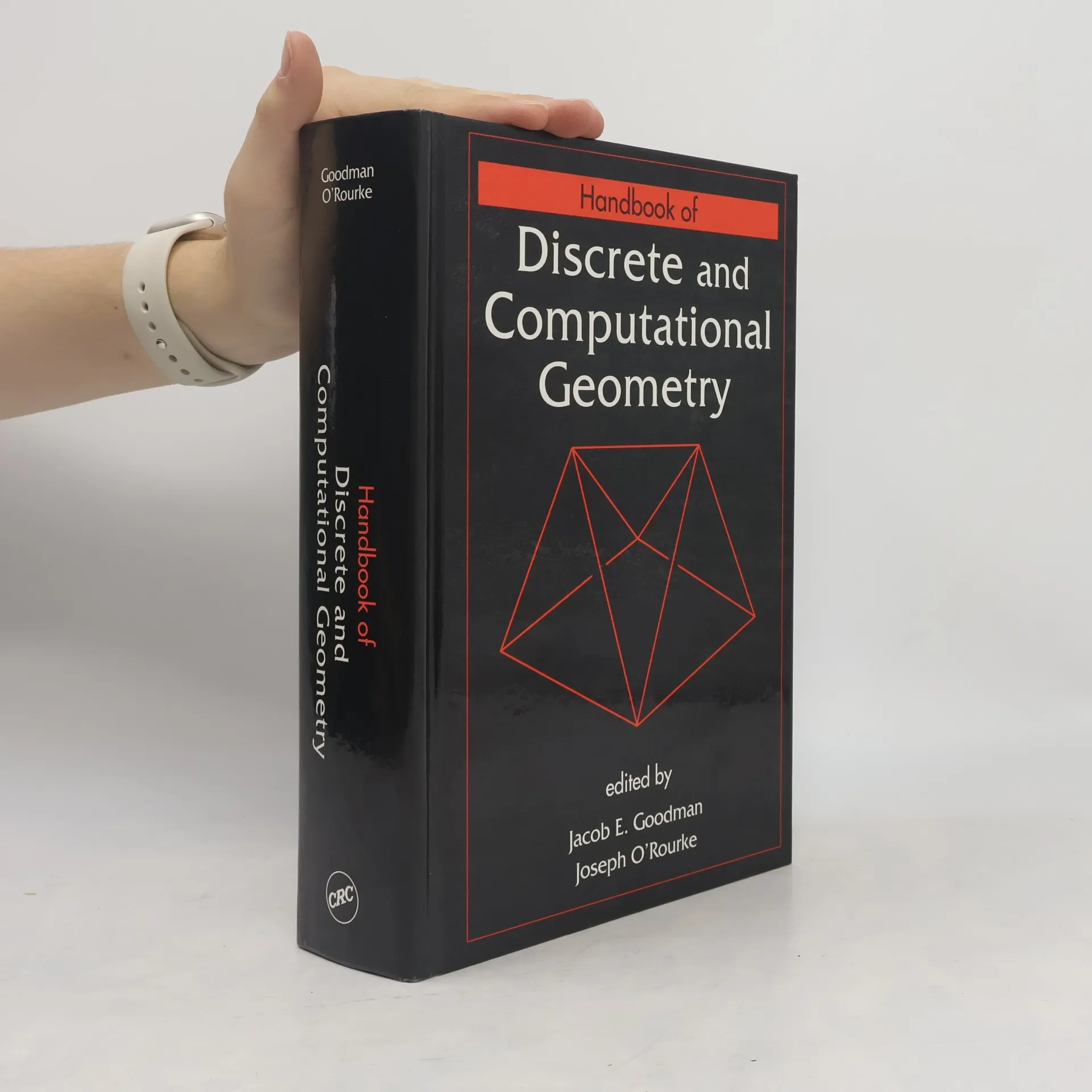
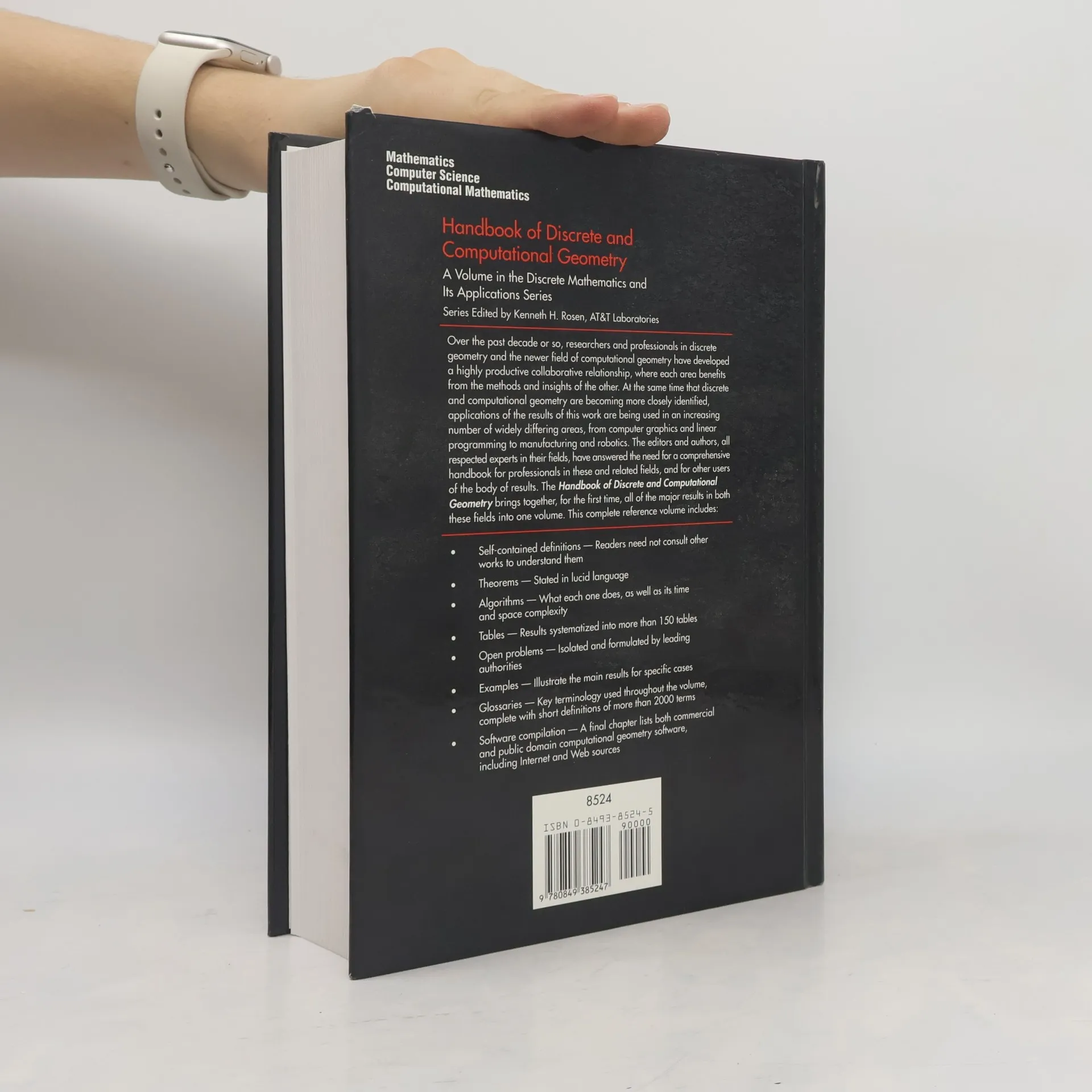
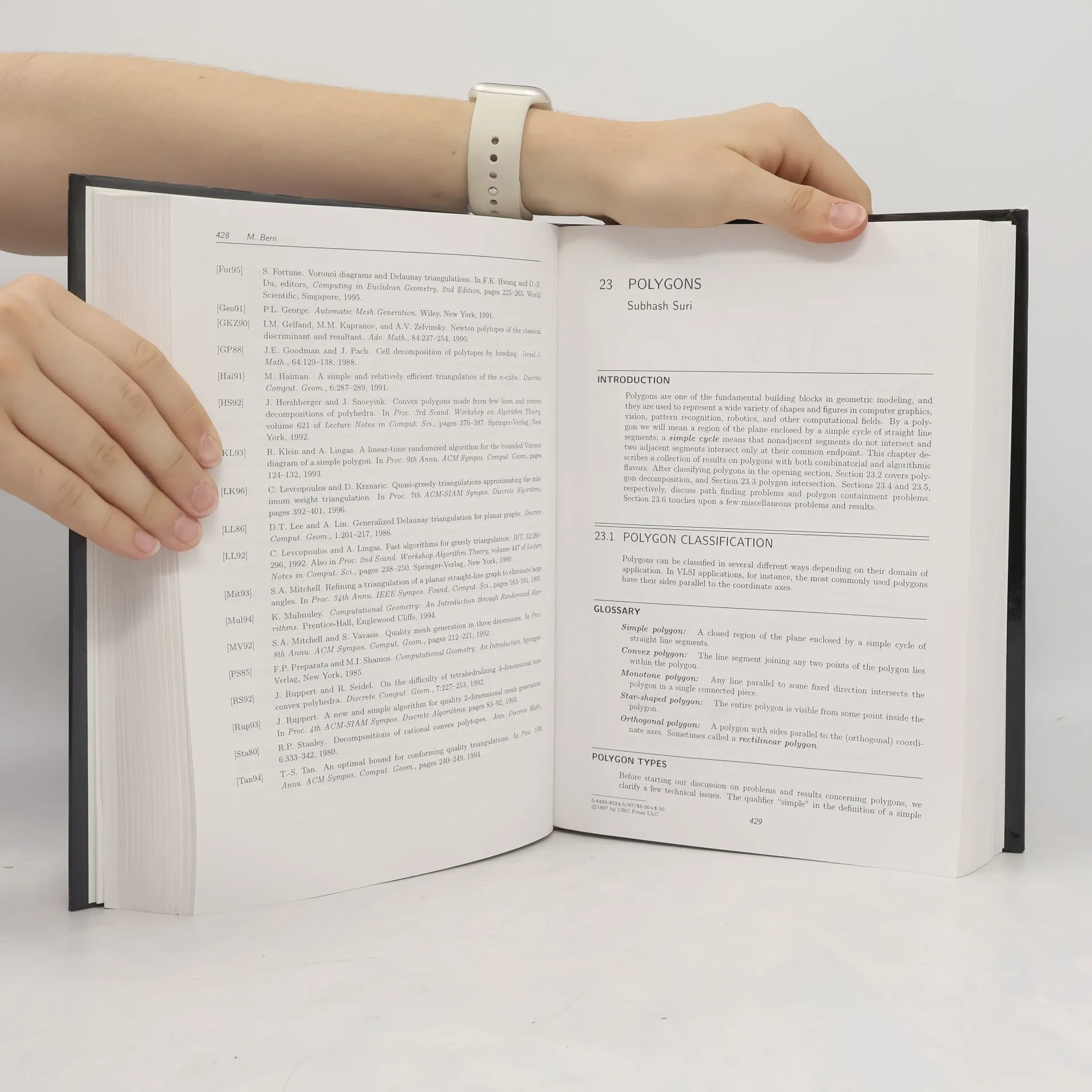
Jacob E. Goodman, co-founder and editor of Discrete & Computational Geometry, collaborates with esteemed computer scientist Joseph O'Rourke and other experts to create a definitive handbook on discrete and computational geometry. In recent years, researchers in these interrelated fields have fostered a productive collaboration, enhancing each area through shared methods and insights. As these disciplines become increasingly intertwined, their applications are expanding across diverse sectors, including computer graphics, linear programming, manufacturing, and robotics. This handbook addresses the need for a comprehensive resource for professionals and researchers, consolidating scattered information from various sources into a single volume. It encompasses thousands of results—ranging from theorems to algorithms and tables—providing thorough coverage of both fields. The content is accessible for novices while offering depth for specialists, with every technical term clearly defined in an easy-to-use glossary. Over 200 figures illustrate key concepts and provide examples, and the handbook also includes information on current geometric software, detailing its functionality and efficiency.
Book purchase
Handbook of Discrete and Computational Geometry, Jacob E. Goodman, Joseph O'Rourke, Csaba D. Toth
- Language

- Released
- 1997
- Binding
- (Hardcover)
Payment methods
No one has rated yet.
- Title
- Handbook of Discrete and Computational Geometry
- Language
- English
- Authors
- Jacob E. Goodman, Joseph O'Rourke, Csaba D. Toth
- Publisher
- CRC Press
- Released
- 1997
- Format
- Hardcover
- Pages
- 1008
- ISBN10
- 0849385245
- ISBN13
- 9780849385247
- Series
- Categories
- Description
- Jacob E. Goodman, co-founder and editor of Discrete & Computational Geometry, collaborates with esteemed computer scientist Joseph O'Rourke and other experts to create a definitive handbook on discrete and computational geometry. In recent years, researchers in these interrelated fields have fostered a productive collaboration, enhancing each area through shared methods and insights. As these disciplines become increasingly intertwined, their applications are expanding across diverse sectors, including computer graphics, linear programming, manufacturing, and robotics. This handbook addresses the need for a comprehensive resource for professionals and researchers, consolidating scattered information from various sources into a single volume. It encompasses thousands of results—ranging from theorems to algorithms and tables—providing thorough coverage of both fields. The content is accessible for novices while offering depth for specialists, with every technical term clearly defined in an easy-to-use glossary. Over 200 figures illustrate key concepts and provide examples, and the handbook also includes information on current geometric software, detailing its functionality and efficiency.