

More about the book
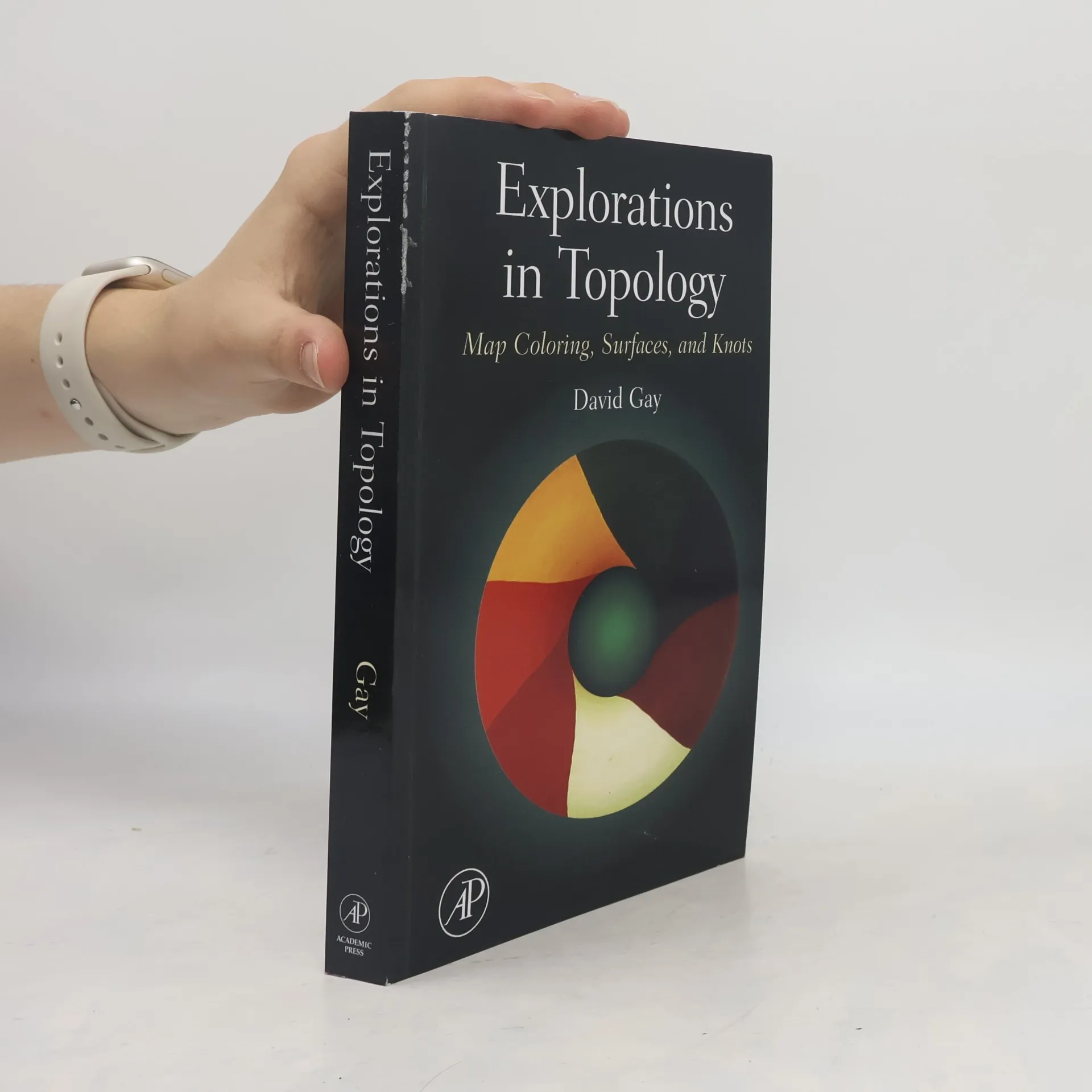
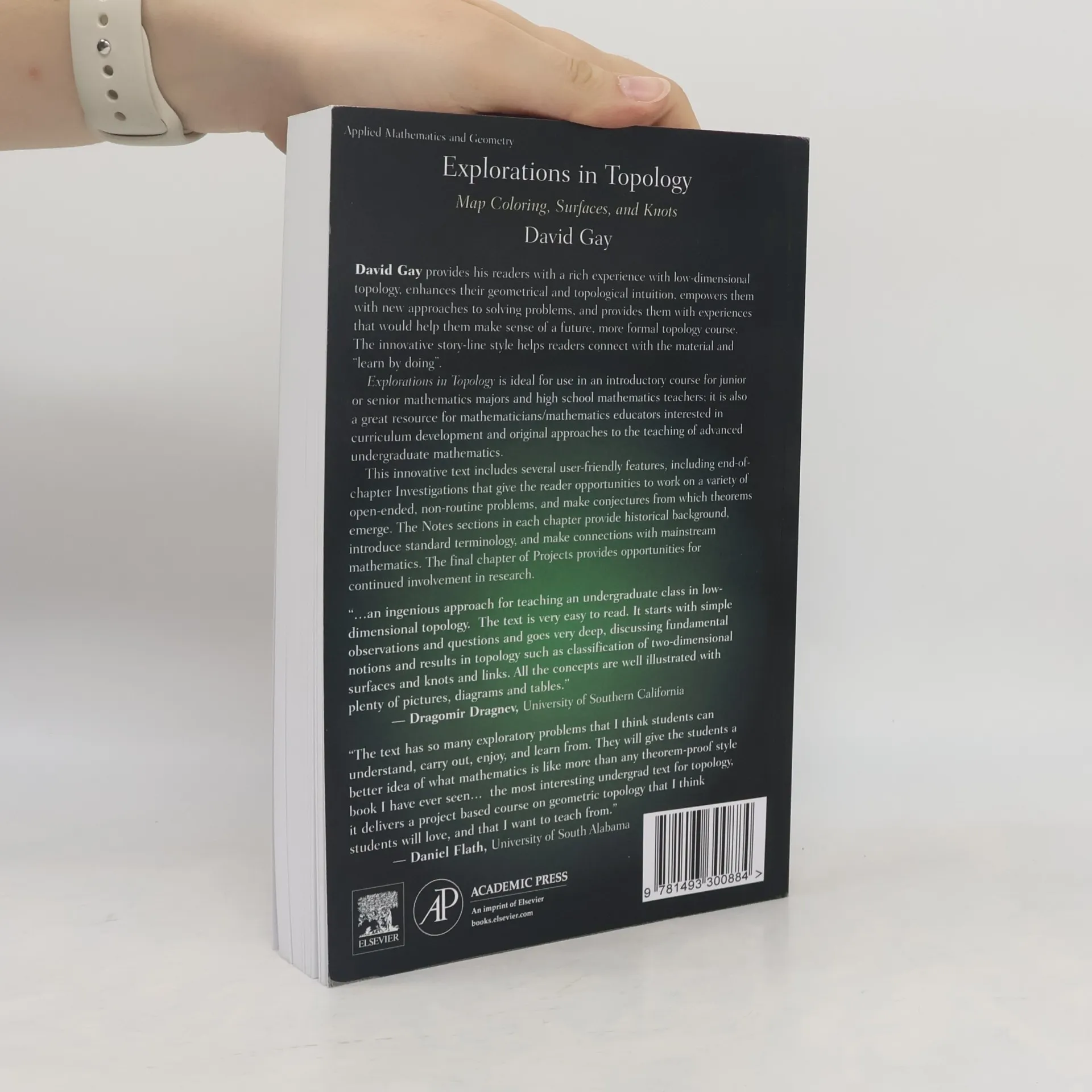
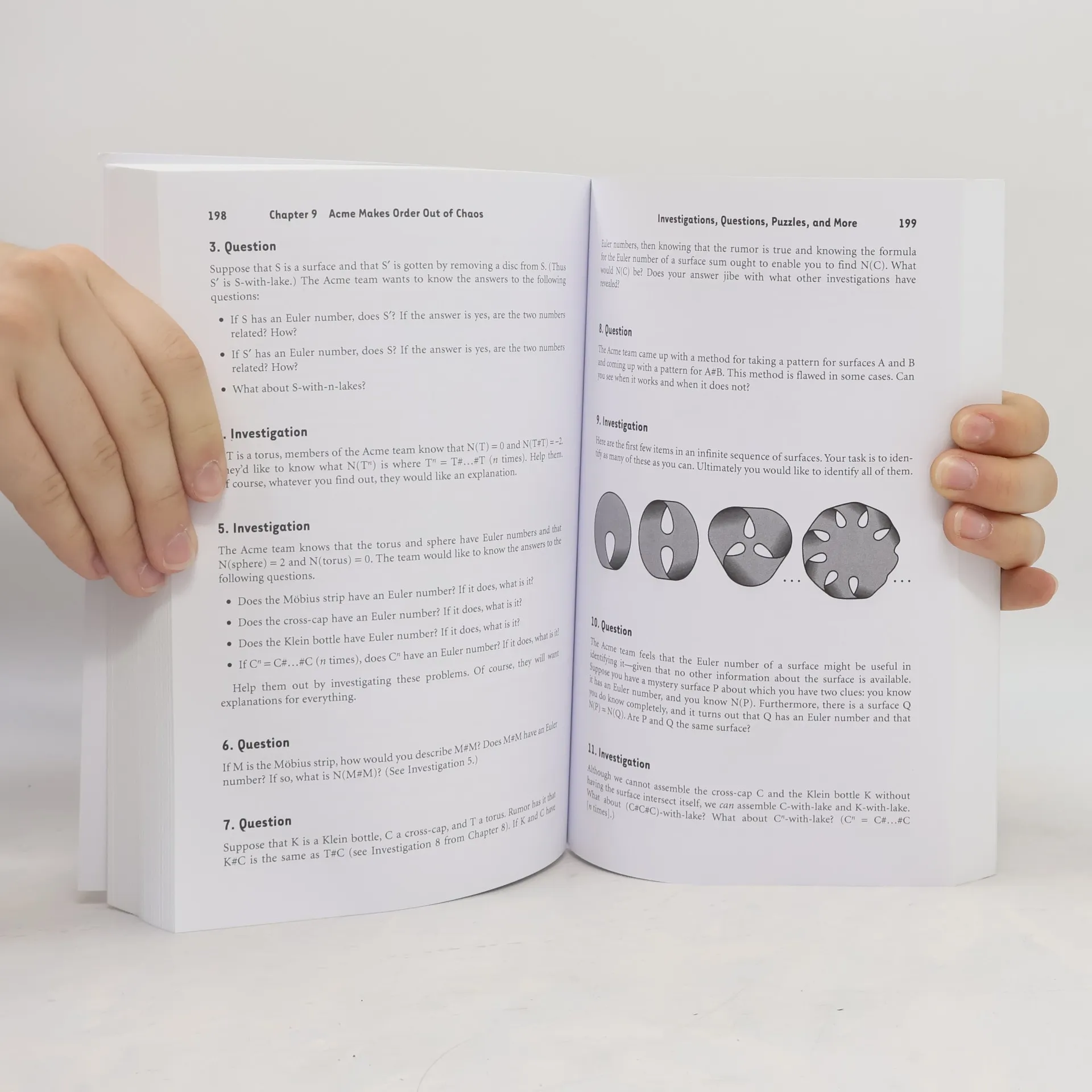
This book gives students a rich experience with low-dimensional topology, enhances their geometrical and topological intuition, empowers them with new approaches to solving problems, and provides them with experiences that would help them make sense of a future, more formal topology course. The innovative story-line style of the text models the problems-solving process, presents the development of concepts in a natural way, and through its informality seduces the reader into engagement with the material. The end-of-chapter Investigations give the reader opportunities to work on a variety of open-ended, non-routine problems, and, through a modified Moore method, to make conjectures from which theorems emerge. The students themselves emerge from these experiences owning concepts and results. The end-of-chapter Notes provide historical background to the chapter s ideas, introduce standard terminology, and make connections with mainstream mathematics. The final chapter of projects provides opportunities for continued involvement in research beyond the topics of the book. * Students begin to solve substantial problems right from the start * Ideas unfold through the context of a storyline, and students become actively involved * The text models the problem-solving process, presents the development of concepts in a natural way, and helps the reader engage with the material"
Book purchase
Explorations in Topology, David Gaylin
- Language

- Released
- 2006
- Binding
- (Paperback)
Payment methods
No one has rated yet.
- Title
- Explorations in Topology
- Subtitle
- Map Coloring, Surfaces and Knots
- Language
- English
- Authors
- David Gaylin
- Publisher
- Academic press
- Released
- 2006
- Format
- Paperback
- Pages
- 352
- ISBN10
- 1493300881
- ISBN13
- 9781493300884
- Series
- Categories
- Description
- This book gives students a rich experience with low-dimensional topology, enhances their geometrical and topological intuition, empowers them with new approaches to solving problems, and provides them with experiences that would help them make sense of a future, more formal topology course. The innovative story-line style of the text models the problems-solving process, presents the development of concepts in a natural way, and through its informality seduces the reader into engagement with the material. The end-of-chapter Investigations give the reader opportunities to work on a variety of open-ended, non-routine problems, and, through a modified Moore method, to make conjectures from which theorems emerge. The students themselves emerge from these experiences owning concepts and results. The end-of-chapter Notes provide historical background to the chapter s ideas, introduce standard terminology, and make connections with mainstream mathematics. The final chapter of projects provides opportunities for continued involvement in research beyond the topics of the book. * Students begin to solve substantial problems right from the start * Ideas unfold through the context of a storyline, and students become actively involved * The text models the problem-solving process, presents the development of concepts in a natural way, and helps the reader engage with the material"