

Parameters
- 208 pages
- 8 hours of reading
More about the book
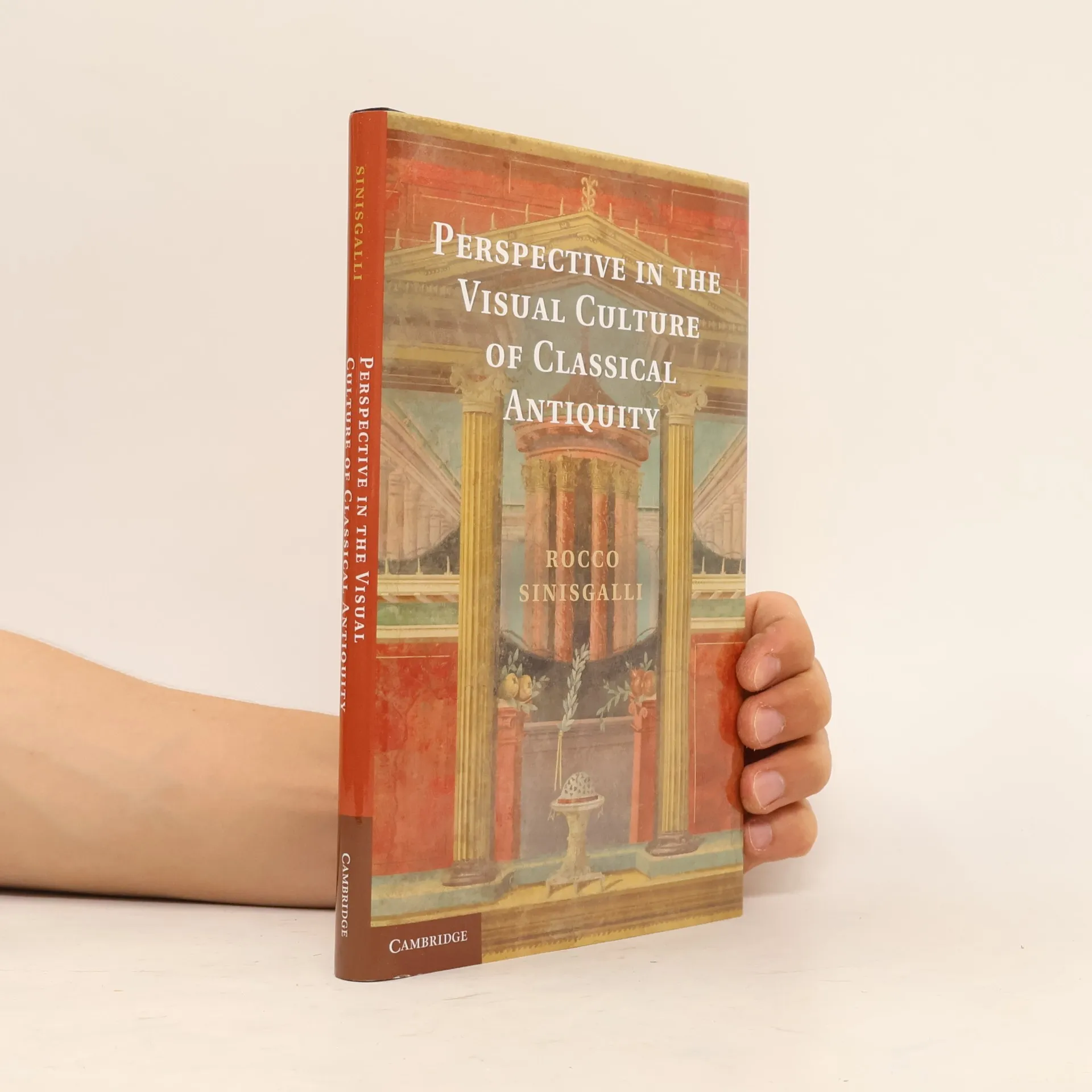
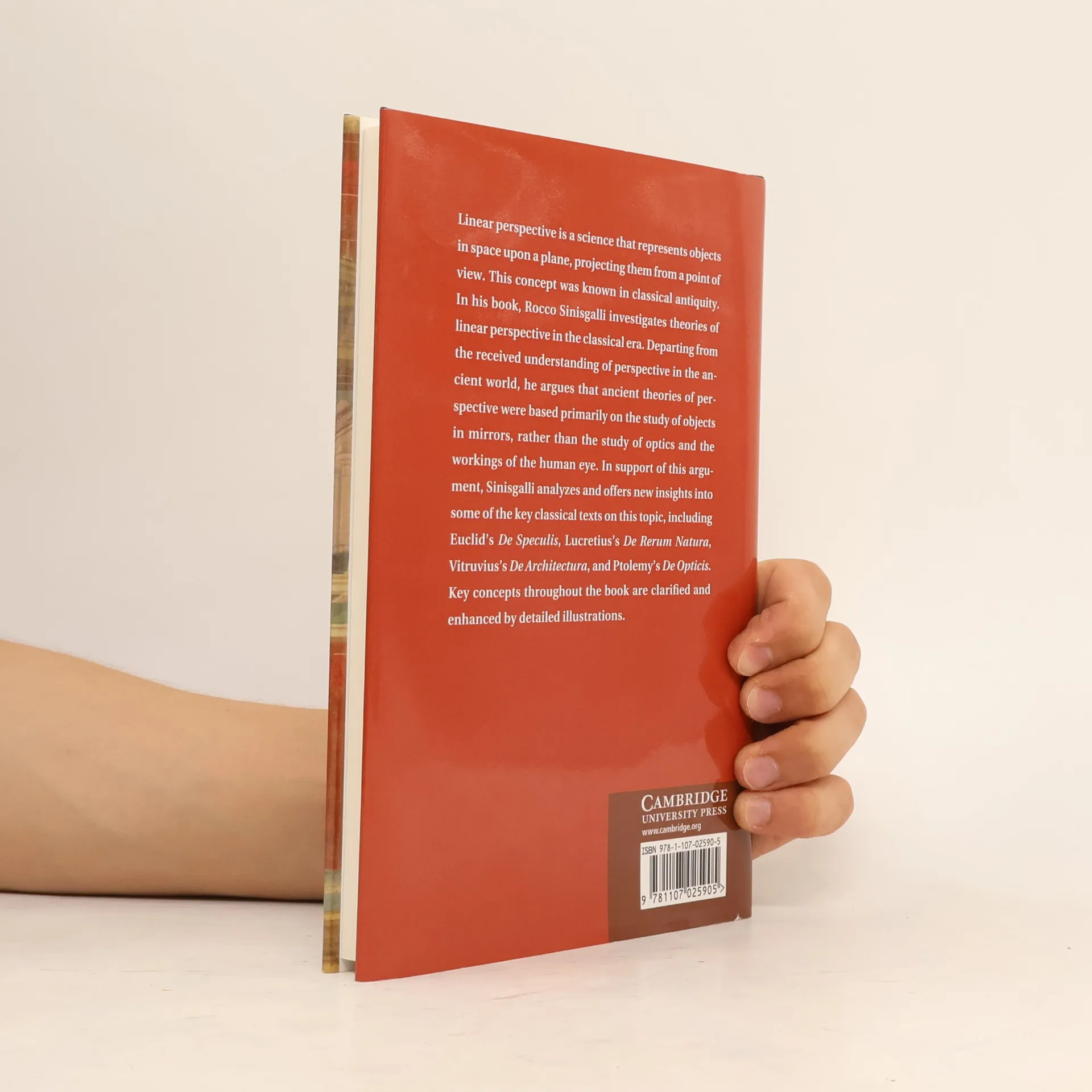
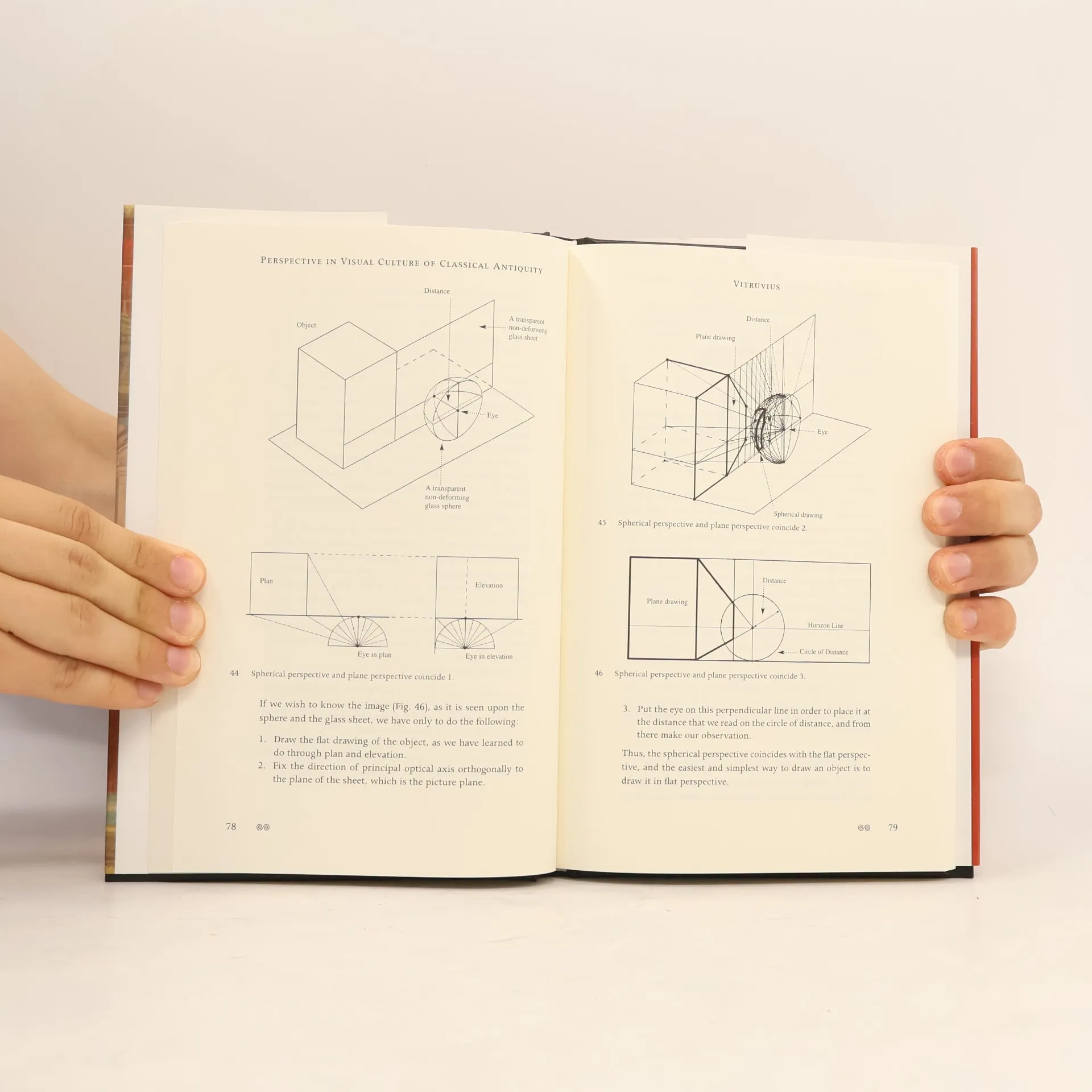
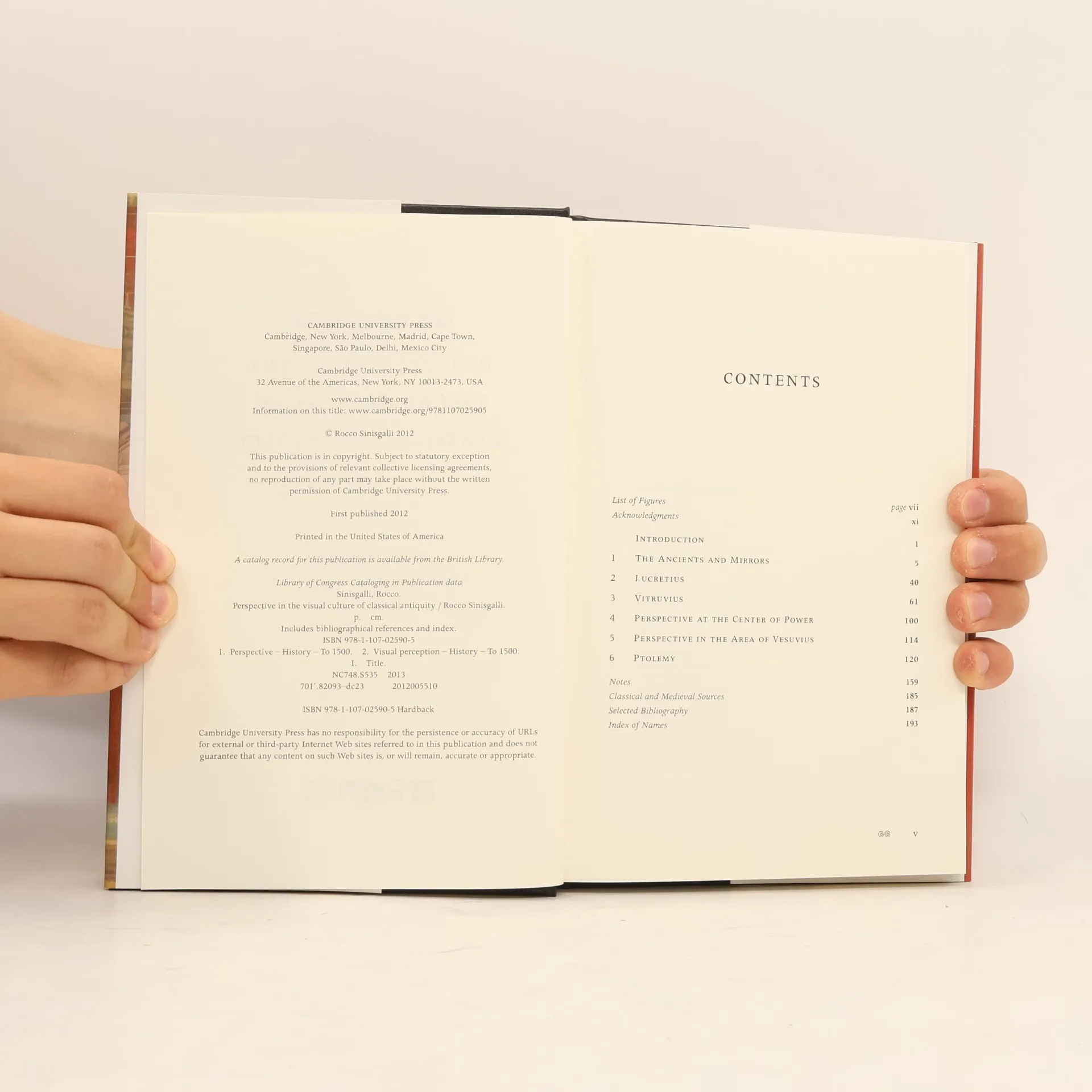
Linear perspective is a science that represents objects in space upon a plane, projecting them from a point of view. This concept was known in classical antiquity. In this book, Rocco Sinisgalli investigates theories of linear perspective in the classical era. Departing from the received understanding of perspective in the ancient world, he argues that ancient theories of perspective were primarily based on the study of objects in mirrors, rather than the study of optics and the workings of the human eye. In support of this argument, Sinisgalli analyzes, and offers new insights into, some of the key classical texts on this topic, including Euclid's De speculis, Lucretius' De rerum natura, Vitruvius' De architectura and Ptolemy's De opticis. Key concepts throughout the book are clarified and enhanced by detailed illustrations.
Book purchase
Perspective in the Visual Culture of Classical Antiquity, Rocco Sinisgalli
- Language

- Released
- 2012
- Binding
- (Hardcover)
Payment methods
No one has rated yet.
- Title
- Perspective in the Visual Culture of Classical Antiquity
- Language
- English
- Authors
- Rocco Sinisgalli
- Publisher
- Cambridge University Press
- Released
- 2012
- Format
- Hardcover
- Pages
- 208
- ISBN10
- 1107025907
- ISBN13
- 9781107025905
- Series
- Categories
- Tags
- Historical Themes, Art, Culture and Society, Ancient History, History of Art, Western Europe, Perspective
- Description
- Linear perspective is a science that represents objects in space upon a plane, projecting them from a point of view. This concept was known in classical antiquity. In this book, Rocco Sinisgalli investigates theories of linear perspective in the classical era. Departing from the received understanding of perspective in the ancient world, he argues that ancient theories of perspective were primarily based on the study of objects in mirrors, rather than the study of optics and the workings of the human eye. In support of this argument, Sinisgalli analyzes, and offers new insights into, some of the key classical texts on this topic, including Euclid's De speculis, Lucretius' De rerum natura, Vitruvius' De architectura and Ptolemy's De opticis. Key concepts throughout the book are clarified and enhanced by detailed illustrations.