


More about the book
Following Alexander the Great's sudden death, the Diadochi, or "successors," convened in Babylon to divide the empire. Perdiccas, entrusted with Alexander's ring, emerged as a key figure in these tumultuous councils. Primary sources, particularly Diodorus, depict him negatively as the regent for King Philip III, who was unfit to rule, and the infant King Alexander IV. This study questions whether Perdiccas was an autocrat masquerading as a guardian of the kings' interests or if a more nuanced understanding of his character can be gleaned, contrasting with Diodorus's harsh criticism. The investigation begins with the Babylonian councils of June 323 BC, focusing on Perdiccas's role among his fellow officers. It then examines original sources detailing his life up to his assassination by his own men in the summer of 320 BC, comparing his actions with those of other Diadochi. The final section explores how the circumstances of his death shaped perceptions of Perdiccas. This analysis serves as a broader examination of the early phase of Hellenism and the establishment of various regimes among the Diadochi.
Book purchase
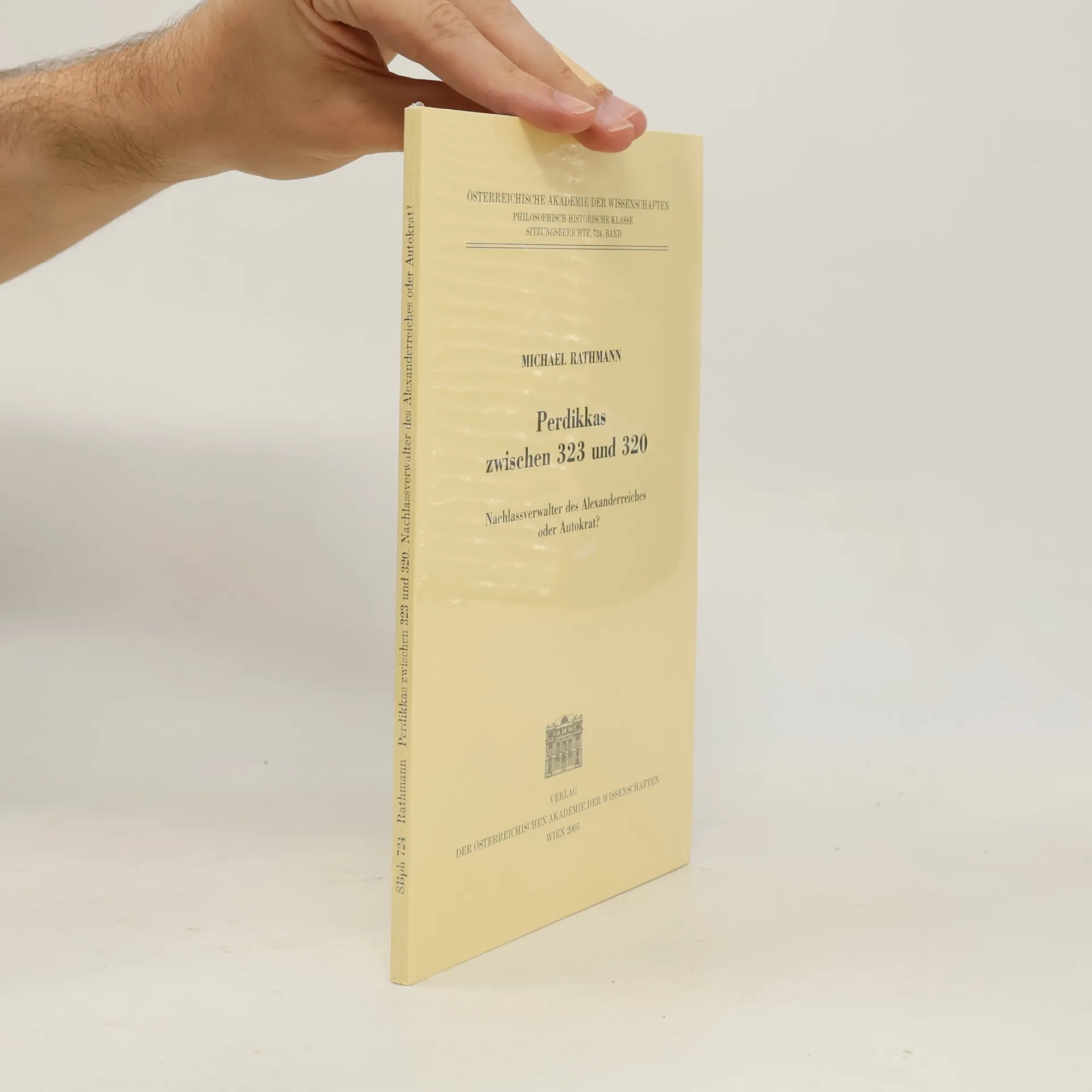
Sitzungsberichte der Philosophisch-Historischen Klasse - 724: Perdikkas zwischen 323 und 320, Michael Rathmann
- Language

- Released
- 2005
- Binding
- (Paperback)
Payment methods
No one has rated yet.
- Title
- Sitzungsberichte der Philosophisch-Historischen Klasse - 724: Perdikkas zwischen 323 und 320
- Subtitle
- Nachlassverwalter des Alexanderreiches oder Autokrat?
- Language
- German
- Authors
- Michael Rathmann
- Publisher
- Austrian Academy of Sciences Press
- Released
- 2005
- Format
- Paperback
- Pages
- 100
- ISBN10
- 3700135033
- ISBN13
- 9783700135036
- Series
- Description
- Following Alexander the Great's sudden death, the Diadochi, or "successors," convened in Babylon to divide the empire. Perdiccas, entrusted with Alexander's ring, emerged as a key figure in these tumultuous councils. Primary sources, particularly Diodorus, depict him negatively as the regent for King Philip III, who was unfit to rule, and the infant King Alexander IV. This study questions whether Perdiccas was an autocrat masquerading as a guardian of the kings' interests or if a more nuanced understanding of his character can be gleaned, contrasting with Diodorus's harsh criticism. The investigation begins with the Babylonian councils of June 323 BC, focusing on Perdiccas's role among his fellow officers. It then examines original sources detailing his life up to his assassination by his own men in the summer of 320 BC, comparing his actions with those of other Diadochi. The final section explores how the circumstances of his death shaped perceptions of Perdiccas. This analysis serves as a broader examination of the early phase of Hellenism and the establishment of various regimes among the Diadochi.