

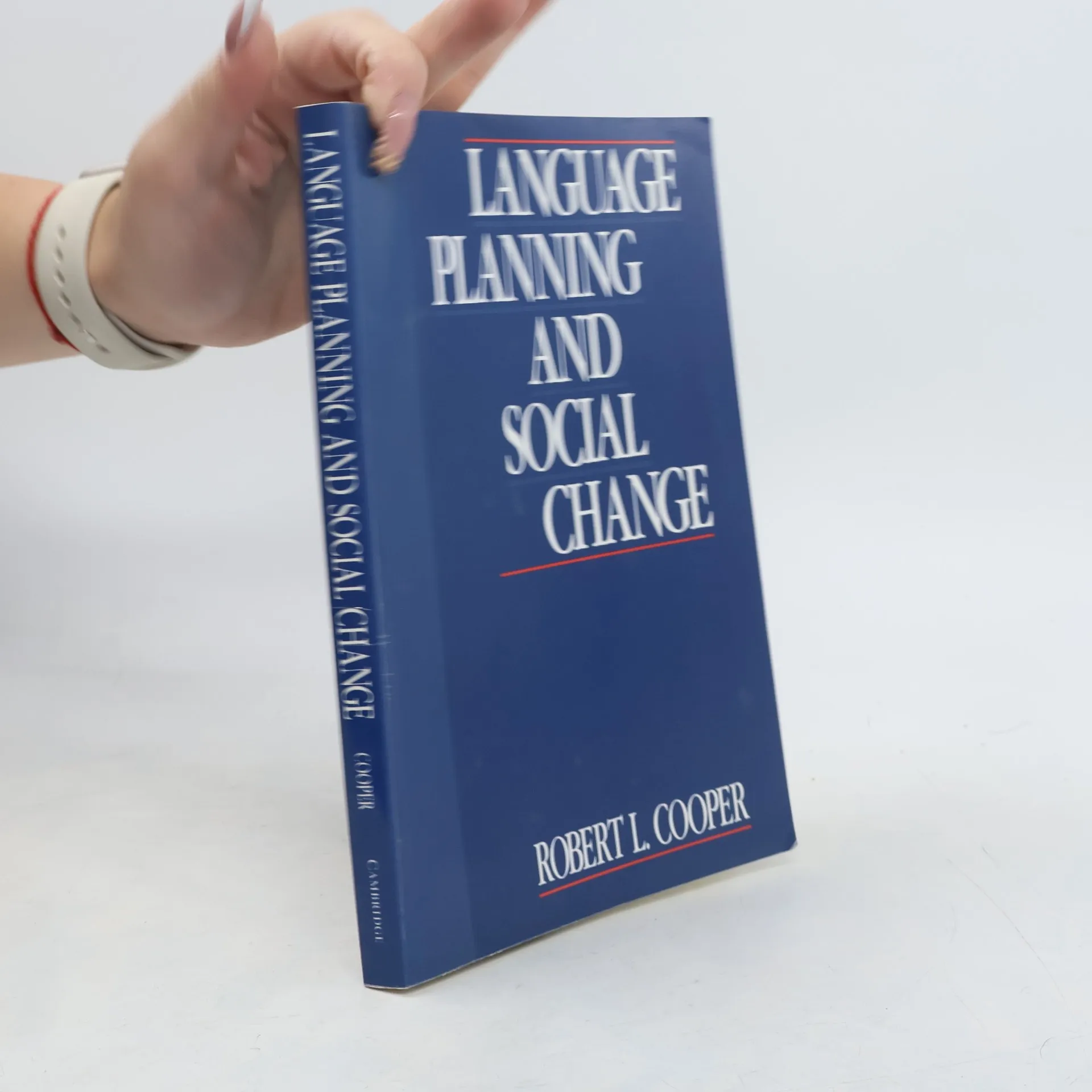



Language Planning and Social Change
Authors
More about the book
This book describes the ways in which politicians, church officials, generals, and other leaders try to influence our use of language. Using many examples, Professor Cooper argues that language planning is never attempted for its own sake, but rather for the attainment of nonlinguistic ends. Examples discussed include the revival of Hebrew as a spoken language, feminist campaigns to eliminate sexist bias in language, adult literacy campaigns, the plain language movement, efforts to distinguish American from British spelling, the American bilingual education movement, the creation of writing systems for unwritten languages, and campaigns to rid languages of foreign terms. This is the first book to define the field of language planning and relate it to other aspects of social planning and to social change.
Book purchase
Language Planning and Social Change, Robert L. Cooper
- Language

- Released
- 2000
- Binding
- (Paperback)
Payment methods
No one has rated yet.
- Title
- Language Planning and Social Change
- Language
- English
- Authors
- Robert L. Cooper
- Publisher
- Cambridge University Press
- Released
- 2000
- Format
- Paperback
- Pages
- 228
- ISBN10
- 0521336414
- ISBN13
- 9780521336413
- Series
- Categories
- Description
- This book describes the ways in which politicians, church officials, generals, and other leaders try to influence our use of language. Using many examples, Professor Cooper argues that language planning is never attempted for its own sake, but rather for the attainment of nonlinguistic ends. Examples discussed include the revival of Hebrew as a spoken language, feminist campaigns to eliminate sexist bias in language, adult literacy campaigns, the plain language movement, efforts to distinguish American from British spelling, the American bilingual education movement, the creation of writing systems for unwritten languages, and campaigns to rid languages of foreign terms. This is the first book to define the field of language planning and relate it to other aspects of social planning and to social change.