

More about the book
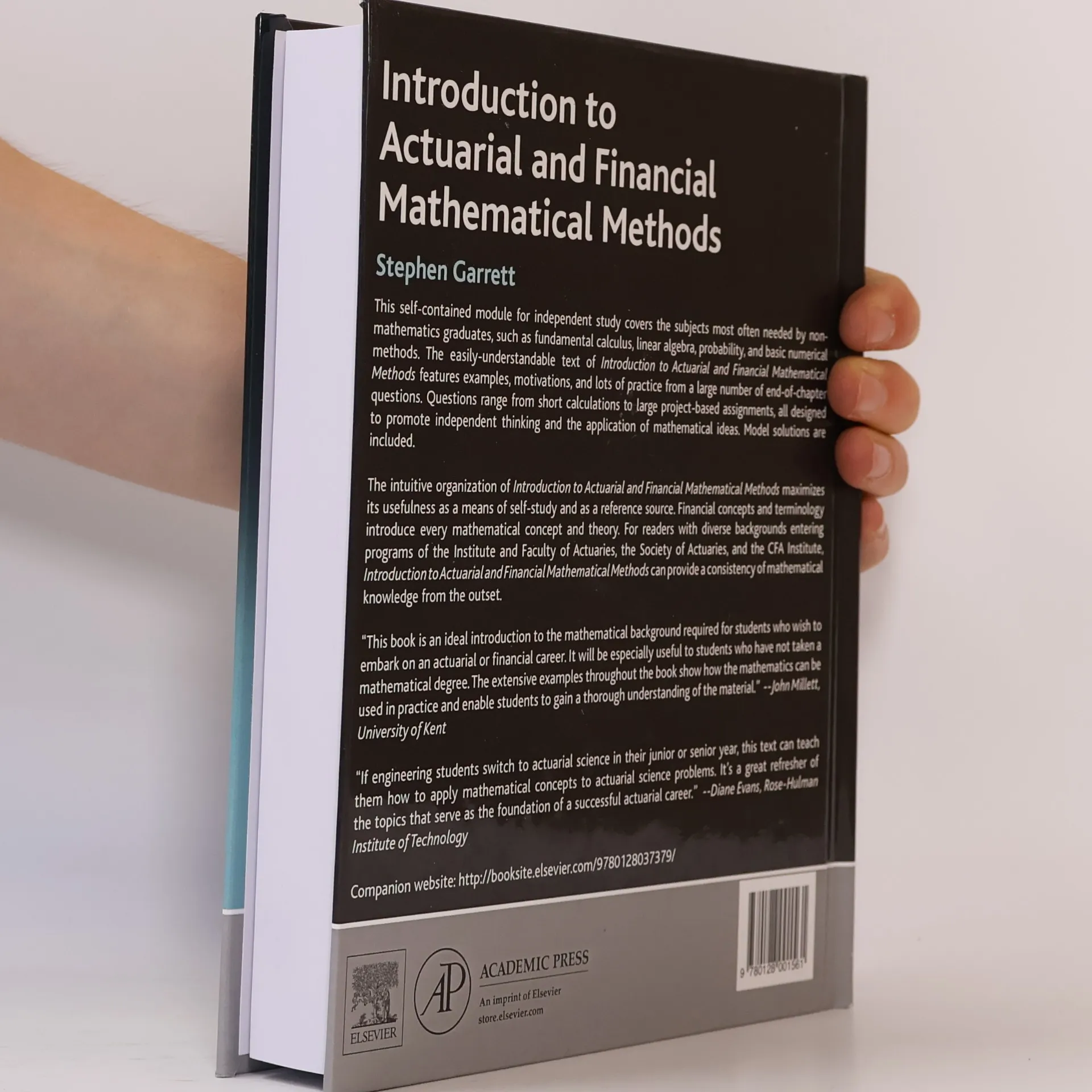
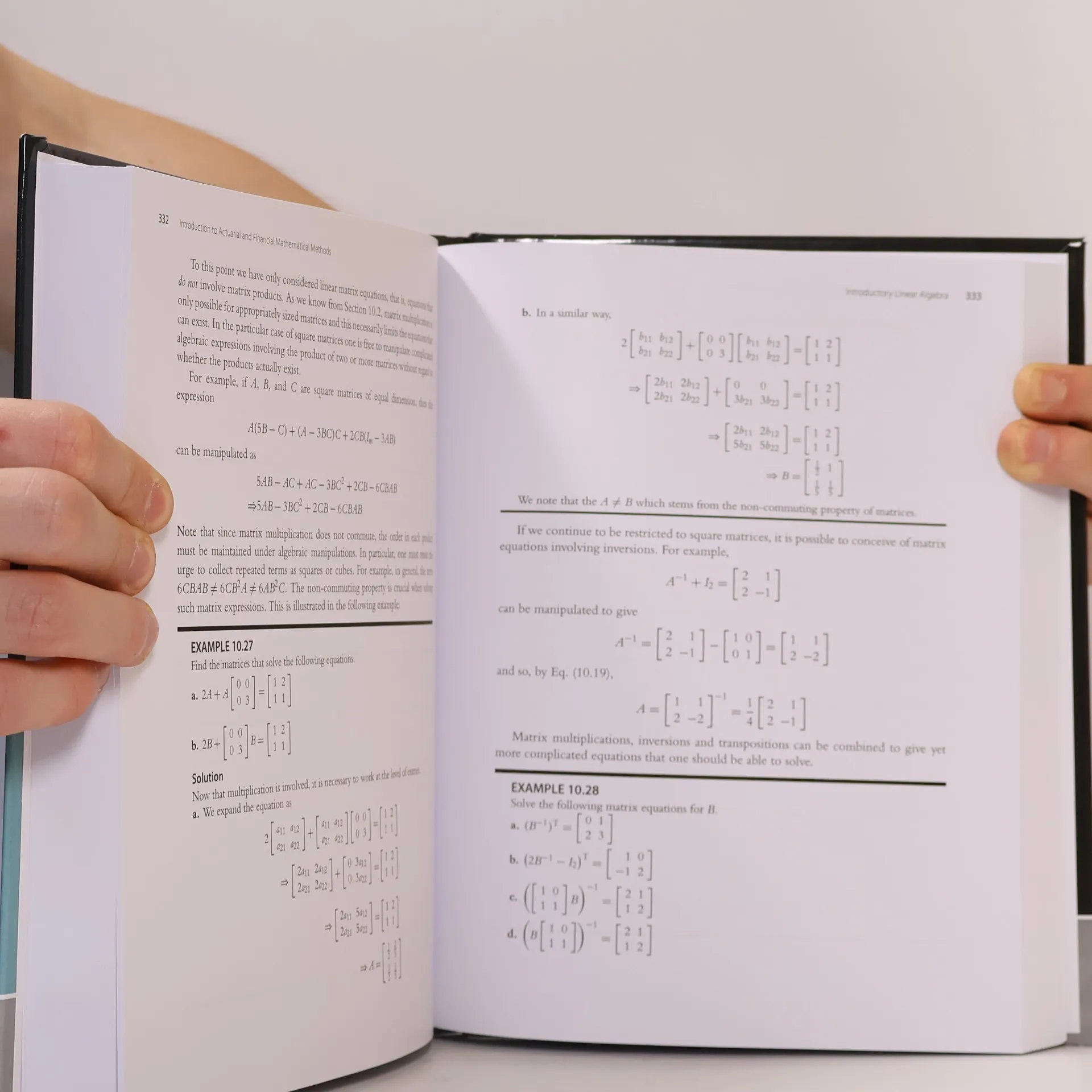
This self-contained module for independent study covers the subjects most often needed by non-mathematics graduates, such as fundamental calculus, linear algebra, probability, and basic numerical methods. The easily-understandable text of Introduction to Actuarial and Mathematical Methods features examples, motivations, and lots of practice from a large number of end-of-chapter questions. For readers with diverse backgrounds entering programs of the Institute and Faculty of Actuaries, the Society of Actuaries, and the CFA Institute, Introduction to Actuarial and Mathematical Methods can provide a consistency of mathematical knowledge from the outset.
Book purchase
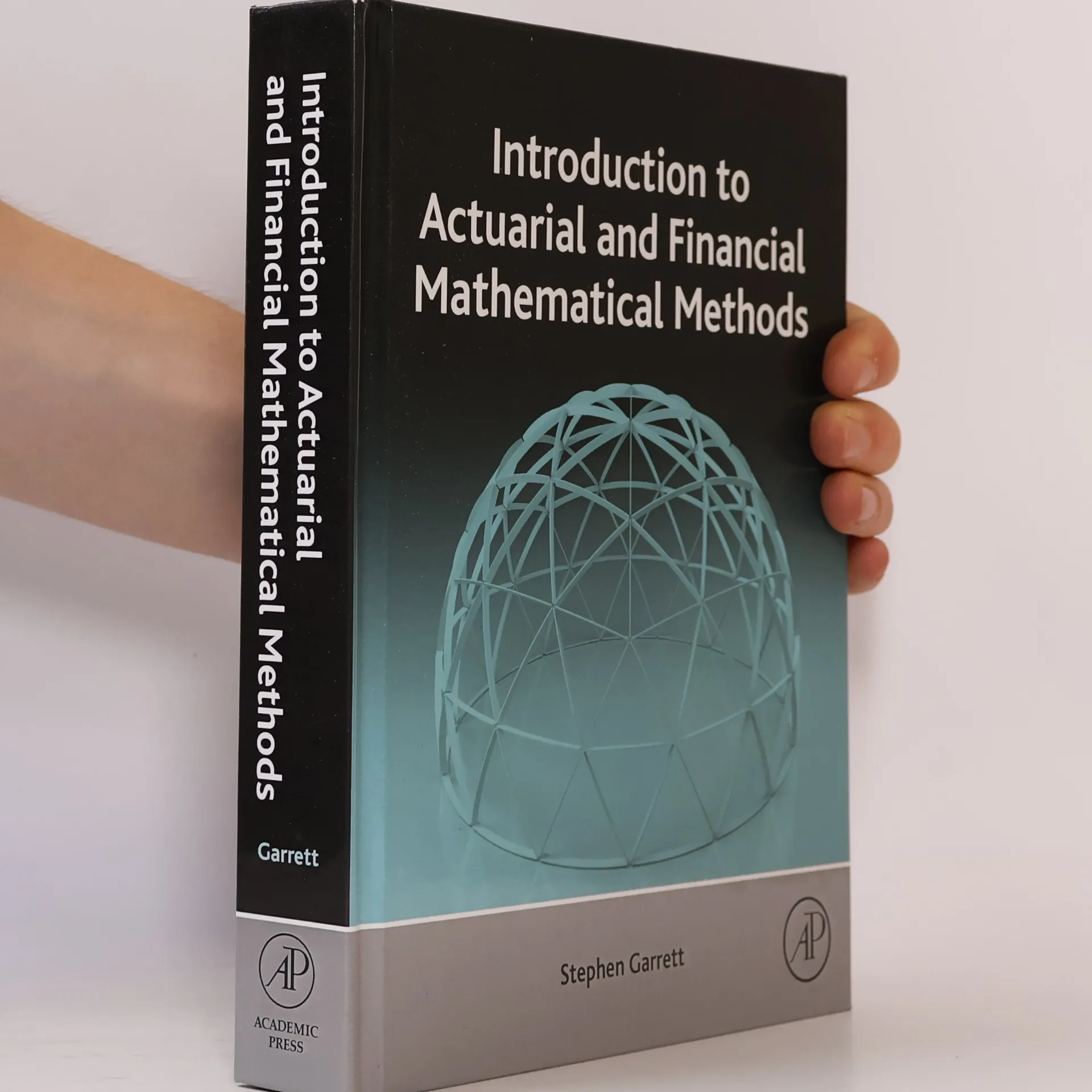
Introduction to Actuarial and Financial Mathematical Methods, Stephen Garrett
- Language

- Released
- 2015
- Binding
- (Hardcover)
Payment methods
No one has rated yet.
- Title
- Introduction to Actuarial and Financial Mathematical Methods
- Language
- English
- Authors
- Stephen Garrett
- Publisher
- Academic press
- Released
- 2015
- Format
- Hardcover
- Pages
- 624
- ISBN10
- 0128001569
- ISBN13
- 9780128001561
- Series
- Categories
- Description
- This self-contained module for independent study covers the subjects most often needed by non-mathematics graduates, such as fundamental calculus, linear algebra, probability, and basic numerical methods. The easily-understandable text of Introduction to Actuarial and Mathematical Methods features examples, motivations, and lots of practice from a large number of end-of-chapter questions. For readers with diverse backgrounds entering programs of the Institute and Faculty of Actuaries, the Society of Actuaries, and the CFA Institute, Introduction to Actuarial and Mathematical Methods can provide a consistency of mathematical knowledge from the outset.