

More about the book
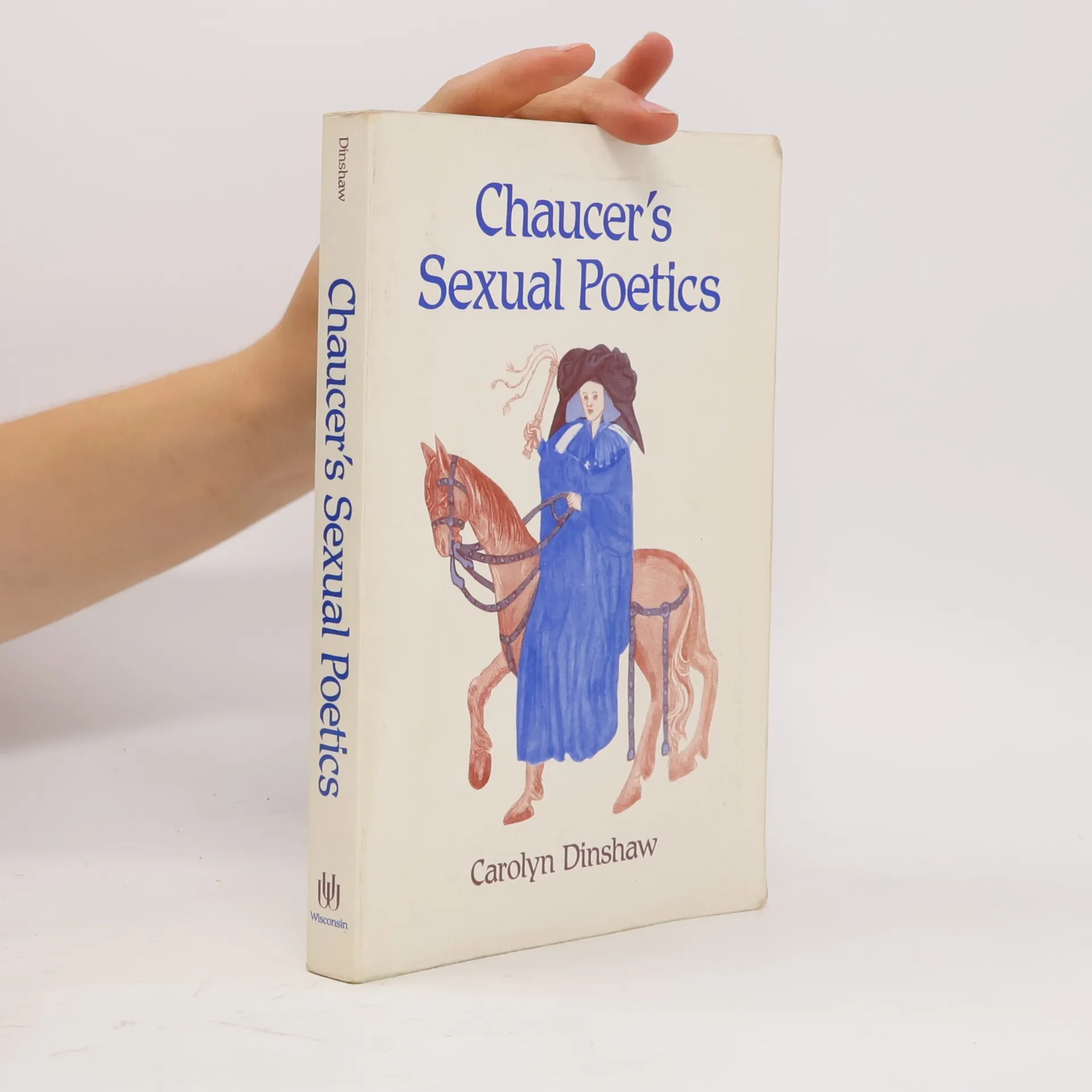
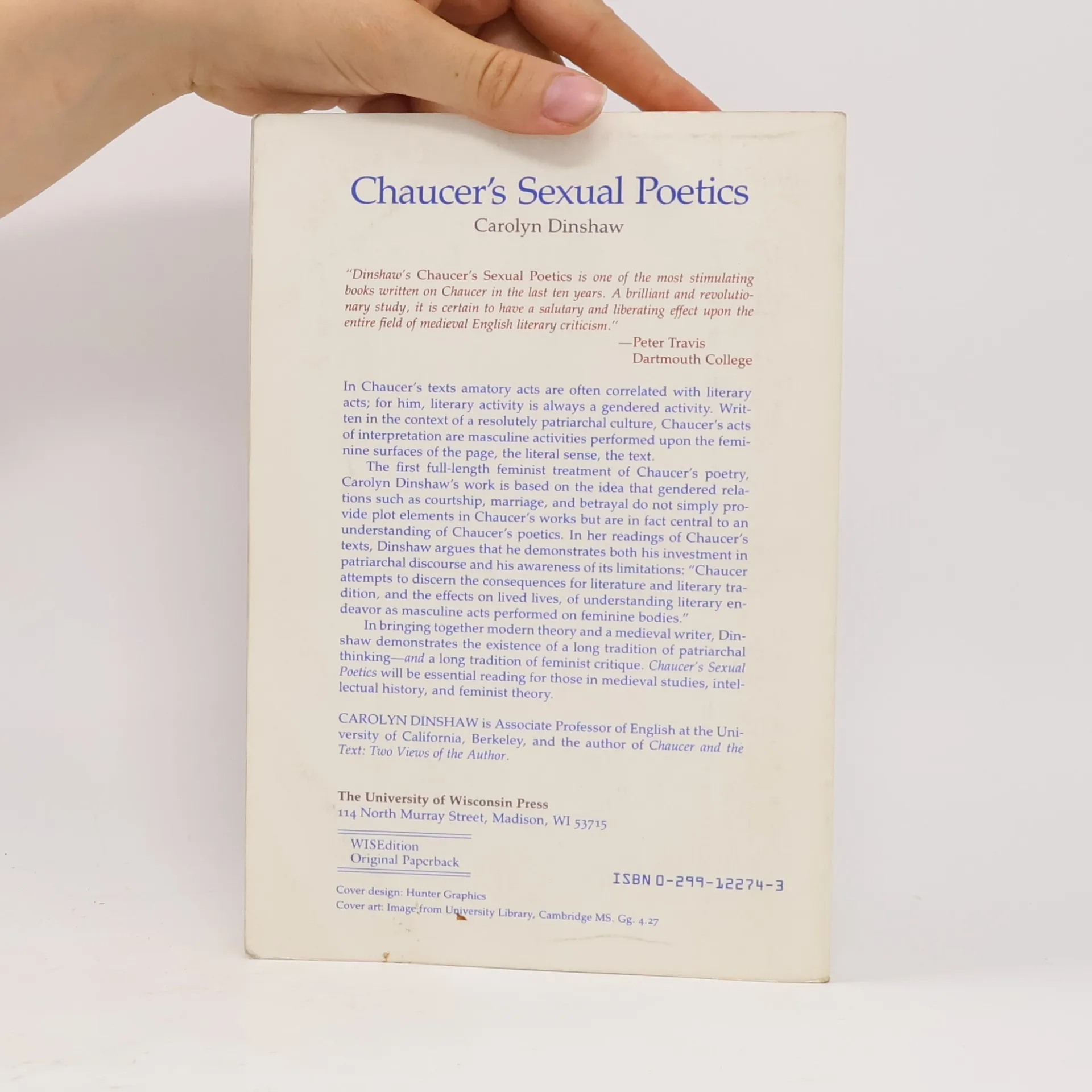
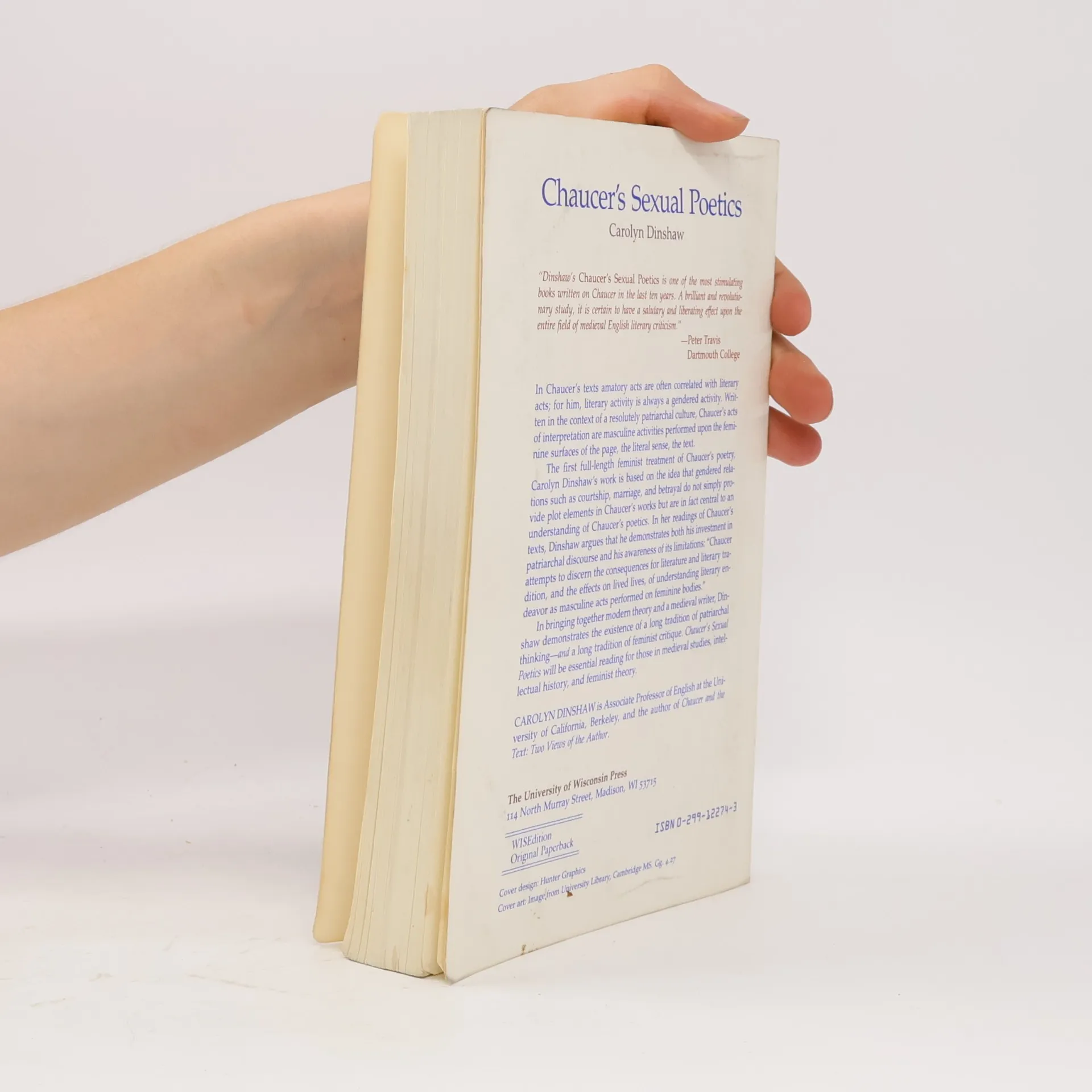
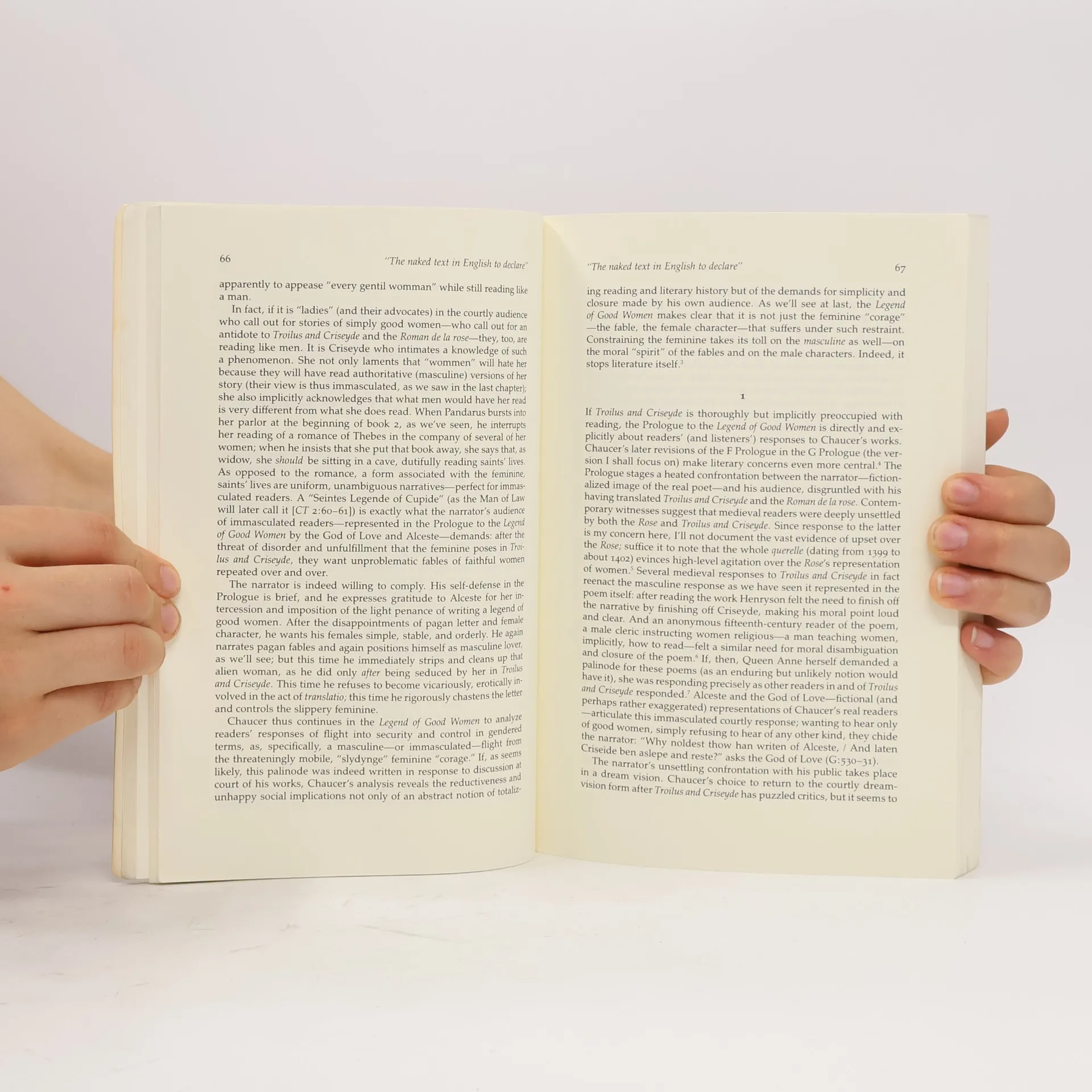
Through an analysis of the poems Chaucers wordes Unto Adam, His Owne Scriveyn, Troilus and Criseyde, the Legend of Good Women, the Man of Law’s Tale, the Wife of Bath’s Tale and its Prologue, the Clerk’s Tale, and the Pardoner’s Tale, Carolyn Dinshaw offers a provocative argument on medieval sexual constructs and Chaucer’s role in shaping them. Operating under the assumption that people read and write certain ways based upon society’s demands, Dinshaw examines gender identity and the effects of a patriarchal society. The focal point of Dinshaw’s argument is the idea that the literary text can be seen as the female body while any literary activities upon the text are decidedly male. Through a series of six provocative essays, Dinshaw argues that Chaucer was not only aware that gender is a social construction, but that he self-consciously worked to oppose the dominance of masculinity that a patriarchal society places on texts by creating works in which gender identity and hierarchy were more fluid.
Book purchase
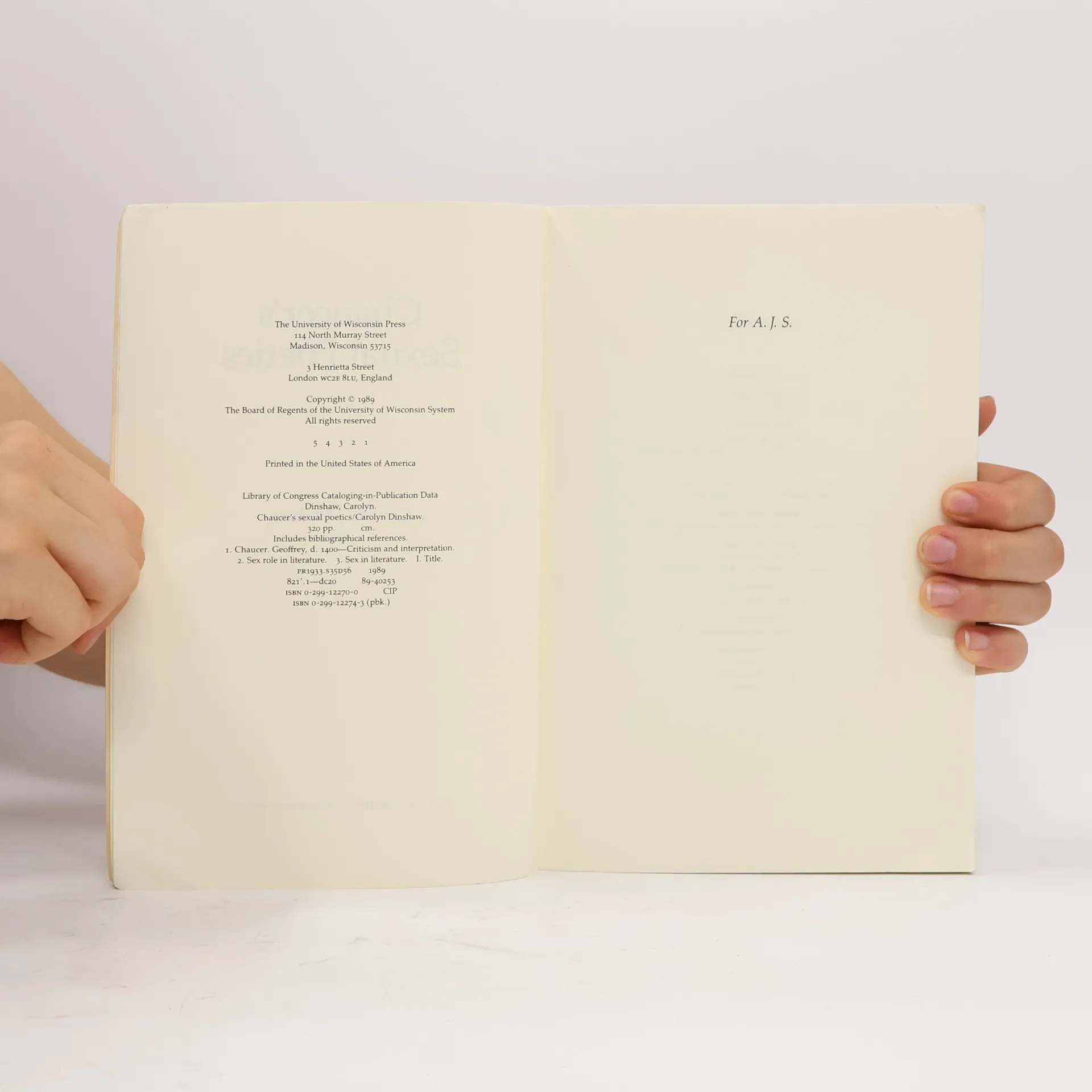
Chaucer's Sexual Poetics, Carolyn Dinshaw
- Language

- Released
- 1989
- Binding
- (Paperback),
- Book condition
- Damaged
- Price
- €1.60
Payment methods
No one has rated yet.
- Title
- Chaucer's Sexual Poetics
- Language
- English
- Authors
- Carolyn Dinshaw
- Publisher
- University of Wisconsin Press
- Released
- 1989
- Format
- Paperback
- Pages
- 272
- ISBN10
- 0299122743
- ISBN13
- 9780299122744
- Series
- Tags
- School, England, Literary Criticism
- Description
- Through an analysis of the poems Chaucers wordes Unto Adam, His Owne Scriveyn, Troilus and Criseyde, the Legend of Good Women, the Man of Law’s Tale, the Wife of Bath’s Tale and its Prologue, the Clerk’s Tale, and the Pardoner’s Tale, Carolyn Dinshaw offers a provocative argument on medieval sexual constructs and Chaucer’s role in shaping them. Operating under the assumption that people read and write certain ways based upon society’s demands, Dinshaw examines gender identity and the effects of a patriarchal society. The focal point of Dinshaw’s argument is the idea that the literary text can be seen as the female body while any literary activities upon the text are decidedly male. Through a series of six provocative essays, Dinshaw argues that Chaucer was not only aware that gender is a social construction, but that he self-consciously worked to oppose the dominance of masculinity that a patriarchal society places on texts by creating works in which gender identity and hierarchy were more fluid.