

More about the book
Johann Ludwig Burkhardt (1784-1817), a Swiss traveller and orientalist, is renowned for rediscovering the ancient Nabataean city of Petra in Jordan. After studying at Leipzig and Göttingen, he sought a position in the civil service in England but instead joined the African Association, aiming to uncover the Niger River's origins and Timbuktu's location. To prepare for an overland expedition from Cairo to Timbuktu, he studied Arabic science and medicine at Cambridge. Adopting Arabian attire, he traveled to Aleppo in 1809 to refine his Arabic and learn Muslim customs, assuming the name Sheikh Ibrahim Ibn Abdallah to conceal his European identity. After two years, he felt secure enough to travel freely. In 1812, however, he faced numerous challenges, including losing his possessions to a deceitful guide in the desert. After securing a new guide, he reached Petra in August 1812, becoming the first European to do so, later chronicling his experiences in *Travels in Syria and the Holy Land* (1822). Following a pilgrimage to Mecca, he documented rituals uncommon for Europeans, providing valuable insights for future explorers. Burckhardt spent his final years in Cairo, editing his journals and preparing for a Sahara caravan to Timbuktu, but he succumbed to dysentery before realizing this journey. His posthumously published works include *Travels in Nubia* (1819) and *Travels in Arabia* (1829).
Book purchase
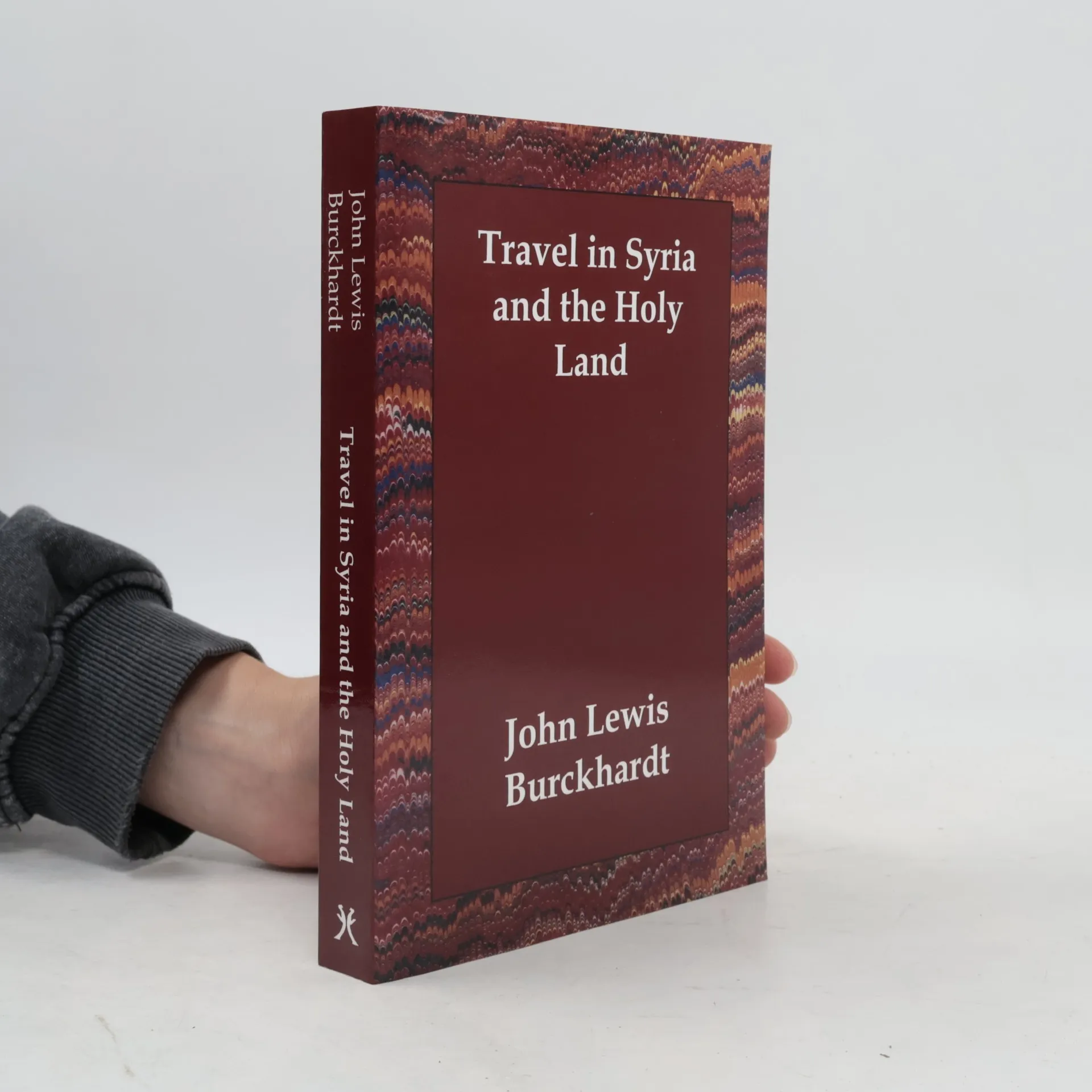
Travel in Syria and the Holy Land, Jean Louis Burckhardt
- Language

- Released
- 2006
- Binding
- (Paperback)
Payment methods
No one has rated yet.
- Title
- Travel in Syria and the Holy Land
- Language
- English
- Authors
- Jean Louis Burckhardt
- Publisher
- Echo Library
- Released
- 2006
- Format
- Paperback
- Pages
- 400
- ISBN10
- 1406800821
- ISBN13
- 9781406800821
- Series
- Categories
- Tags
- Historical Themes, Travel
- Description
- Johann Ludwig Burkhardt (1784-1817), a Swiss traveller and orientalist, is renowned for rediscovering the ancient Nabataean city of Petra in Jordan. After studying at Leipzig and Göttingen, he sought a position in the civil service in England but instead joined the African Association, aiming to uncover the Niger River's origins and Timbuktu's location. To prepare for an overland expedition from Cairo to Timbuktu, he studied Arabic science and medicine at Cambridge. Adopting Arabian attire, he traveled to Aleppo in 1809 to refine his Arabic and learn Muslim customs, assuming the name Sheikh Ibrahim Ibn Abdallah to conceal his European identity. After two years, he felt secure enough to travel freely. In 1812, however, he faced numerous challenges, including losing his possessions to a deceitful guide in the desert. After securing a new guide, he reached Petra in August 1812, becoming the first European to do so, later chronicling his experiences in *Travels in Syria and the Holy Land* (1822). Following a pilgrimage to Mecca, he documented rituals uncommon for Europeans, providing valuable insights for future explorers. Burckhardt spent his final years in Cairo, editing his journals and preparing for a Sahara caravan to Timbuktu, but he succumbed to dysentery before realizing this journey. His posthumously published works include *Travels in Nubia* (1819) and *Travels in Arabia* (1829).