

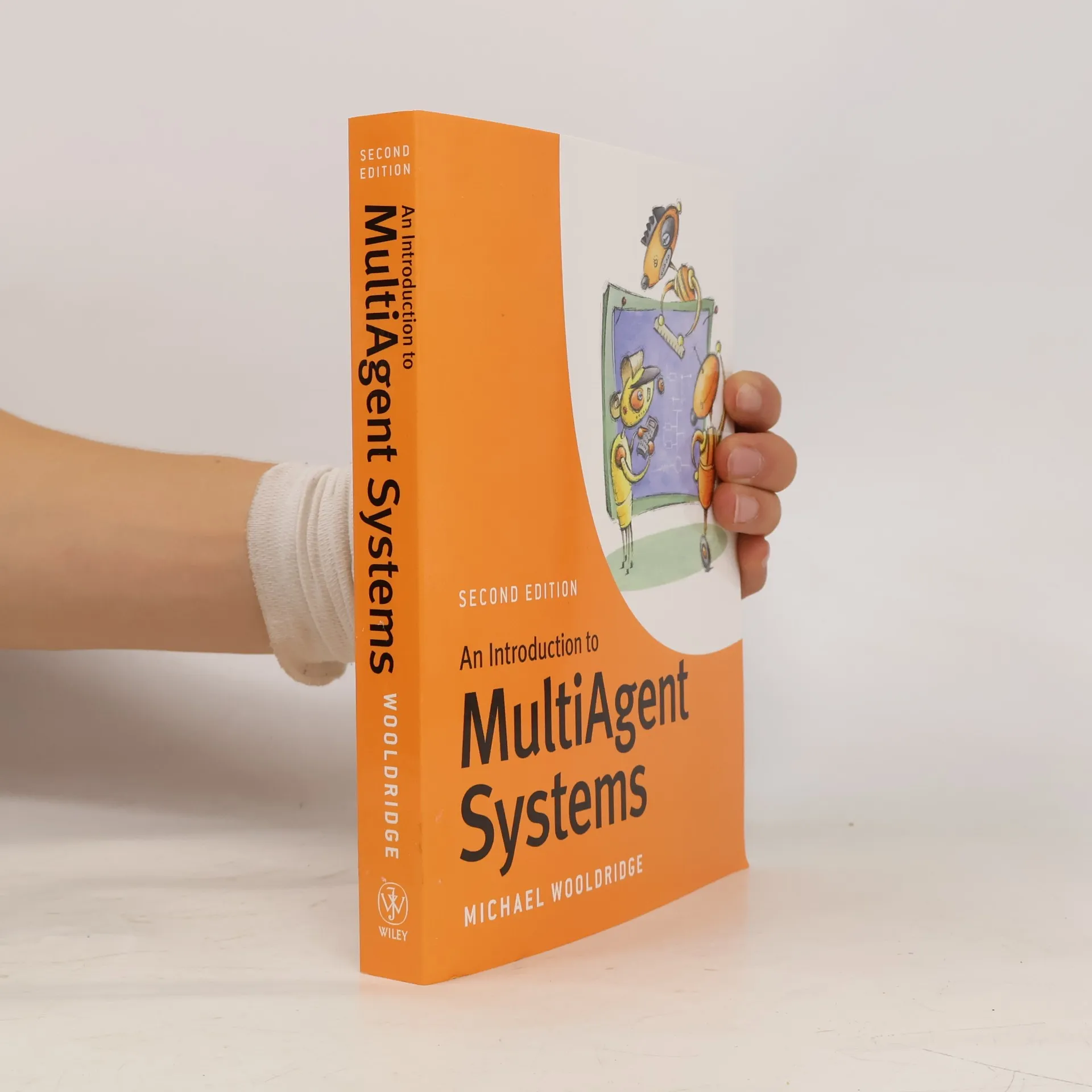


Parameters
- 484 pages
- 17 hours of reading
More about the book
This updated resource focuses on the rapidly advancing field of multi-agent systems, where intelligent agents interact with one another. Since the first edition nearly a decade ago, significant developments have emerged, prompting a comprehensive update. The new edition includes recent topics such as auctions, computational social choice, and Markov decision processes, while reducing coverage of previously critical areas that have lost prominence. This shift results in a timely and essential resource for understanding multi-agent systems. The text introduces the concept of agents and their applications, discusses key design issues for intelligent agents and multi-agent societies, and explores typical applications of agent technology. It covers various types of agents, including deductive reasoning, practical reasoning, reactive, and hybrid agents. Additionally, it reviews multi-agent decision-making, communication, cooperation, and intelligent autonomous agents. By the end of the book, readers will gain a solid understanding of how agents differ from other software paradigms and the characteristics of applications suited for agent-oriented software. This comprehensive guide is vital for anyone interested in the evolving landscape of multi-agent systems.
Book purchase
An Introduction to MultiAgent Systems, Michael J. Wooldridge
- Language

- Released
- 2009
- Binding
- (Paperback)
Payment methods
No one has rated yet.
- Title
- An Introduction to MultiAgent Systems
- Language
- English
- Authors
- Michael J. Wooldridge
- Publisher
- WILEY
- Released
- 2009
- Format
- Paperback
- Pages
- 484
- ISBN10
- 0470519460
- ISBN13
- 9780470519462
- Series
- Description
- This updated resource focuses on the rapidly advancing field of multi-agent systems, where intelligent agents interact with one another. Since the first edition nearly a decade ago, significant developments have emerged, prompting a comprehensive update. The new edition includes recent topics such as auctions, computational social choice, and Markov decision processes, while reducing coverage of previously critical areas that have lost prominence. This shift results in a timely and essential resource for understanding multi-agent systems. The text introduces the concept of agents and their applications, discusses key design issues for intelligent agents and multi-agent societies, and explores typical applications of agent technology. It covers various types of agents, including deductive reasoning, practical reasoning, reactive, and hybrid agents. Additionally, it reviews multi-agent decision-making, communication, cooperation, and intelligent autonomous agents. By the end of the book, readers will gain a solid understanding of how agents differ from other software paradigms and the characteristics of applications suited for agent-oriented software. This comprehensive guide is vital for anyone interested in the evolving landscape of multi-agent systems.