

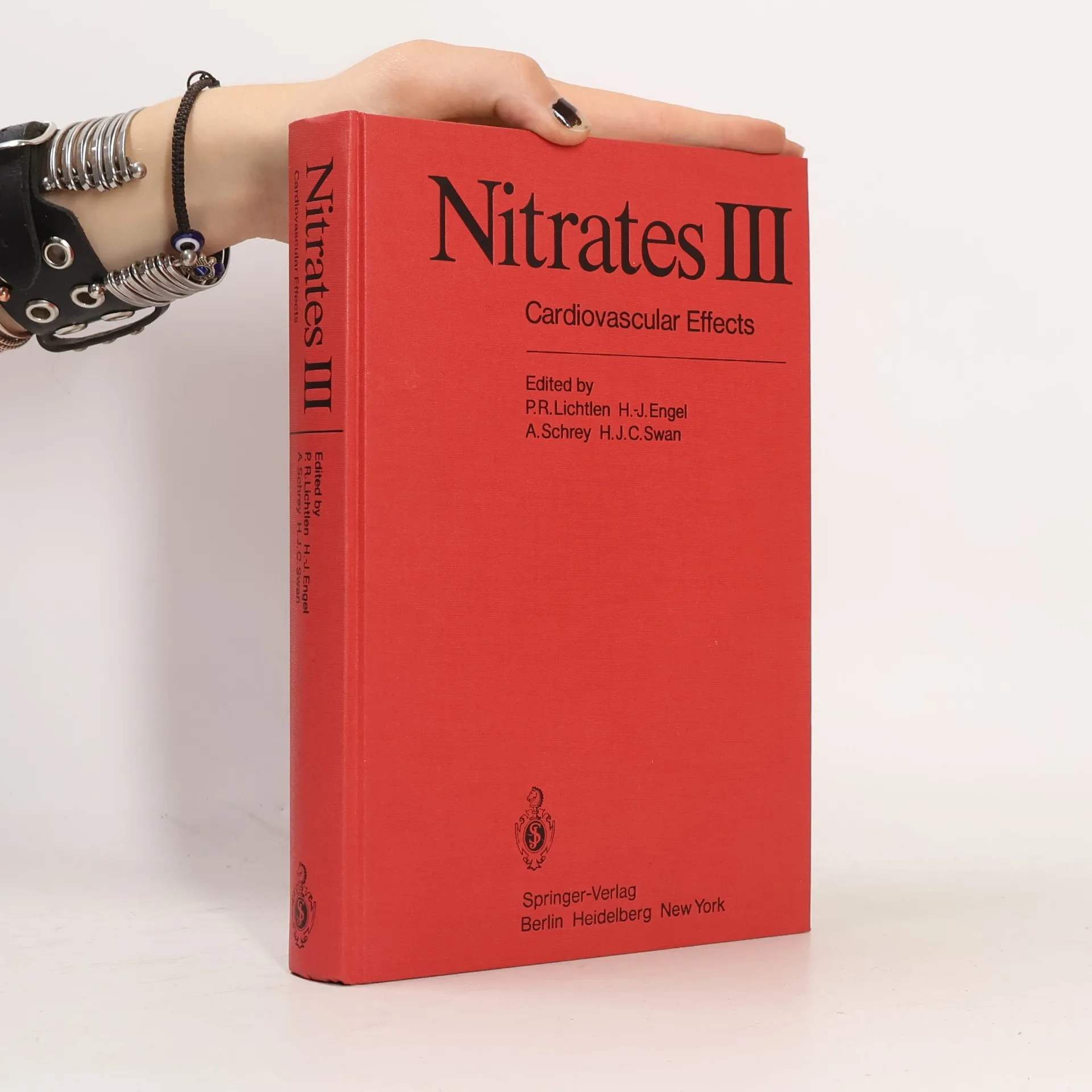


More about the book
Pharmacological and clinical research on nitrates remains a focal point of interest, despite their beneficial effects in angina pectoris being recognized over a century ago. Since the last symposia on nitrates in 1975 and 1978, significant new information has emerged regarding their pharmacology, pharmacokinetics, and pharmacodynamics, as well as their clinical implications in acute and chronic ischemic heart diseases and severe congestive heart failure. However, advancements in understanding the fundamental action of nitrates have been limited. While it is widely accepted that nitrates reduce vascular smooth muscle tone primarily through intracellular calcium sequestration, the precise site of action is still unclear. Established differences in venous and arteriolar tone based on dosage have been noted. Treatment discussions highlighted the issue of tolerance with long-term use, introducing the concept of "pseudotolerance" to explain the body's adaptation to chronic vasodilation. This understanding is crucial for long-term prophylactic anti-ischemic treatment in both stable and unstable angina pectoris, particularly during episodes of increased vasomotor tone, such as spasm.
Book purchase
Nitrates III, Paul R. Lichtlen, A. Schrey, H.J.C. Swan, Heinz-Jürgen Engel
- Language

- Released
- 1981
- Binding
- (Hardcover),
- Book condition
- Good
- Price
- €56.99
Payment methods
No one has rated yet.
- Title
- Nitrates III
- Subtitle
- Cardiovascular Effects
- Language
- English
- Publisher
- Springer
- Released
- 1981
- Format
- Hardcover
- Pages
- 597
- ISBN10
- 3540107614
- ISBN13
- 9783540107613
- Series
- Tags
- Medicine, Research, Pharmacology, Heart, Cardiology, Toxicology
- Description
- Pharmacological and clinical research on nitrates remains a focal point of interest, despite their beneficial effects in angina pectoris being recognized over a century ago. Since the last symposia on nitrates in 1975 and 1978, significant new information has emerged regarding their pharmacology, pharmacokinetics, and pharmacodynamics, as well as their clinical implications in acute and chronic ischemic heart diseases and severe congestive heart failure. However, advancements in understanding the fundamental action of nitrates have been limited. While it is widely accepted that nitrates reduce vascular smooth muscle tone primarily through intracellular calcium sequestration, the precise site of action is still unclear. Established differences in venous and arteriolar tone based on dosage have been noted. Treatment discussions highlighted the issue of tolerance with long-term use, introducing the concept of "pseudotolerance" to explain the body's adaptation to chronic vasodilation. This understanding is crucial for long-term prophylactic anti-ischemic treatment in both stable and unstable angina pectoris, particularly during episodes of increased vasomotor tone, such as spasm.