

More about the book
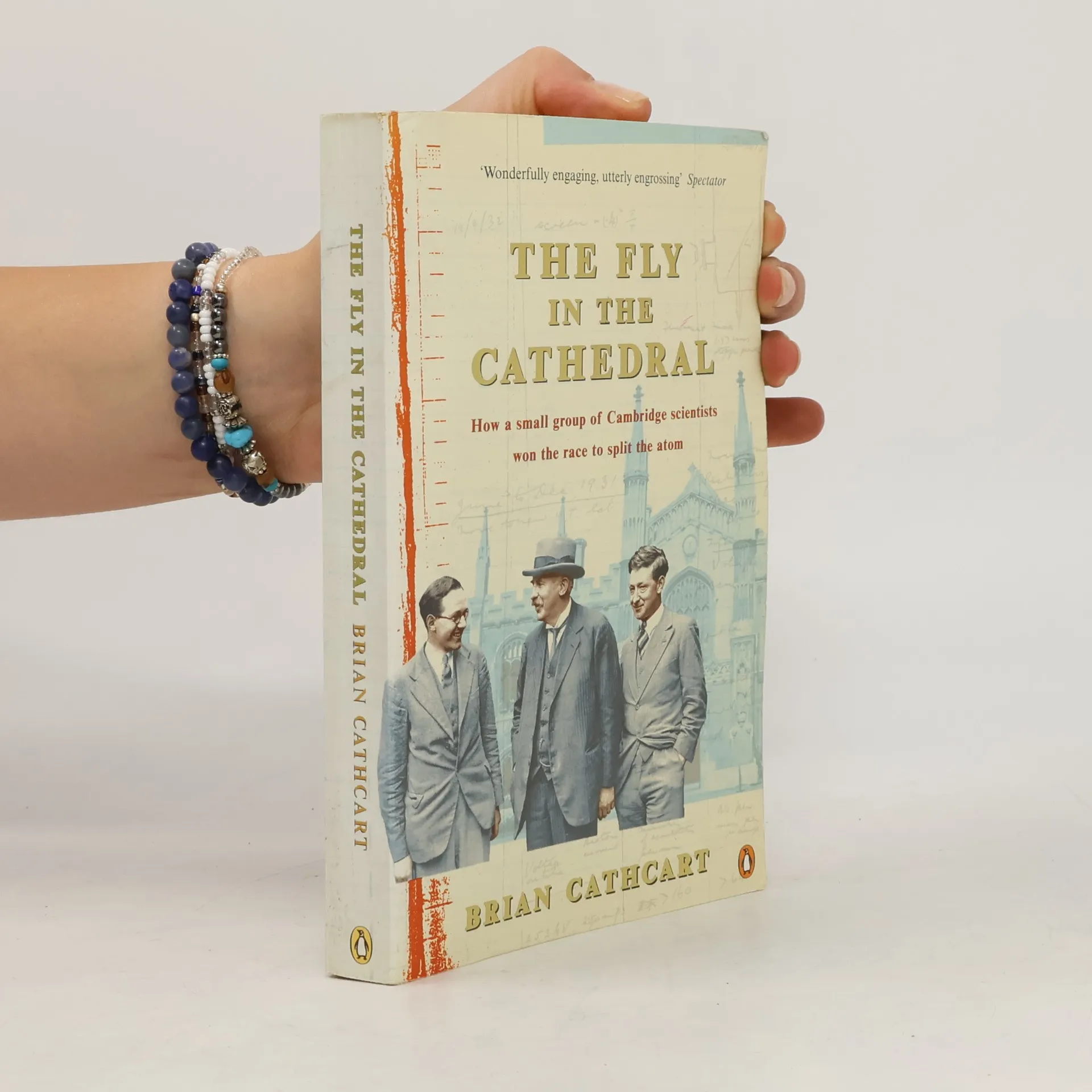
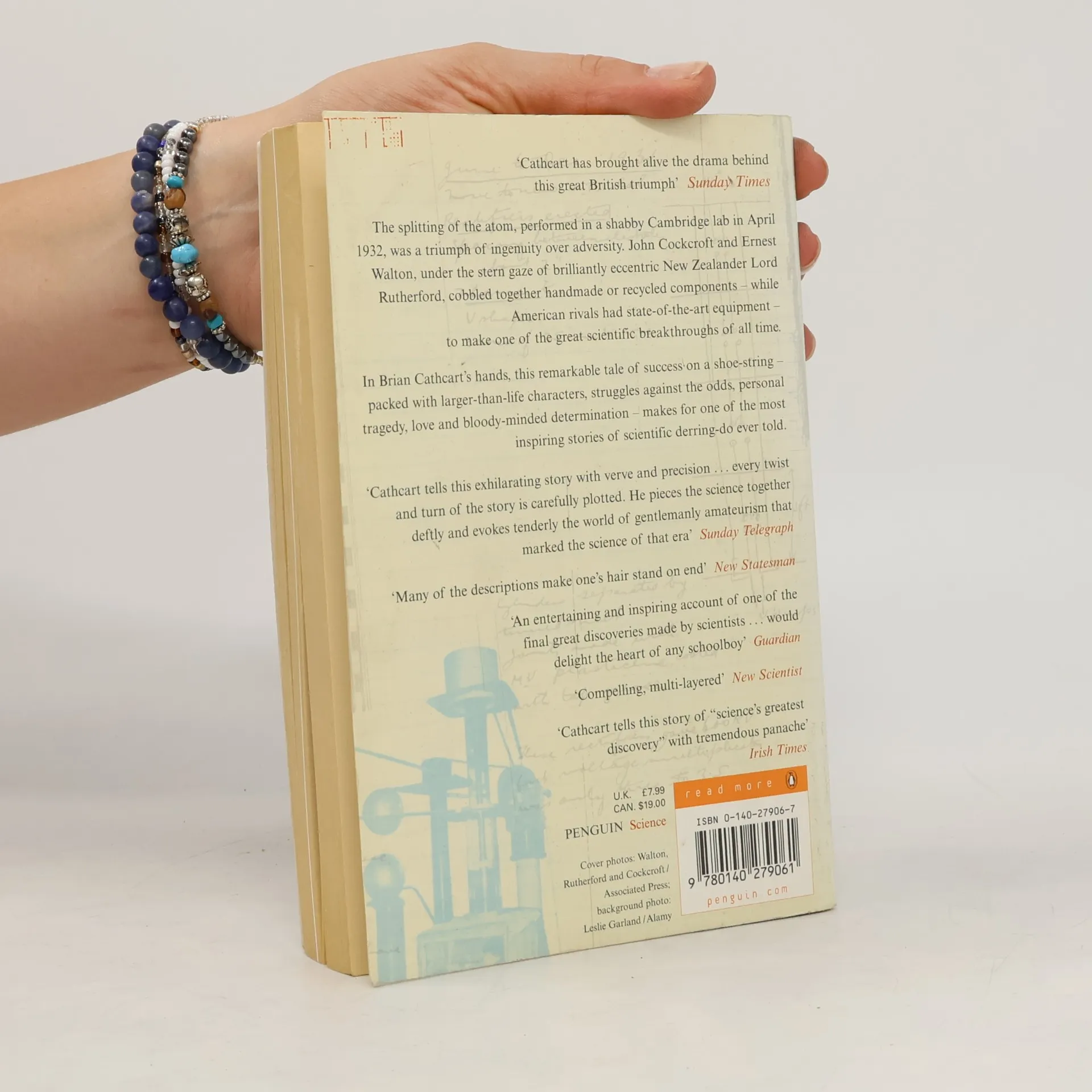
To understand how something works, one can dismantle it and study its components. However, when the subject is too small to see, even with powerful microscopes, the challenge becomes greater. Brian Cathcart's narrative explores how scientists managed to take apart atoms to uncover their structures. Set in 1932 at Cambridge's Cavendish Laboratory, the story centers on key figures like Ernest Rutherford, the "father of nuclear physics," along with his protégés, John Cockcroft and Ernest Walton. They realized that the prevailing atomic model was based on flawed mathematics and speculation. Driven by curiosity, they sought to discover what held oppositely charged protons and electrons together and what other particles existed within the nucleus. Through a series of remarkable experiments using homemade equipment, these scientists advanced atomic science significantly. Ultimately, Cockcroft and Walton, in fierce competition with their American and German counterparts, created a machine that changed history by splitting an atom. This account weaves together historical context, detailed narratives, moments of failure, and triumphant success. While the achievements at Cambridge in 1932 foreshadowed the threat of atomic warfare, Cathcart allows readers to celebrate the brilliance and ingenuity of these scientists.
Book purchase
Fly in the Cathedral, Brian Cathcart
- Language

- Released
- 2005
- Binding
- (Paperback),
- Book condition
- Good
- Price
- €6.49
Payment methods
No one has rated yet.
- Title
- Fly in the Cathedral
- Subtitle
- How a Small Group of Cambridge Scientists Won the Race to Split the Atom
- Language
- English
- Authors
- Brian Cathcart
- Publisher
- Penguin Books
- Released
- 2005
- Format
- Paperback
- Pages
- 320
- ISBN10
- 0140279067
- ISBN13
- 9780140279061
- Series
- Tags
- Natural sciences, Science
- Description
- To understand how something works, one can dismantle it and study its components. However, when the subject is too small to see, even with powerful microscopes, the challenge becomes greater. Brian Cathcart's narrative explores how scientists managed to take apart atoms to uncover their structures. Set in 1932 at Cambridge's Cavendish Laboratory, the story centers on key figures like Ernest Rutherford, the "father of nuclear physics," along with his protégés, John Cockcroft and Ernest Walton. They realized that the prevailing atomic model was based on flawed mathematics and speculation. Driven by curiosity, they sought to discover what held oppositely charged protons and electrons together and what other particles existed within the nucleus. Through a series of remarkable experiments using homemade equipment, these scientists advanced atomic science significantly. Ultimately, Cockcroft and Walton, in fierce competition with their American and German counterparts, created a machine that changed history by splitting an atom. This account weaves together historical context, detailed narratives, moments of failure, and triumphant success. While the achievements at Cambridge in 1932 foreshadowed the threat of atomic warfare, Cathcart allows readers to celebrate the brilliance and ingenuity of these scientists.