

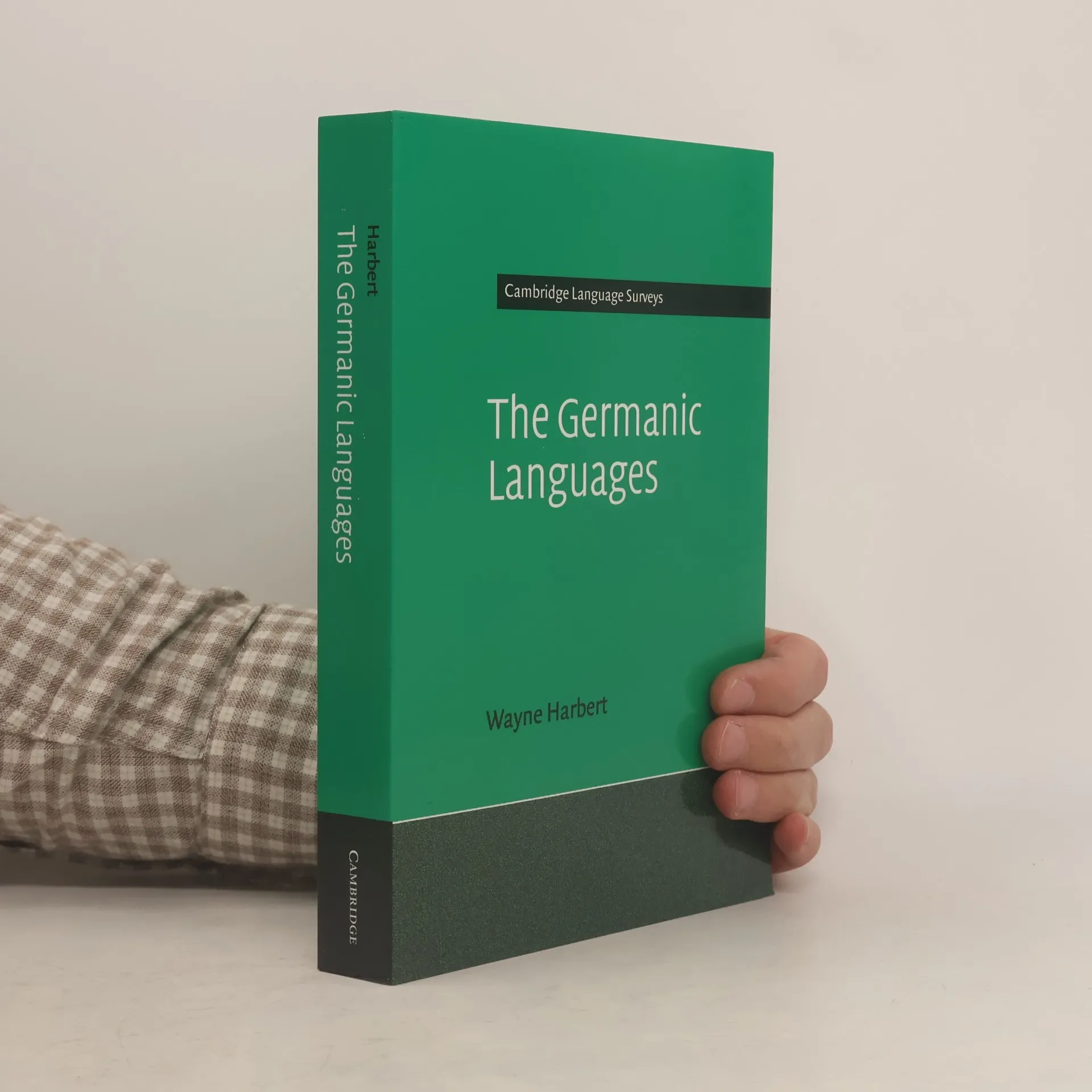
More about the book
Germanic - one of the largest sub-groups of the Indo-European language family - comprises 37 languages with an estimated 470 million speakers worldwide. This book presents a comparative linguistic survey of the full range of Germanic languages, both ancient and modern, including major world languages such as English and German (West Germanic), the Scandinavian (North Germanic) languages, and the extinct East Germanic languages. Unlike previous studies, it does not take a chronological or a language-by-language approach, organized instead around linguistic constructions and subsystems. Considering dialects alongside standard varieties, it provides a detailed account of topics such as case, word formation, sound systems, vowel length, syllable structure, the noun phrase, the verb phrase, the expression of tense and mood, and the syntax of the clause. Authoritative and comprehensive, this much-needed survey will be welcomed by scholars and students of the Germanic languages, as well as linguists across the many branches of the field.
Book purchase
Cambridge Language Surveys: The Germanic Languages, Wayne Harbert
- Language

- Released
- 2007
- Binding
- (Paperback)
Payment methods
No one has rated yet.
- Title
- Cambridge Language Surveys: The Germanic Languages
- Language
- English
- Authors
- Wayne Harbert
- Publisher
- Cambridge University Press
- Released
- 2007
- Format
- Paperback
- Pages
- 522
- ISBN10
- 0521015111
- ISBN13
- 9780521015110
- Series
- Categories
- Description
- Germanic - one of the largest sub-groups of the Indo-European language family - comprises 37 languages with an estimated 470 million speakers worldwide. This book presents a comparative linguistic survey of the full range of Germanic languages, both ancient and modern, including major world languages such as English and German (West Germanic), the Scandinavian (North Germanic) languages, and the extinct East Germanic languages. Unlike previous studies, it does not take a chronological or a language-by-language approach, organized instead around linguistic constructions and subsystems. Considering dialects alongside standard varieties, it provides a detailed account of topics such as case, word formation, sound systems, vowel length, syllable structure, the noun phrase, the verb phrase, the expression of tense and mood, and the syntax of the clause. Authoritative and comprehensive, this much-needed survey will be welcomed by scholars and students of the Germanic languages, as well as linguists across the many branches of the field.