




Parameters
- 398 pages
- 14 hours of reading
More about the book
Inter-generational transfers are at the center of economic policy debates today. Reducing public debt; financing social security; taxing capital and bequests; and designing the education system imply substantial inter-generational transfers. The tool that economists employ to analyze these issues is the overlapping generations model, which reflects the different periods of life. When the model includes capital accumulation, it also allows researchers to formalize the development of an economy, relating its growth path to the savings behavior of young agents. The aim of this book is an in-depth analysis of this model that includes its major policy implications.
Book purchase
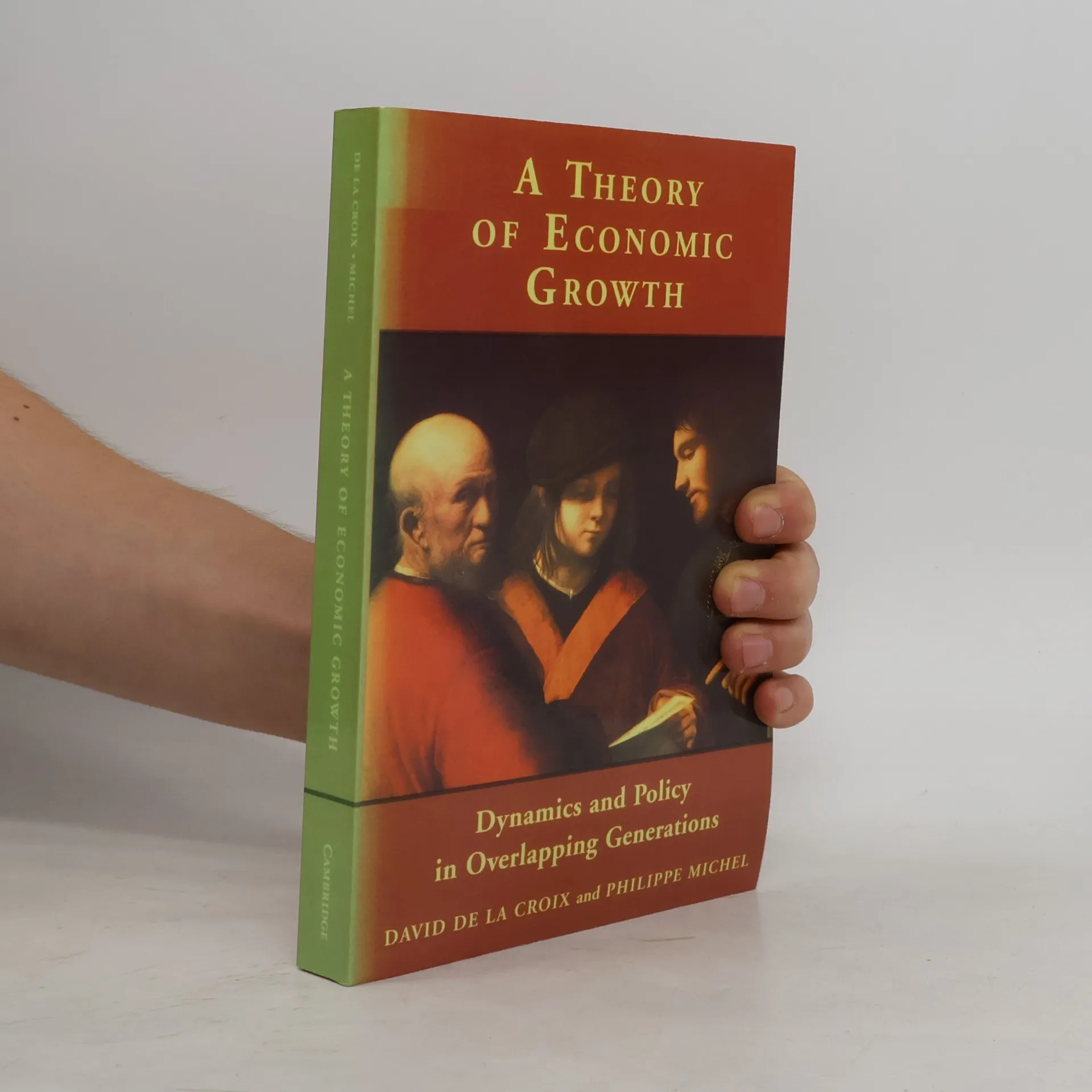
A Theory of Economic Growth, David de la Croix, Philippe Michel
- Language

- Released
- 1998
- Binding
- (Paperback),
- Book condition
- Very Good
- Price
- €10.89
Payment methods
No one has rated yet.
- Title
- A Theory of Economic Growth
- Subtitle
- Dynamics and Policy in Overlapping Generations
- Language
- English
- Authors
- David de la Croix, Philippe Michel
- Publisher
- Cambridge University Press
- Released
- 1998
- Format
- Paperback
- Pages
- 398
- ISBN10
- 0521001153
- ISBN13
- 9780521001151
- Series
- Categories
- Tags
- Business, Scientific Theories, Development, Economic History, Economic Policy, Political Economy, Macroeconomics
- Description
- Inter-generational transfers are at the center of economic policy debates today. Reducing public debt; financing social security; taxing capital and bequests; and designing the education system imply substantial inter-generational transfers. The tool that economists employ to analyze these issues is the overlapping generations model, which reflects the different periods of life. When the model includes capital accumulation, it also allows researchers to formalize the development of an economy, relating its growth path to the savings behavior of young agents. The aim of this book is an in-depth analysis of this model that includes its major policy implications.