



More about the book
Urbanism and landscape are often seen as opposing forces, with the latter viewed as a temporary escape from urban life dominated by buildings and infrastructure. However, in light of environmental concerns, landscape has emerged as a vital model and medium for urbanism, with some theorists suggesting that landscape architects are the contemporary urbanists. One of the field's pioneers presents a compelling argument for reimagining cities through the lens of landscape. Tracing its roots from the Renaissance to the twentieth century, the concept evolved from progressive architectural culture and populist environmentalism, influenced by the nineteenth-century emergence of landscape architecture as a means to reconcile industrial city design with ecological and social realities. As urban planning transitioned from design to social science and neotraditional town planning models became prevalent, landscape urbanism arose to address a critical gap in modern urban projects. Richly illustrated, this work explores global contributions from designers like Ludwig Hilberseimer, Andrea Branzi, and Frank Lloyd Wright, as well as contemporary figures such as James Corner and Michael Van Valkenburgh. This comprehensive account highlights an emerging field poised to shape urban design for years to come.
Book purchase
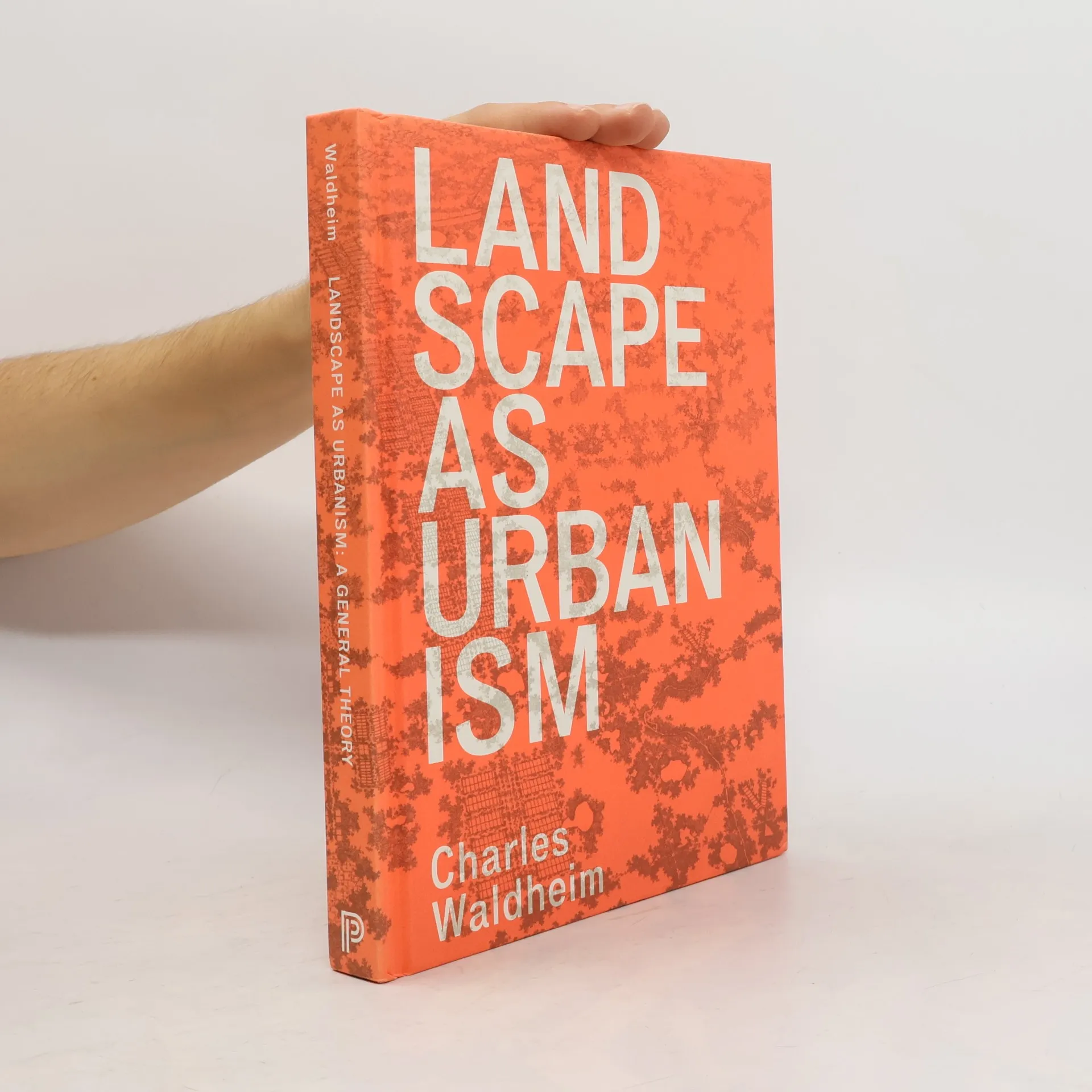
Landscape as Urbanism, Charles Waldheim
- Language

- Released
- 2016
- Binding
- (Hardcover)
Payment methods
No one has rated yet.
- Title
- Landscape as Urbanism
- Subtitle
- A General Theory
- Language
- English
- Authors
- Charles Waldheim
- Publisher
- Princeton University Press
- Released
- 2016
- Format
- Hardcover
- Pages
- 216
- ISBN10
- 0691167907
- ISBN13
- 9780691167909
- Series
- Categories
- Tags
- Art, Architecture, USA, Cities, Criticism, Urbanism, Urbanization, Landscape, Landscape Architecture, Building Design, Theory of Architecture
- Description
- Urbanism and landscape are often seen as opposing forces, with the latter viewed as a temporary escape from urban life dominated by buildings and infrastructure. However, in light of environmental concerns, landscape has emerged as a vital model and medium for urbanism, with some theorists suggesting that landscape architects are the contemporary urbanists. One of the field's pioneers presents a compelling argument for reimagining cities through the lens of landscape. Tracing its roots from the Renaissance to the twentieth century, the concept evolved from progressive architectural culture and populist environmentalism, influenced by the nineteenth-century emergence of landscape architecture as a means to reconcile industrial city design with ecological and social realities. As urban planning transitioned from design to social science and neotraditional town planning models became prevalent, landscape urbanism arose to address a critical gap in modern urban projects. Richly illustrated, this work explores global contributions from designers like Ludwig Hilberseimer, Andrea Branzi, and Frank Lloyd Wright, as well as contemporary figures such as James Corner and Michael Van Valkenburgh. This comprehensive account highlights an emerging field poised to shape urban design for years to come.