

More about the book
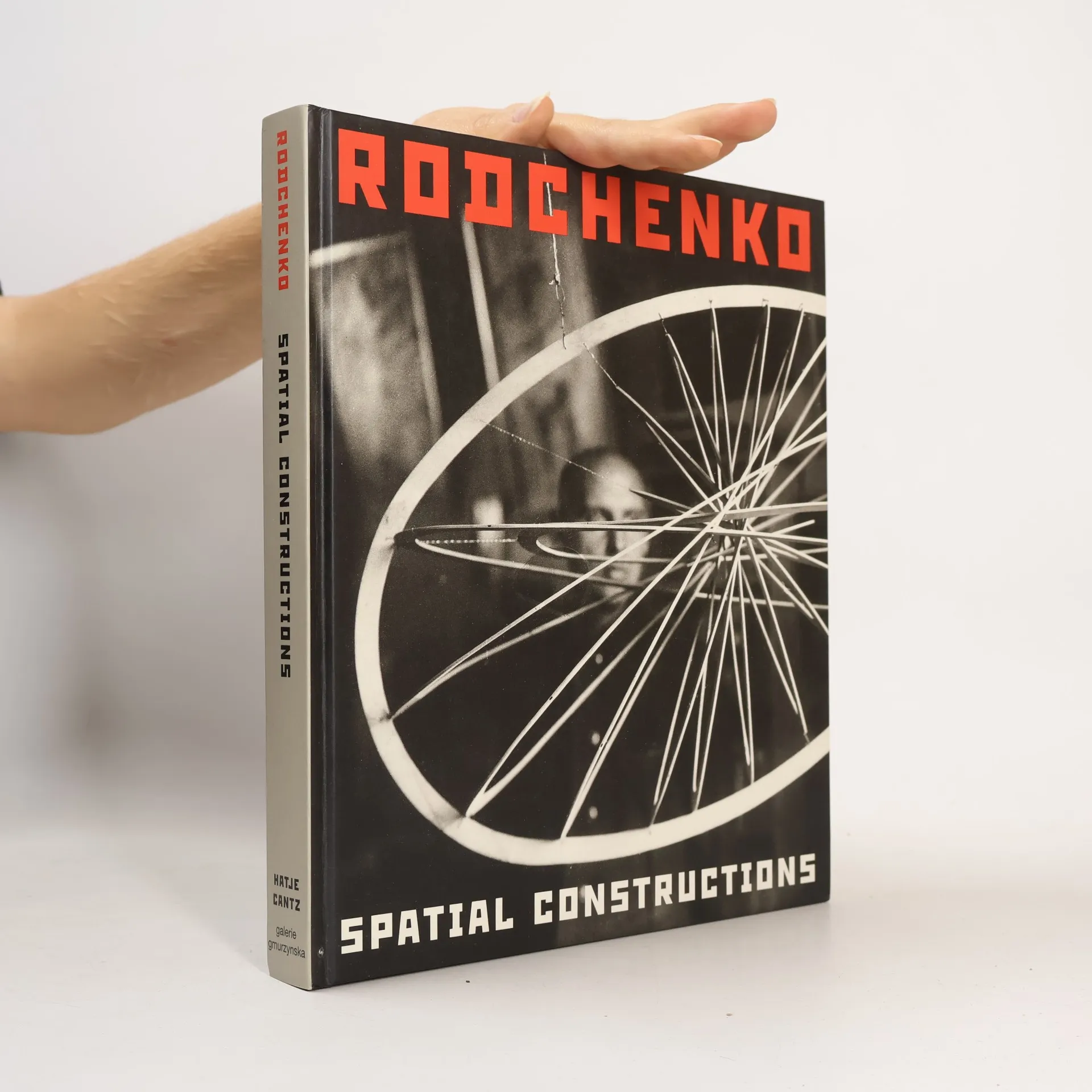
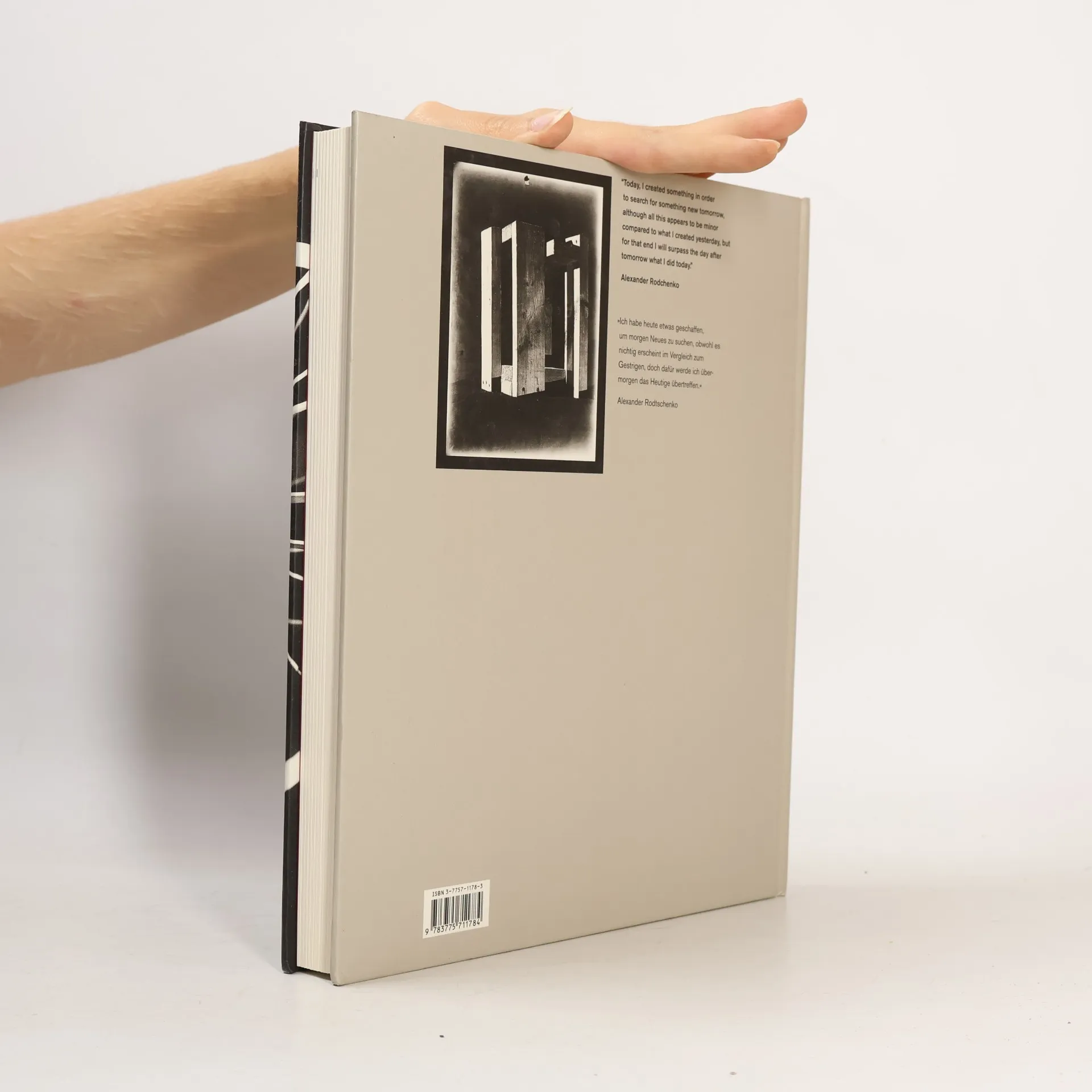
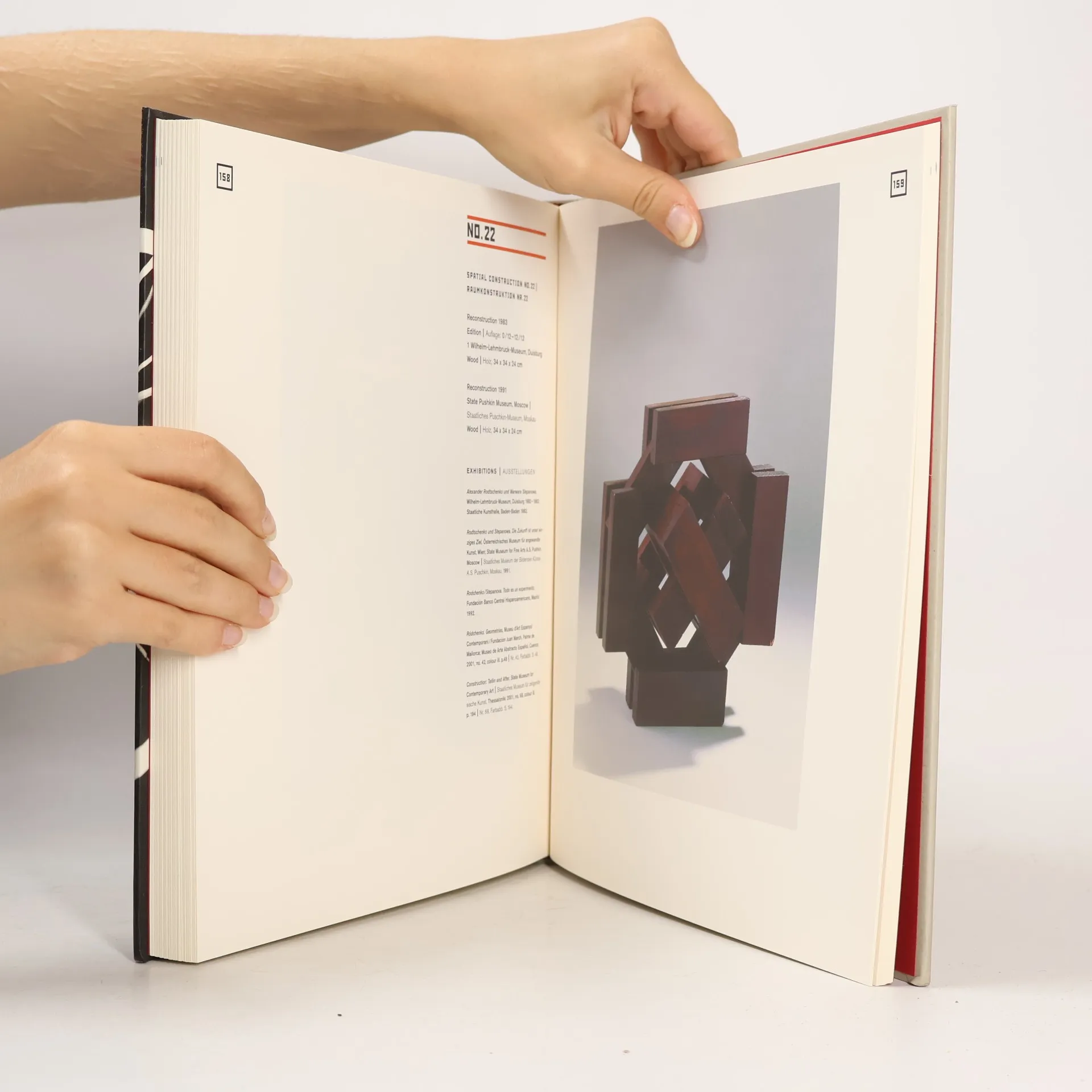
As spokesman of the Inkhuk group, which included Vladimir Tatlin as a leading member, Alexander Rodchenko was a decisive factor in the development of abstract art with his paintings, sculptures and architectural designs. This monograph focuses on Rodchenko's sculptures and presents a large number of works created by the Russian Constructivist. These can be loosely divided into three groups, beginning with the abstract sculptures dating from the year 1918, in which the artist renders the geometric surfaces of his pictures "spatially," assembling two-dimensional material, cardboard or plywood. Subsequently, works that are intended to be freely suspended within a given space form a second series of constructions: These light, perforated interlacings, consisting of similar geometrical contours, were flexible, kinetic sculptures, also viewed as the first mobiles. A third group represents Rodchenko's constructions of standard type squared timber produced in around 1920, which were never shown during his lifetime. These sculptures, constructed of raw wooden modules and reminiscent of Art Brut, demonstrate the universal validity of the principles governing the organization of forms, upon which the constructivists based the composition of their paintings
Book purchase
Alexander Rodchenko, Aleksandr Mikhaĭlovich Rodchenko, Alexander Lawrentjew, Selim Khan-Magomedow, Varvara Stepanova, Michael Eldred
- Language

- Released
- 2002
- Binding
- (Hardcover),
- Book condition
- Very Good
- Price
- €25.89
Payment methods
No one has rated yet.
- Title
- Alexander Rodchenko
- Subtitle
- Spatial Constructions, Raumkonstruktionen
- Language
- English
- Authors
- Aleksandr Mikhaĭlovich Rodchenko, Alexander Lawrentjew, Selim Khan-Magomedow, Varvara Stepanova, Michael Eldred
- Publisher
- Hatje Cantz
- Released
- 2002
- Format
- Hardcover
- Pages
- 208
- ISBN10
- 3775711783
- ISBN13
- 9783775711784
- Series
- Tags
- Historical Themes, Art, Illustrations, Exhibition Catalogues, 20th century, Russia, History of Art, Museums, Western Europe
- Description
- As spokesman of the Inkhuk group, which included Vladimir Tatlin as a leading member, Alexander Rodchenko was a decisive factor in the development of abstract art with his paintings, sculptures and architectural designs. This monograph focuses on Rodchenko's sculptures and presents a large number of works created by the Russian Constructivist. These can be loosely divided into three groups, beginning with the abstract sculptures dating from the year 1918, in which the artist renders the geometric surfaces of his pictures "spatially," assembling two-dimensional material, cardboard or plywood. Subsequently, works that are intended to be freely suspended within a given space form a second series of constructions: These light, perforated interlacings, consisting of similar geometrical contours, were flexible, kinetic sculptures, also viewed as the first mobiles. A third group represents Rodchenko's constructions of standard type squared timber produced in around 1920, which were never shown during his lifetime. These sculptures, constructed of raw wooden modules and reminiscent of Art Brut, demonstrate the universal validity of the principles governing the organization of forms, upon which the constructivists based the composition of their paintings