


More about the book
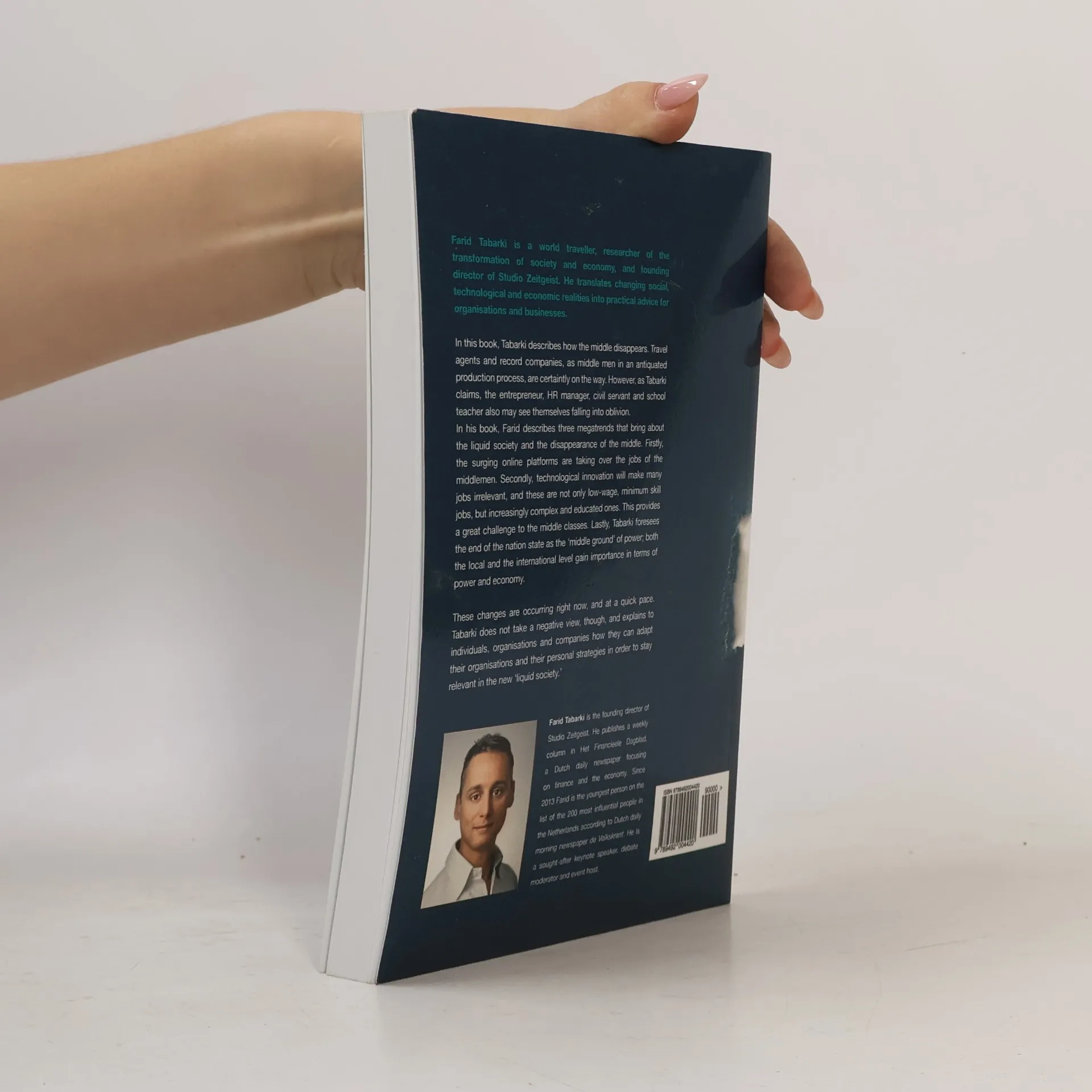
In this book, Farid Tabarki describes how the middle disappears. Travel agents and record companies, as middle men in an antiquated production process, are certainly on the way. However, as Tabarki claims, the entrepreneur, HR manager, civil servant and school teacher also may see themselves falling into oblivion. In his book, Farid describes three megatrends that bring about the liquid society and the disappearance of the middle. Firstly, surging online platforms are taking over the jobs of the middlemen. Secondly, technological innovation will make many jobs irrelevant, and these are not only low-wage, minimum skill jobs, but increasingly complex and educated ones. This provides a great challenge to the middle classes. Lastly, Tabarki foresees the end of the nation state as the ‘middle ground’ of power; both the local and the international level gain importance in terms of power and economy. These changes are occurring right now, and at a quick pace. Tabarki does not take a negative view, though, and explains to individuals, organisations and companies how they can adapt their organisations and their personal strategies in order to stay relevant in the new ‘liquid society.’
Book purchase
The End of the Middle, Farid Tabarki
- Language

- Released
- 2017
- Binding
- (Paperback),
- Book condition
- Good
- Price
- €18.49
Payment methods
No one has rated yet.
- Title
- The End of the Middle
- Subtitle
- What a Society of Extremes Means for People, Politics and Business
- Language
- English
- Authors
- Farid Tabarki
- Publisher
- Warden Press
- Released
- 2017
- Format
- Paperback
- Pages
- 224
- ISBN10
- 9492004429
- ISBN13
- 9789492004420
- Series
- Categories
- Tags
- Description
- In this book, Farid Tabarki describes how the middle disappears. Travel agents and record companies, as middle men in an antiquated production process, are certainly on the way. However, as Tabarki claims, the entrepreneur, HR manager, civil servant and school teacher also may see themselves falling into oblivion. In his book, Farid describes three megatrends that bring about the liquid society and the disappearance of the middle. Firstly, surging online platforms are taking over the jobs of the middlemen. Secondly, technological innovation will make many jobs irrelevant, and these are not only low-wage, minimum skill jobs, but increasingly complex and educated ones. This provides a great challenge to the middle classes. Lastly, Tabarki foresees the end of the nation state as the ‘middle ground’ of power; both the local and the international level gain importance in terms of power and economy. These changes are occurring right now, and at a quick pace. Tabarki does not take a negative view, though, and explains to individuals, organisations and companies how they can adapt their organisations and their personal strategies in order to stay relevant in the new ‘liquid society.’