

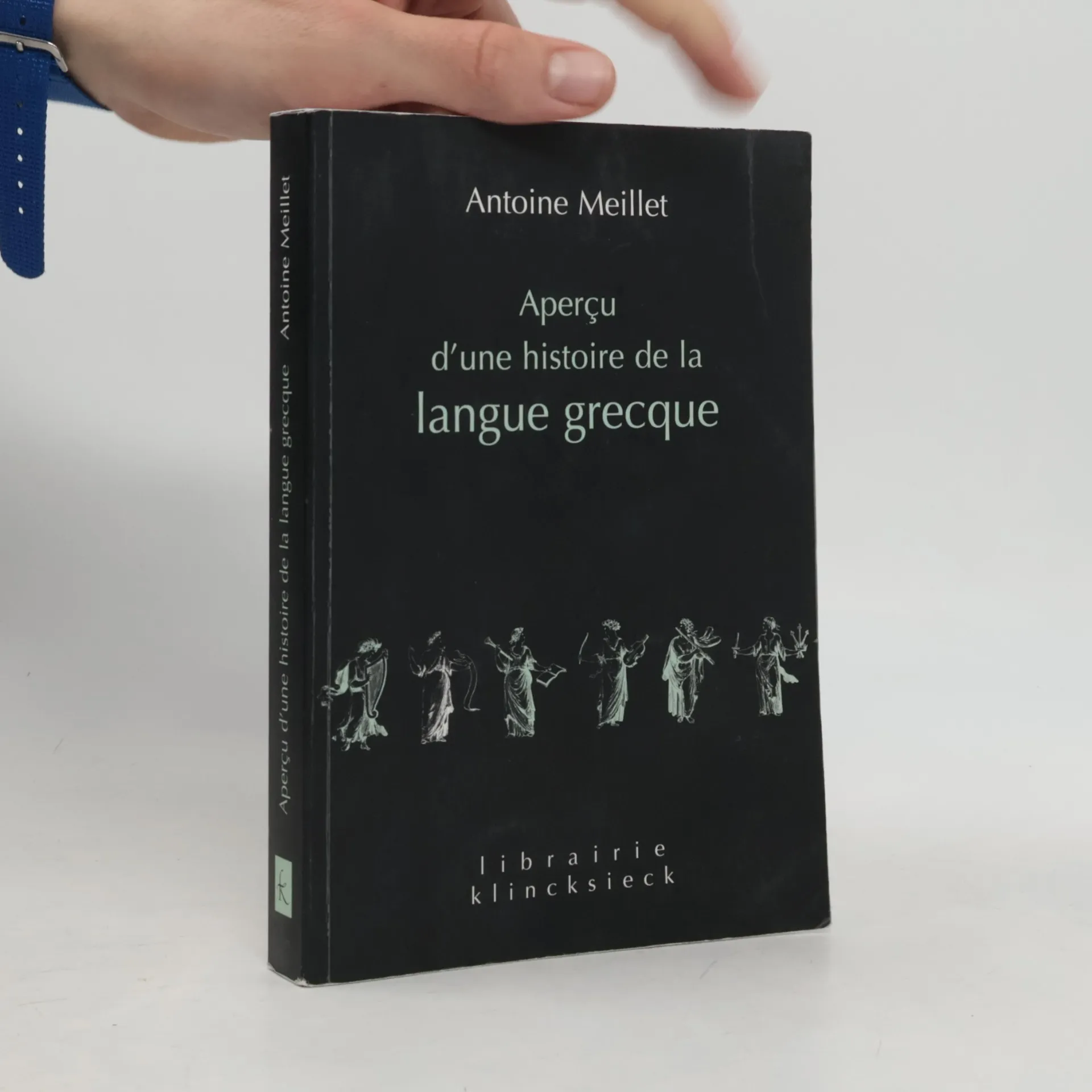


More about the book
The echoes of Greek are heard in many modern languages. For example, the abstract vocabulary of the modern European languages derives largely from the vocabulary of the Greek philosophers and scholars, whether directly or via Latin writers who were educated according to the Greek tradition. First published in 1913, Antoine Meillet's history of Greek shows how the language, derived originally from Indo-European, developed over time in response to sociological and geographical factors. Meillet argues that its complexity is due to the constant borrowing of vocabulary and grammar from contemporary languages and regional dialects. Despite - or because of - its flexible and ever-changing nature, and the lack of consistency in usage between individual city states, Greek eventually became the language of great works of literature, philosophy and science.
Book purchase
Aperçu d'une histoire de la langue grecque, Antoine Meillet
- Language

- Released
- 2004
- Binding
- (Paperback),
- Book condition
- Good
- Price
- €33.99
Payment methods
No one has rated yet.
- Title
- Aperçu d'une histoire de la langue grecque
- Language
- French
- Authors
- Antoine Meillet
- Publisher
- Klincksieck
- Released
- 2004
- Format
- Paperback
- Pages
- 344
- ISBN10
- 2252034874
- ISBN13
- 9782252034873
- Series
- Description
- The echoes of Greek are heard in many modern languages. For example, the abstract vocabulary of the modern European languages derives largely from the vocabulary of the Greek philosophers and scholars, whether directly or via Latin writers who were educated according to the Greek tradition. First published in 1913, Antoine Meillet's history of Greek shows how the language, derived originally from Indo-European, developed over time in response to sociological and geographical factors. Meillet argues that its complexity is due to the constant borrowing of vocabulary and grammar from contemporary languages and regional dialects. Despite - or because of - its flexible and ever-changing nature, and the lack of consistency in usage between individual city states, Greek eventually became the language of great works of literature, philosophy and science.