

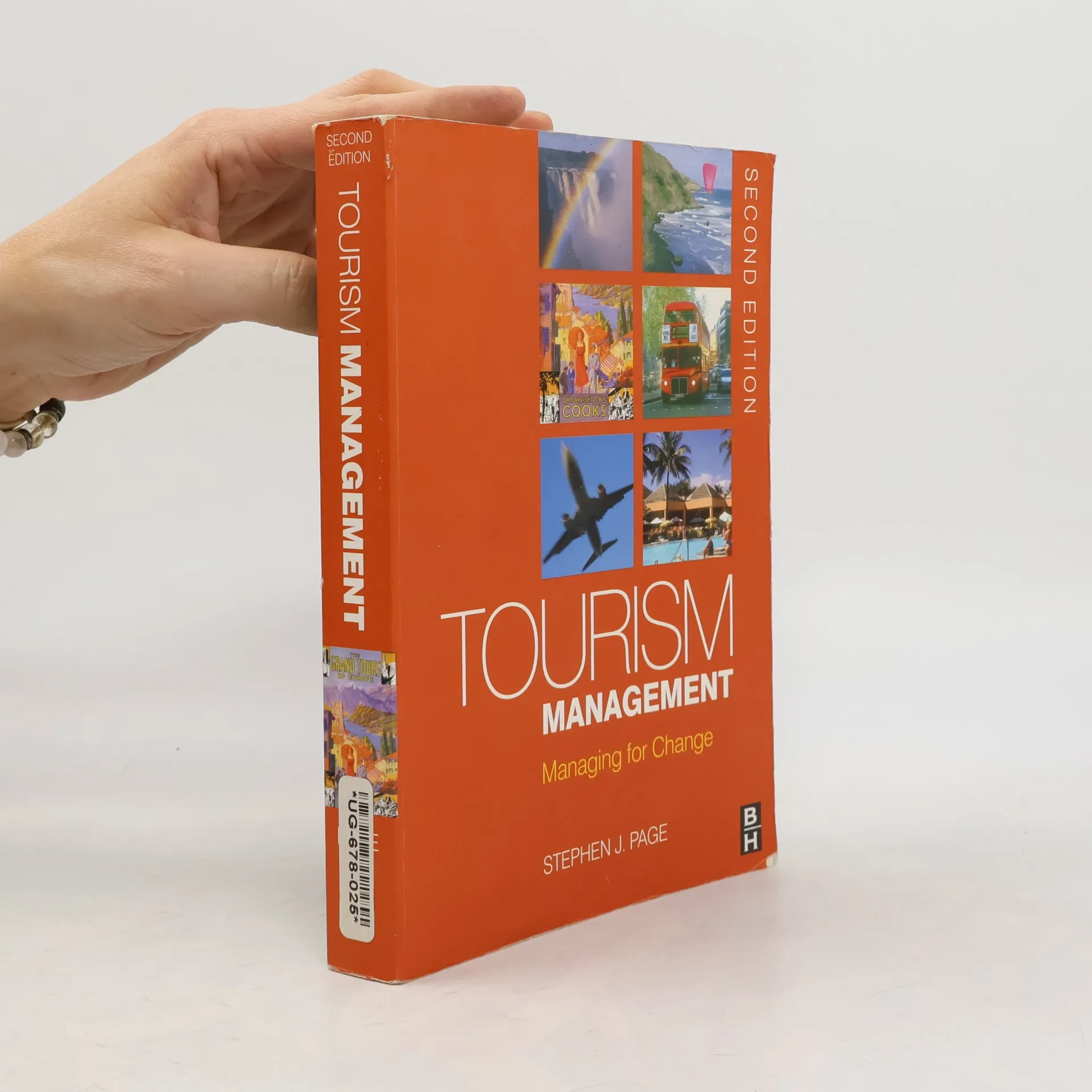


Tourism Management
Managing for Change
Authors
More about the book
This comprehensive synthesis of tourism explores its evolution and significant impacts on the global community, environment, and economy. Provocative and engaging, it challenges conventional thinking, fostering reflection and debate. Now in its second edition, the book has been fully revised with updated statistics and new case studies. It covers essential topics, including the development of tourism, supply and demand, and key sectors such as transport and accommodation. The future of tourism is also addressed, focusing on forecasting and emerging global issues. Written in an accessible, jargon-free style, each chapter is structured to align with degree-level course lectures, making it an ideal resource for students. Additionally, a companion website offers extra resources for both students and lecturers, with accredited educators able to request access to additional materials. This text serves as a vital introduction to the dynamic field of tourism, making it a must-read for those interested in this ever-evolving area of study.
Book purchase
Tourism Management, Stephen Page
- Language

- Released
- 2006
- Binding
- (Paperback)
Payment methods
No one has rated yet.
- Title
- Tourism Management
- Subtitle
- Managing for Change
- Language
- English
- Authors
- Stephen Page
- Publisher
- Butterworth-Heinemann
- Released
- 2006
- Format
- Paperback
- Pages
- 473
- ISBN10
- 0750682051
- ISBN13
- 9780750682053
- Series
- Tags
- Business, Travel, Tourism Industry
- Description
- This comprehensive synthesis of tourism explores its evolution and significant impacts on the global community, environment, and economy. Provocative and engaging, it challenges conventional thinking, fostering reflection and debate. Now in its second edition, the book has been fully revised with updated statistics and new case studies. It covers essential topics, including the development of tourism, supply and demand, and key sectors such as transport and accommodation. The future of tourism is also addressed, focusing on forecasting and emerging global issues. Written in an accessible, jargon-free style, each chapter is structured to align with degree-level course lectures, making it an ideal resource for students. Additionally, a companion website offers extra resources for both students and lecturers, with accredited educators able to request access to additional materials. This text serves as a vital introduction to the dynamic field of tourism, making it a must-read for those interested in this ever-evolving area of study.