




More about the book
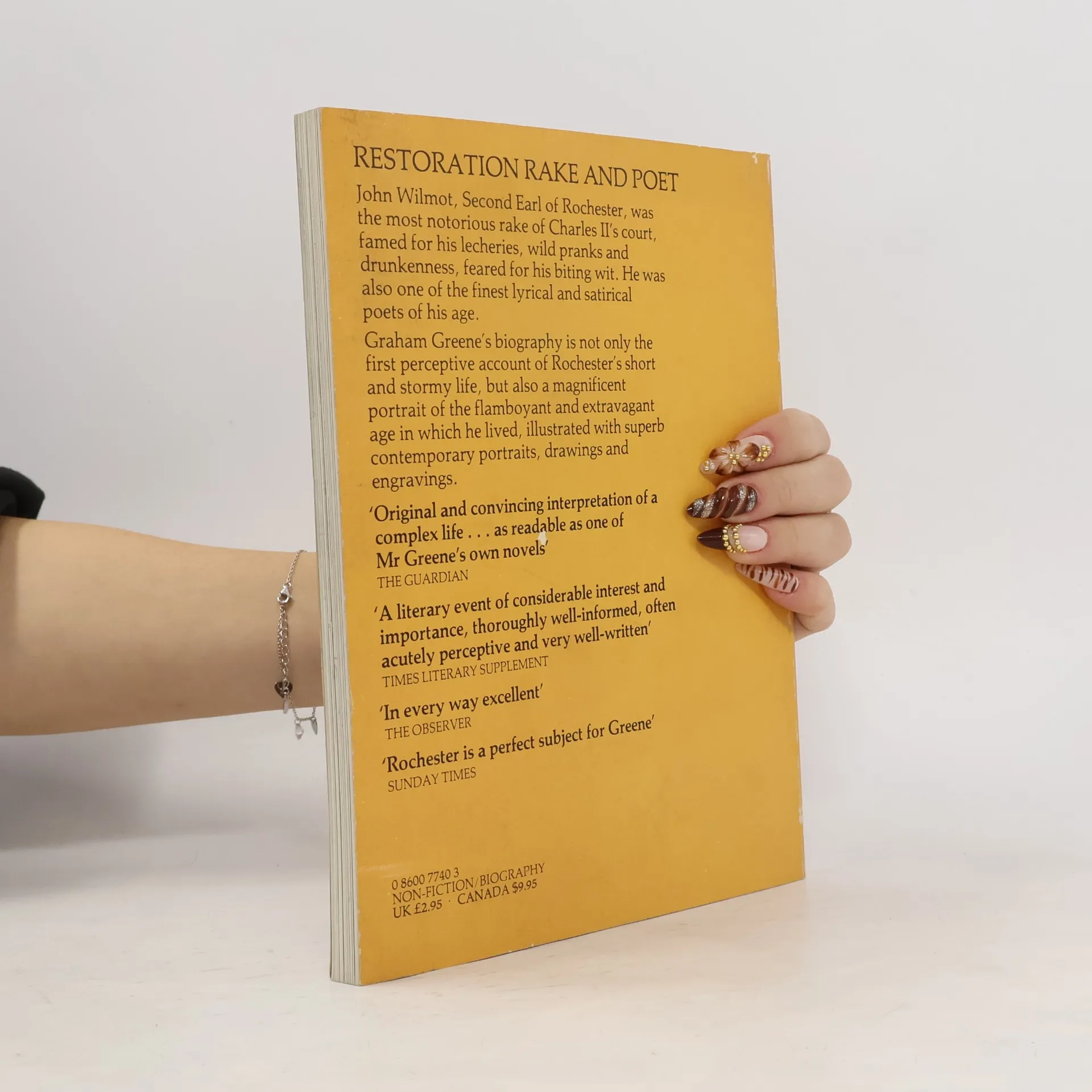
s/t: Being the Life of John Wilmot, Second Earl of Rochester "Lord Rochester's Monkey" was written between 1931 and 1934 and, because of the reputation of its subject, the notorious Restoration libertine and poet, the book failed to find a publisher. Rochester was the most prominent of rakes. He was also a fine lyrical and satirical poet whose work, in Greene's opinion, has been greatly underestimated, being overshadowed by his life of lechery and drunkenness, wild pranks and practical jokes. At court, Charles II suffered but respected Rochester's coruscating satires, joined in his erotic escapades and rewarded him with distinctions. Yet the last thirteen years of his life were "clouded by the fumes of drink" and literary quarrels. On his deathbed in 1680 - he was only 33 - he called for Dr Burnet and repented. His friend Etheridge wrote of him: "I know he is a devil, but had something of the angel yet undefac'd in him".
Book purchase
Lord Rochester's Monkey, Graham Greene
- Language

- Released
- 1974
- Binding
- (Paperback),
- Book condition
- Good
- Price
- €15.49
Payment methods
No one has rated yet.
- Title
- Lord Rochester's Monkey
- Subtitle
- Being the Life of John Wilmot, Second Earl of Rochester
- Language
- English
- Authors
- Graham Greene
- Publisher
- Futura Publications
- Released
- 1974
- Format
- Paperback
- Pages
- 231
- ISBN10
- 0860077403
- ISBN13
- 9780860077404
- Series
- Description
- s/t: Being the Life of John Wilmot, Second Earl of Rochester "Lord Rochester's Monkey" was written between 1931 and 1934 and, because of the reputation of its subject, the notorious Restoration libertine and poet, the book failed to find a publisher. Rochester was the most prominent of rakes. He was also a fine lyrical and satirical poet whose work, in Greene's opinion, has been greatly underestimated, being overshadowed by his life of lechery and drunkenness, wild pranks and practical jokes. At court, Charles II suffered but respected Rochester's coruscating satires, joined in his erotic escapades and rewarded him with distinctions. Yet the last thirteen years of his life were "clouded by the fumes of drink" and literary quarrels. On his deathbed in 1680 - he was only 33 - he called for Dr Burnet and repented. His friend Etheridge wrote of him: "I know he is a devil, but had something of the angel yet undefac'd in him".