


Parameters
- 352 pages
- 13 hours of reading
More about the book
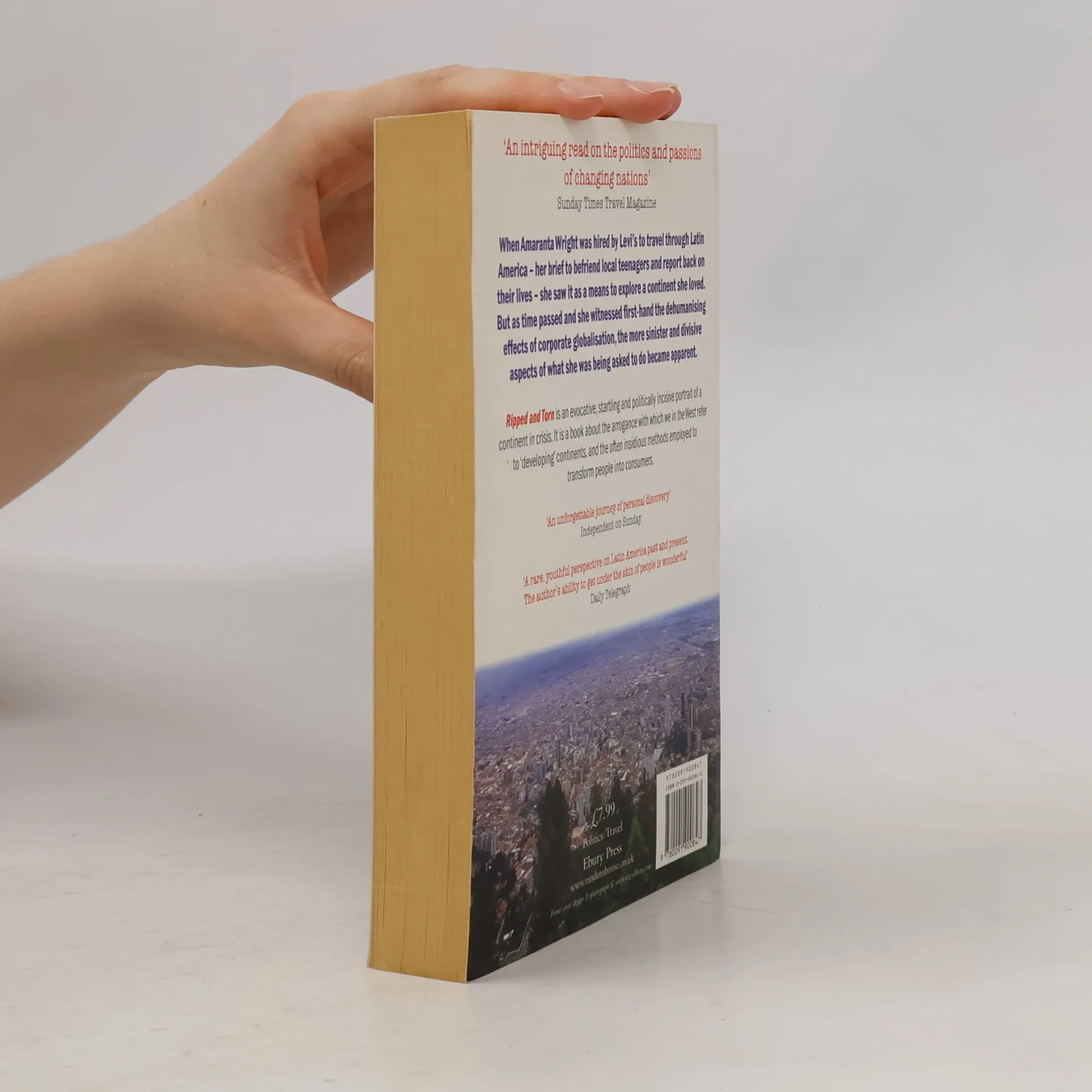
Amaranta Wright was a young writer living in Miami when Levi's hired her to travel through Latin America. Her brief was to befriend teenagers and report back with every aspect of their lives: their hopes, fears, dreams and aspirations. At first, she saw the job as a means to travel around a continent she loved. But as time passed, the more sinister and divisive aspects of what she was being asked to do became apparent, her attempts to understand the dispossessed of these countries constantly frustrated by the mechanics of corporate globalisation - its unspoken aim to reduce individuals to bullet points. This is a compellingly humane portrait of a continent in crisis - riddled with paradox, complexity, beauty and brutality. It is a book about the arrogance with which we in the West refer to 'developing' continents, the developed world's overarching desire to turn people into consumers, and the often insidious methods employed to this end. It is about what happens when indigenous voices are silenced by corporate vision. An evocative, startling and politically-incisive book.
Book purchase
Ripped and Torn, Amaranta Wright, John Pilger
- Language

- Released
- 2006
- Binding
- (Paperback),
- Book condition
- Good
- Price
- €7.39
Payment methods
No one has rated yet.
- Title
- Ripped and Torn
- Subtitle
- Levi's, Latin America & the Blue Jean Dream
- Language
- English
- Authors
- Amaranta Wright, John Pilger
- Publisher
- Ebury Press
- Released
- 2006
- Format
- Paperback
- Pages
- 352
- ISBN10
- 0091900840
- ISBN13
- 9780091900847
- Series
- Categories
- Tags
- Professional Literature, Local History, Globalization, Latin America, International Economic Relations
- Description
- Amaranta Wright was a young writer living in Miami when Levi's hired her to travel through Latin America. Her brief was to befriend teenagers and report back with every aspect of their lives: their hopes, fears, dreams and aspirations. At first, she saw the job as a means to travel around a continent she loved. But as time passed, the more sinister and divisive aspects of what she was being asked to do became apparent, her attempts to understand the dispossessed of these countries constantly frustrated by the mechanics of corporate globalisation - its unspoken aim to reduce individuals to bullet points. This is a compellingly humane portrait of a continent in crisis - riddled with paradox, complexity, beauty and brutality. It is a book about the arrogance with which we in the West refer to 'developing' continents, the developed world's overarching desire to turn people into consumers, and the often insidious methods employed to this end. It is about what happens when indigenous voices are silenced by corporate vision. An evocative, startling and politically-incisive book.