



More about the book
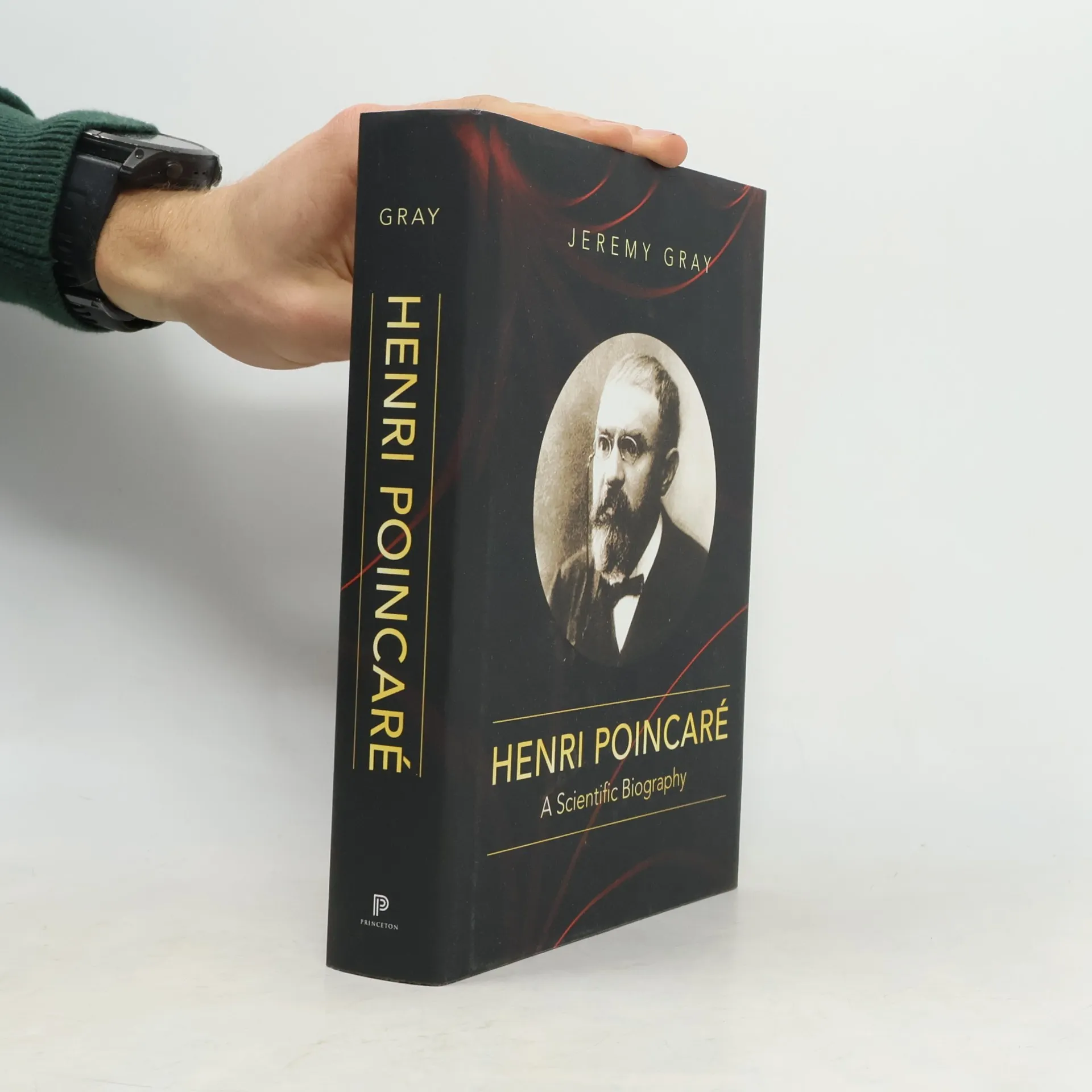
This comprehensive examination delves into the mathematics, physics, and philosophy of Henri Poincaré (1854-1912), a remarkably inventive and versatile mathematician, leading physicist, and influential philosopher of science. Poincaré's groundbreaking contributions sparked significant debates and continue to impact society today. Math historian Jeremy Gray highlights Poincaré's wide-ranging influence, particularly his novel interpretation of non-Euclidean geometry, which challenged existing notions of space and spurred extensive research. His pioneering work in topology laid the foundation for modern studies, notably culminating in the resolution of the famous Poincaré conjecture. Additionally, his reformulation of celestial mechanics and discovery of chaotic motion were pivotal in developing the modern theory of dynamical systems. In physics, Poincaré's insights into the Lorentz group predated Einstein's theories, and he was among the first to suggest that space and time might be fundamentally atomic. A public intellectual, Poincaré engaged in scientific controversies, defending mathematics against logicians like Bertrand Russell, opposing Catholic apologists, and serving as an expert witness in the Dreyfus case that divided France. Richly informed by letters and documents, this exploration reveals how Poincaré's work revolutionized mathematics, science, and the broader world.
Book purchase
Henri Poincaré, Jeremy Gray
- Language

- Released
- 2013
- Binding
- (Hardcover)
Payment methods
No one has rated yet.
- Title
- Henri Poincaré
- Subtitle
- A Scientific Biography
- Language
- English
- Authors
- Jeremy Gray
- Publisher
- Princeton University Press
- Released
- 2013
- Format
- Hardcover
- Pages
- 608
- ISBN10
- 0691152713
- ISBN13
- 9780691152714
- Series
- Categories
- Description
- This comprehensive examination delves into the mathematics, physics, and philosophy of Henri Poincaré (1854-1912), a remarkably inventive and versatile mathematician, leading physicist, and influential philosopher of science. Poincaré's groundbreaking contributions sparked significant debates and continue to impact society today. Math historian Jeremy Gray highlights Poincaré's wide-ranging influence, particularly his novel interpretation of non-Euclidean geometry, which challenged existing notions of space and spurred extensive research. His pioneering work in topology laid the foundation for modern studies, notably culminating in the resolution of the famous Poincaré conjecture. Additionally, his reformulation of celestial mechanics and discovery of chaotic motion were pivotal in developing the modern theory of dynamical systems. In physics, Poincaré's insights into the Lorentz group predated Einstein's theories, and he was among the first to suggest that space and time might be fundamentally atomic. A public intellectual, Poincaré engaged in scientific controversies, defending mathematics against logicians like Bertrand Russell, opposing Catholic apologists, and serving as an expert witness in the Dreyfus case that divided France. Richly informed by letters and documents, this exploration reveals how Poincaré's work revolutionized mathematics, science, and the broader world.