

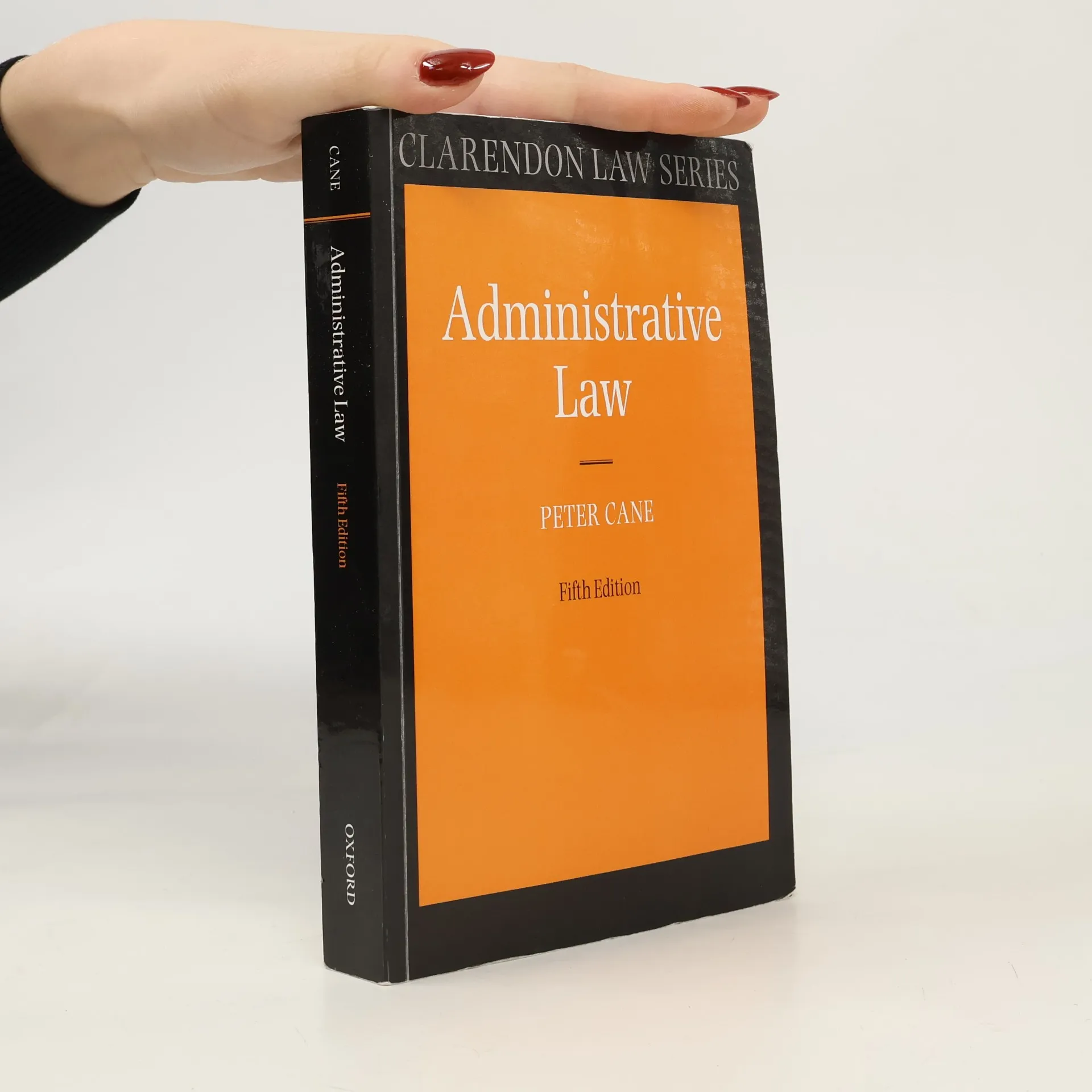



Clarendon Law Series: Administrative Law - Fifth Edition
Authors
More about the book
This work offers a sophisticated yet accessible overview of administrative law, a field of growing significance. The text is organized to present administrative law as a framework for public administration, beginning with an exploration of its nature, sources, and the concept of administrative justice. It then outlines the institutional framework of public administration. The second section addresses the normative aspects, discussing administrative tasks and functions, and delving into norms governing administrative procedures, decision-making processes, and the substance of decisions. It also covers the private law context, including tort, contract, and restitution. The third section focuses on accountability mechanisms that enforce the public administration framework, such as judicial review, appeals, bureaucratic and parliamentary oversight, and ombudsman investigations, concluding with a discussion on how these mechanisms integrate into the administrative justice system. The final section examines the functions of administrative law and its effects on administration, providing a comprehensive understanding of its role and relevance in contemporary governance.
Book purchase
Clarendon Law Series: Administrative Law - Fifth Edition, Peter Cane
- Language

- Released
- 2011
- Binding
- (Paperback),
- Book condition
- Damaged
- Price
- €13.06
Payment methods
No one has rated yet.
- Title
- Clarendon Law Series: Administrative Law - Fifth Edition
- Language
- English
- Authors
- Peter Cane
- Publisher
- Oxford University Press
- Released
- 2011
- Format
- Paperback
- Pages
- 496
- ISBN10
- 0199692335
- ISBN13
- 9780199692330
- Series
- Categories
- Description
- This work offers a sophisticated yet accessible overview of administrative law, a field of growing significance. The text is organized to present administrative law as a framework for public administration, beginning with an exploration of its nature, sources, and the concept of administrative justice. It then outlines the institutional framework of public administration. The second section addresses the normative aspects, discussing administrative tasks and functions, and delving into norms governing administrative procedures, decision-making processes, and the substance of decisions. It also covers the private law context, including tort, contract, and restitution. The third section focuses on accountability mechanisms that enforce the public administration framework, such as judicial review, appeals, bureaucratic and parliamentary oversight, and ombudsman investigations, concluding with a discussion on how these mechanisms integrate into the administrative justice system. The final section examines the functions of administrative law and its effects on administration, providing a comprehensive understanding of its role and relevance in contemporary governance.