

More about the book
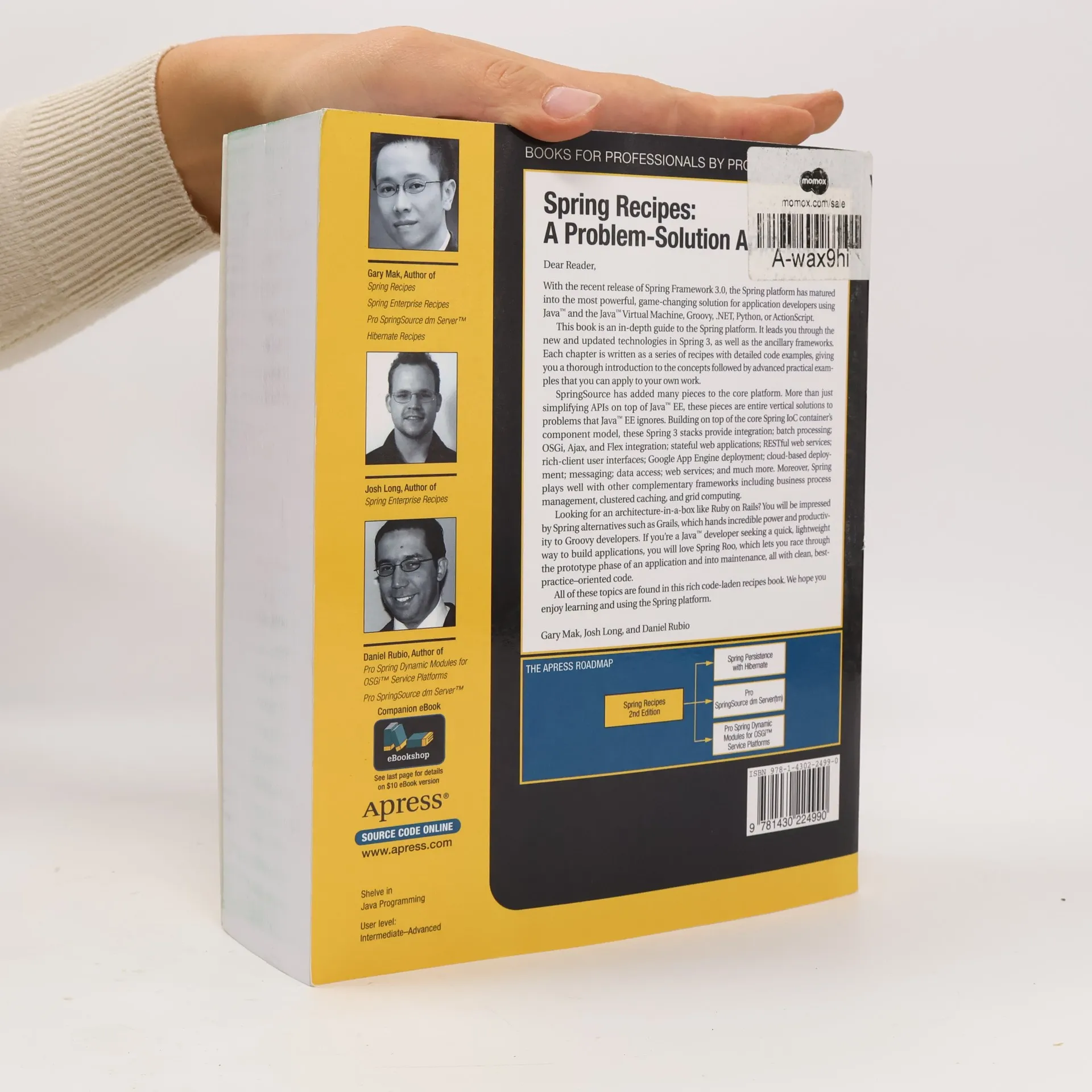
The Spring framework is growing. It has always been about choice. Java EE focused on a few technologies, largely to the detriment of alternative, better solutions. When the Spring framework debuted, few would have agreed that Java EE represented the best-in-breed architectures of the day. Spring debuted to great fanfare, because it sought to simplify Java EE. Each release since marks the introduction of new features designed to both simplify and enable solutions. With version 2.0 and later, the Spring framework started targeting multiple platforms. The framework provided services on top of existing platforms, as always, but was decoupled from the underlying platform wherever possible. Java EE is a still a major reference point, but it’s not the only target. OSGi (a promising technology for modular architectures) has been a big part of the SpringSource strategy here. Additionally, the Spring framework runs on Google App Engine. With the introduction of annotation-centric frameworks and XML schemas, SpringSource has built frameworks that effectively model the domain of a specific problem, in effect creating domain-specific languages (DSLs). Frameworks built on top of the Spring framework have emerged supporting application integration, batch processing, Flex and Flash integration, GWT, OSGi, and much more.
Book purchase
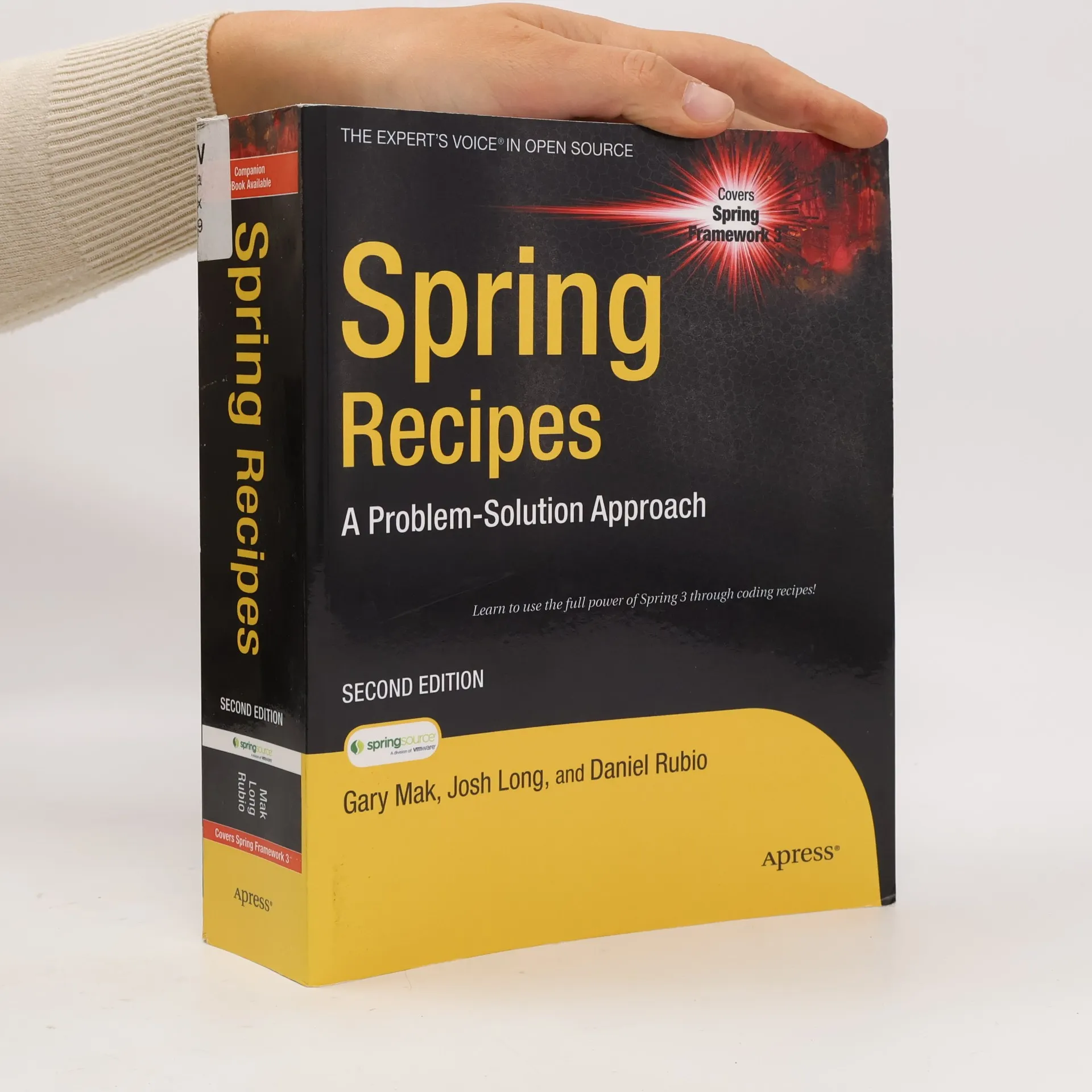
Spring Recipes - Second Edition, Gary Mak, Josh Long, Daniel Rubio
- Language

- Released
- 2010
- Binding
- (Paperback),
- Book condition
- Very Good
- Price
- €6.89
Payment methods
No one has rated yet.
- Title
- Spring Recipes - Second Edition
- Language
- English
- Authors
- Gary Mak, Josh Long, Daniel Rubio
- Publisher
- Apress
- Released
- 2010
- Format
- Paperback
- Pages
- 1148
- ISBN10
- 1430224991
- ISBN13
- 9781430224990
- Series
- Categories
- Description
- The Spring framework is growing. It has always been about choice. Java EE focused on a few technologies, largely to the detriment of alternative, better solutions. When the Spring framework debuted, few would have agreed that Java EE represented the best-in-breed architectures of the day. Spring debuted to great fanfare, because it sought to simplify Java EE. Each release since marks the introduction of new features designed to both simplify and enable solutions. With version 2.0 and later, the Spring framework started targeting multiple platforms. The framework provided services on top of existing platforms, as always, but was decoupled from the underlying platform wherever possible. Java EE is a still a major reference point, but it’s not the only target. OSGi (a promising technology for modular architectures) has been a big part of the SpringSource strategy here. Additionally, the Spring framework runs on Google App Engine. With the introduction of annotation-centric frameworks and XML schemas, SpringSource has built frameworks that effectively model the domain of a specific problem, in effect creating domain-specific languages (DSLs). Frameworks built on top of the Spring framework have emerged supporting application integration, batch processing, Flex and Flash integration, GWT, OSGi, and much more.