


More about the book
In this innovative study, Gilles de Van focuses on an often neglected aspect of Verdi's their effectiveness as theater. De Van argues that two main aesthetic conceptions underlie all of Verdi's that of the "melodrama" and the "musical drama." In the melodrama the composer relies mainly on dramatic intensity and the rhythm linking various stages of the plot, using exemplary characters and situations. But in the musical drama reality begins to blur, the musical forms lose their excessively neat patterns, and doubt and ambiguity undermine characters and situations, reflecting the crisis of character typical of modernity.Although melodrama tends to dominate Verdi's early work and musical drama his later, both aesthetics are woven into all his musical drama is already present in Ernani (1844), and melodrama is still present in Otello (1887). Indeed, much of the interest and originality of Verdi's operas lies in his adherence to both these contradictory systems, allowing the composer/dramatist to be simultaneously classical and modern, traditionalist and innovator.
Book purchase
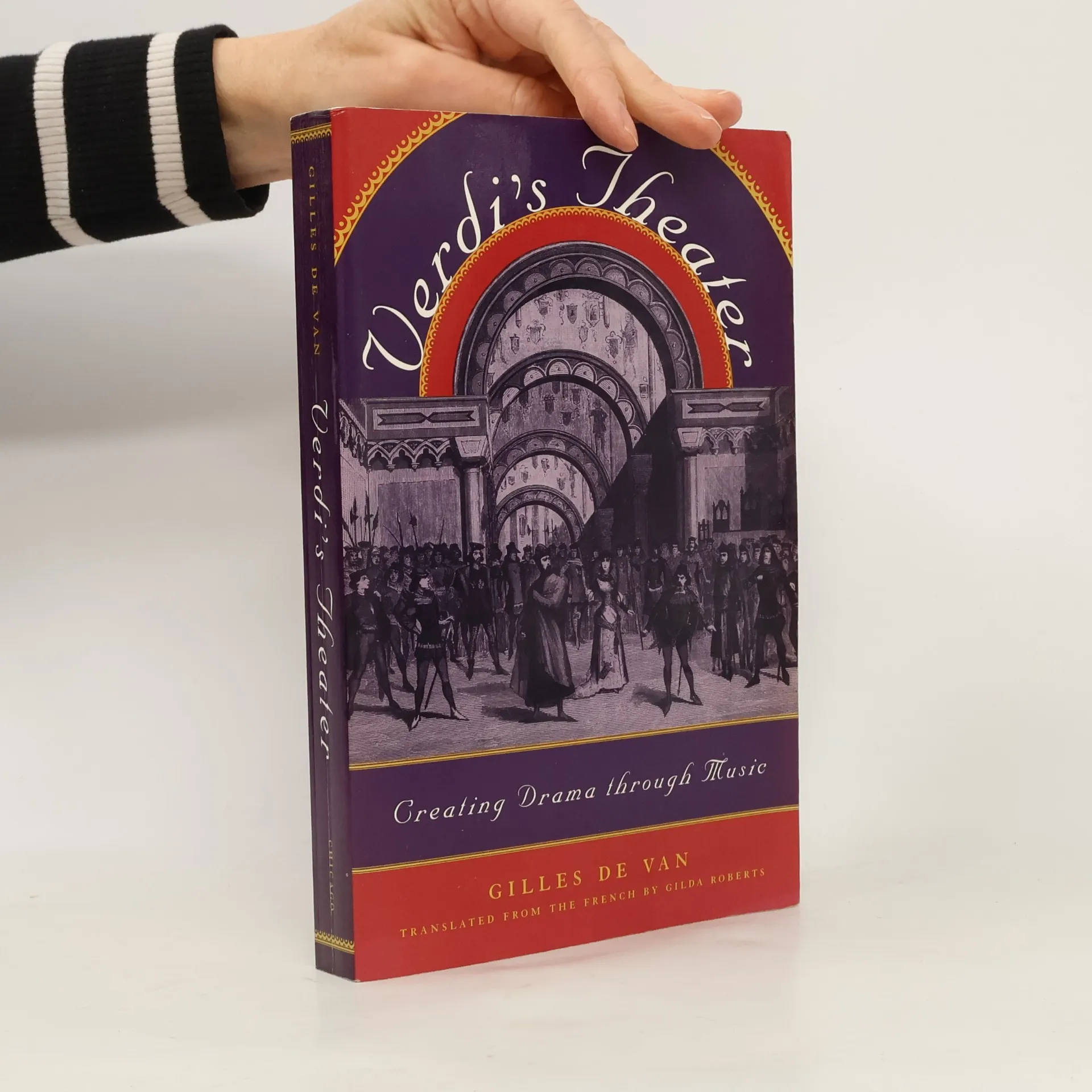
Verdi's Theater, Gilles de Van, Gilda Roberts
- Language

- Released
- 1998
- Binding
- (Paperback),
- Book condition
- Good
- Price
- €6.49
Payment methods
No one has rated yet.
- Title
- Verdi's Theater
- Subtitle
- Creating Drama Through Music
- Language
- English
- Authors
- Gilles de Van, Gilda Roberts
- Publisher
- The University of Chicago Press
- Released
- 1998
- Format
- Paperback
- Pages
- 434
- ISBN10
- 0226143708
- ISBN13
- 9780226143705
- Series
- Categories
- Tags
- Historical Themes, Music Theme, USA, Italy, Western Europe, Romanticism, Performing Arts, Operas and Operettas, Dramaturgy
- Description
- In this innovative study, Gilles de Van focuses on an often neglected aspect of Verdi's their effectiveness as theater. De Van argues that two main aesthetic conceptions underlie all of Verdi's that of the "melodrama" and the "musical drama." In the melodrama the composer relies mainly on dramatic intensity and the rhythm linking various stages of the plot, using exemplary characters and situations. But in the musical drama reality begins to blur, the musical forms lose their excessively neat patterns, and doubt and ambiguity undermine characters and situations, reflecting the crisis of character typical of modernity.Although melodrama tends to dominate Verdi's early work and musical drama his later, both aesthetics are woven into all his musical drama is already present in Ernani (1844), and melodrama is still present in Otello (1887). Indeed, much of the interest and originality of Verdi's operas lies in his adherence to both these contradictory systems, allowing the composer/dramatist to be simultaneously classical and modern, traditionalist and innovator.