

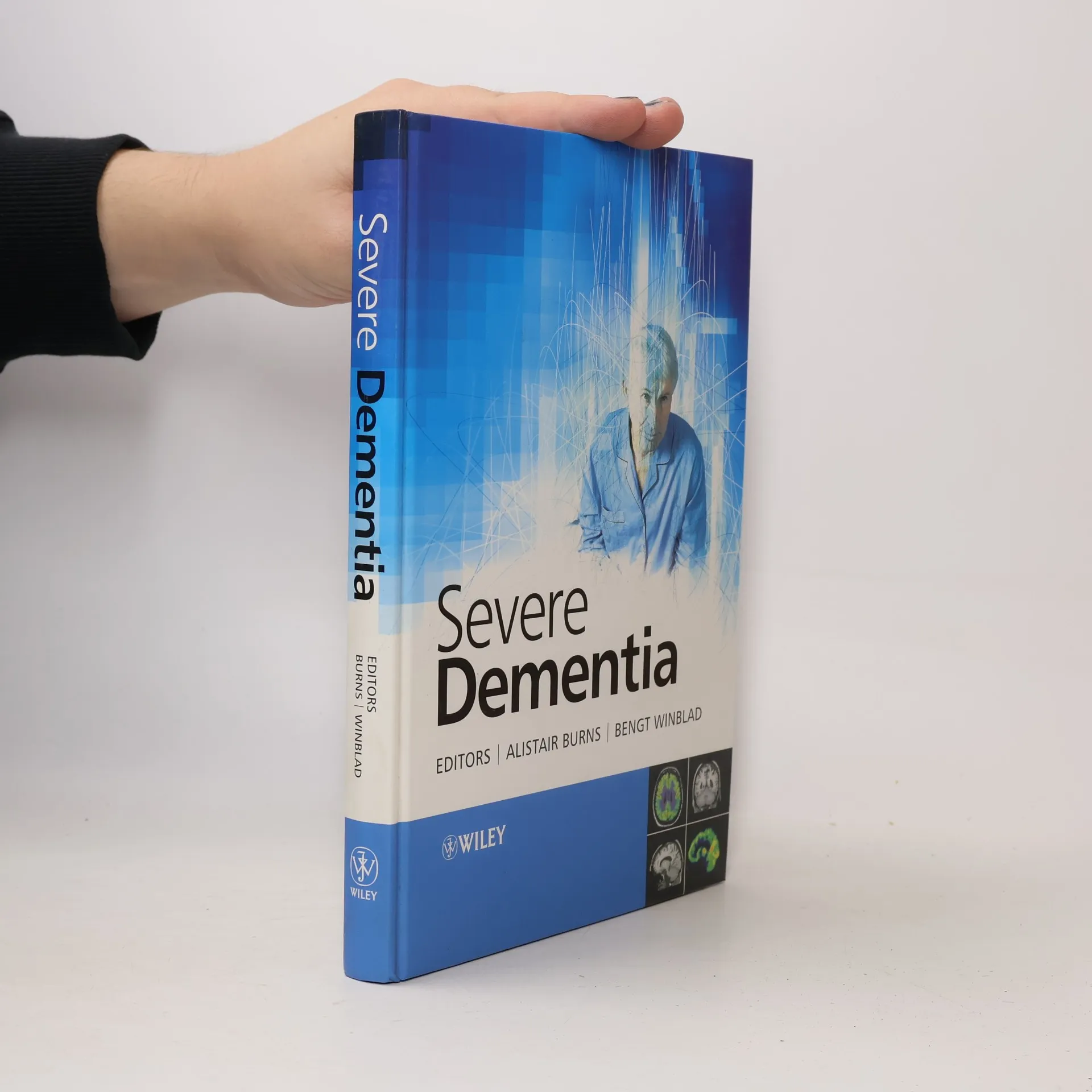


Severe Dementia
Authors
More about the book
The later stages of dementia are crucial, featuring unique characteristics that significantly impact patients and their caregivers. Historically, severe dementia received less attention in clinical literature due to poor prognosis and limited treatment options. However, with the recent approval of memantine, clinicians now have a medication that can delay disease progression. This book is the first to focus solely on severe dementia, exploring both its clinical features and the social aspects of care. It begins with introductory chapters covering differential diagnosis, neurochemistry, and molecular pathology, setting the foundation for a detailed clinical discussion. Subsequent chapters delve into cognitive function, depression, physical effects, staging, and overall function. The text also examines various therapeutic interventions, including memantine, anticholinesterases, neuroleptics, and non-pharmacological treatments. The final chapters address the social and economic dimensions of dementia care, highlighting family involvement, person-centered approaches, palliative care, ethics, and health economics. Authored by experts in geriatric psychiatry and geriatrics, this book serves as a valuable resource for clinicians managing this complex patient group, as well as general practitioners and nursing home caregivers.
Book purchase
Severe Dementia, Alistair Burns, Bengt Winblad
- Language

- Released
- 2006
- Binding
- (Hardcover),
- Book condition
- Damaged
- Price
- €13.97
Payment methods
No one has rated yet.
- Title
- Severe Dementia
- Language
- English
- Authors
- Alistair Burns, Bengt Winblad
- Publisher
- WILEY
- Released
- 2006
- Format
- Hardcover
- Pages
- 264
- ISBN10
- 0470010541
- ISBN13
- 9780470010549
- Series
- Categories
- Tags
- Compilations, Anthologies, Medicine, Professional Literature, Collected Works, Psychiatry, Neurology, Pharmacology, Dementia (Disease), Patients, Chemotherapy
- Description
- The later stages of dementia are crucial, featuring unique characteristics that significantly impact patients and their caregivers. Historically, severe dementia received less attention in clinical literature due to poor prognosis and limited treatment options. However, with the recent approval of memantine, clinicians now have a medication that can delay disease progression. This book is the first to focus solely on severe dementia, exploring both its clinical features and the social aspects of care. It begins with introductory chapters covering differential diagnosis, neurochemistry, and molecular pathology, setting the foundation for a detailed clinical discussion. Subsequent chapters delve into cognitive function, depression, physical effects, staging, and overall function. The text also examines various therapeutic interventions, including memantine, anticholinesterases, neuroleptics, and non-pharmacological treatments. The final chapters address the social and economic dimensions of dementia care, highlighting family involvement, person-centered approaches, palliative care, ethics, and health economics. Authored by experts in geriatric psychiatry and geriatrics, this book serves as a valuable resource for clinicians managing this complex patient group, as well as general practitioners and nursing home caregivers.