

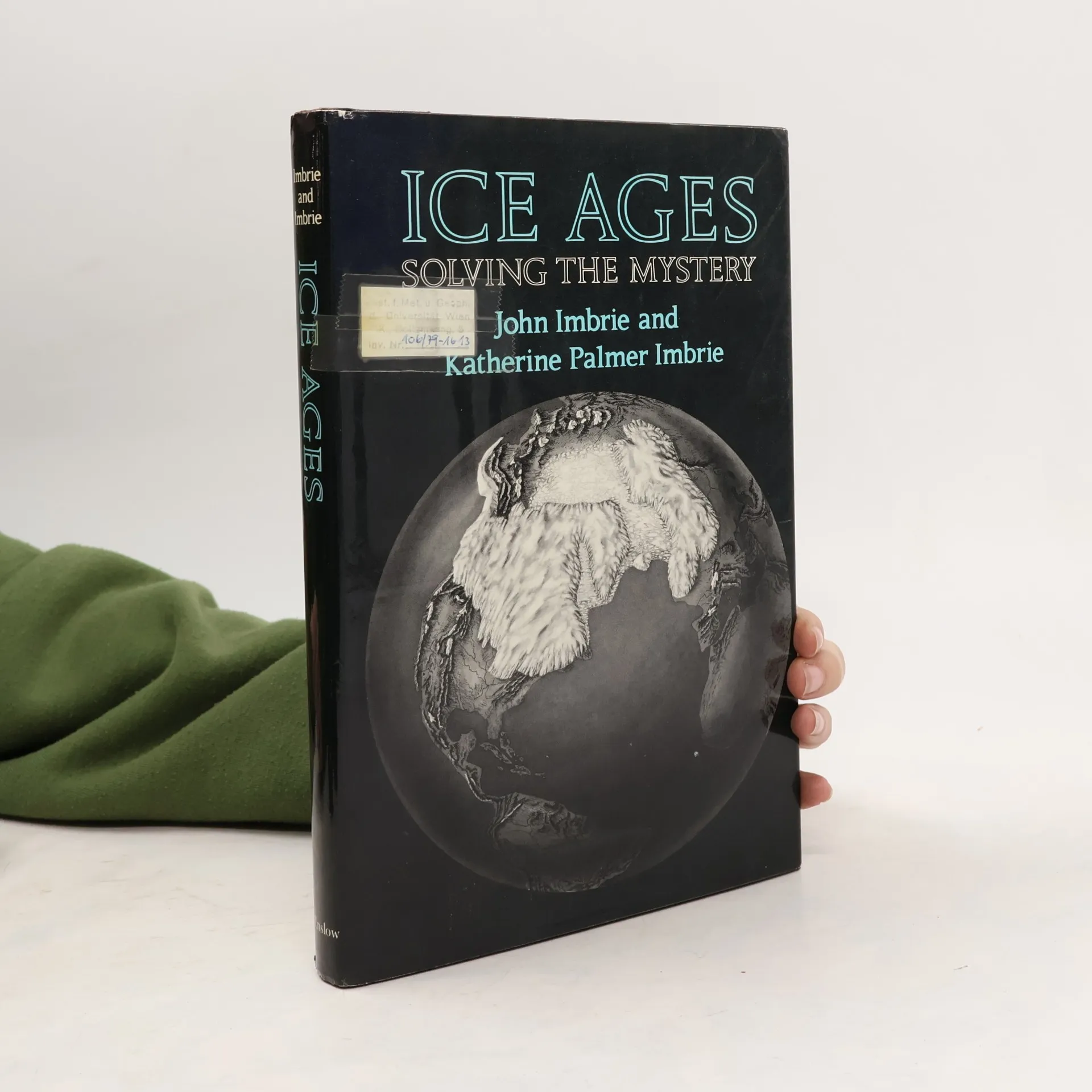

Ice Ages
Solving the Mystery
Parameters
- 224 pages
- 8 hours of reading
More about the book
This book explores the captivating story of the ice ages, detailing their nature, causes, and predictions for future occurrences. The quest to unravel the ice age mystery began with the National Science Foundation's CLIMAP project, which investigated climate changes over the past 700,000 years, aiming to create a map of the last ice age. Scientists analyzed sediment cores from the Indian Ocean, revealing a continuous climate history for 500,000 years. Their findings supported the theory that the earth's irregular orbital motions drive the dramatic climatic shifts that lead to ice ages. The narrative highlights key figures in scientific discovery, such as Louis Agassiz, the Swiss naturalist whose geological studies initially brought attention to the ice age concept; Reverend William Buckland, an Oxford professor who eventually embraced the theory after much resistance; James Croll, a self-taught Scots mechanic who first proposed the astronomic theory; and Milutin Milankovitch, the Serbian mathematician who solidified this theory with quantitative analysis. The contributions of numerous astronomers, geochemists, geologists, paleontologists, and geophysicists are also celebrated, showcasing a collaborative effort spanning over a century to solve the ice-age enigma.
Book purchase
Ice Ages, John Imbrie, Katherine Palmer Imbrie
- Language

- Released
- 1979
- Binding
- (Hardcover),
- Book condition
- Damaged
- Price
- €11.90
Payment methods
No one has rated yet.
- Title
- Ice Ages
- Subtitle
- Solving the Mystery
- Language
- English
- Authors
- John Imbrie, Katherine Palmer Imbrie
- Publisher
- Enslow Publishers
- Released
- 1979
- Format
- Hardcover
- Pages
- 224
- ISBN10
- 0894900153
- ISBN13
- 9780894900150
- Series
- Tags
- Nature, Science, Nature Observation, Geology, Glaciology
- Description
- This book explores the captivating story of the ice ages, detailing their nature, causes, and predictions for future occurrences. The quest to unravel the ice age mystery began with the National Science Foundation's CLIMAP project, which investigated climate changes over the past 700,000 years, aiming to create a map of the last ice age. Scientists analyzed sediment cores from the Indian Ocean, revealing a continuous climate history for 500,000 years. Their findings supported the theory that the earth's irregular orbital motions drive the dramatic climatic shifts that lead to ice ages. The narrative highlights key figures in scientific discovery, such as Louis Agassiz, the Swiss naturalist whose geological studies initially brought attention to the ice age concept; Reverend William Buckland, an Oxford professor who eventually embraced the theory after much resistance; James Croll, a self-taught Scots mechanic who first proposed the astronomic theory; and Milutin Milankovitch, the Serbian mathematician who solidified this theory with quantitative analysis. The contributions of numerous astronomers, geochemists, geologists, paleontologists, and geophysicists are also celebrated, showcasing a collaborative effort spanning over a century to solve the ice-age enigma.