



Sex at Dusk
Lifting the Shiny Wrapping from Sex at Dawn
Authors
Parameters
- 374 pages
- 14 hours of reading
More about the book
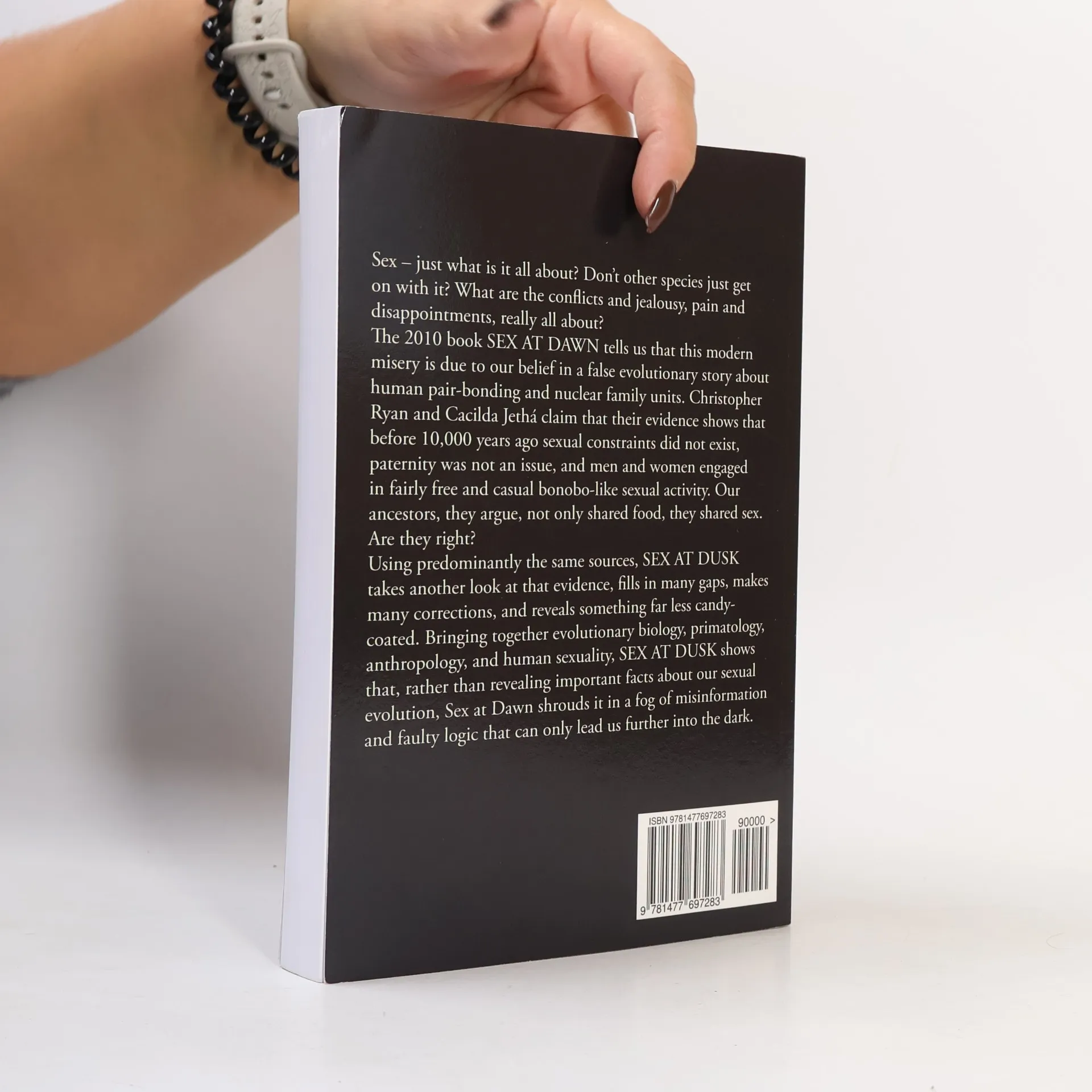
Sex—what is it really about? Unlike other species, humans experience conflicts, jealousy, and disappointments in relationships. The 2010 work posits that modern dilemmas stem from a misguided evolutionary narrative regarding human pair-bonding and family structures. The authors argue that prior to 10,000 years ago, sexual constraints were minimal, paternity concerns were absent, and men and women engaged in casual sexual interactions akin to bonobos. They suggest that our ancestors not only shared food but also sexual partners. In response, another examination of this evidence critiques the original claims, filling in gaps and correcting misconceptions. This new perspective integrates evolutionary biology, primatology, anthropology, and human sexuality, revealing that the earlier narrative may obscure the truth with misinformation and flawed logic. Biologists have largely dismissed the original work, but a rebuttal is now available, offering a well-researched and engaging alternative. This new analysis emphasizes the politicization and romanticization of human sexuality, appealing to those who value truth. It aims to clarify misconceptions and provide a more accurate understanding of our sexual evolution, making it both an enlightening and enjoyable read.
Book purchase
Sex at Dusk, Lynn Saxon
- Language

- Released
- 2012
- Binding
- (Paperback),
- Book condition
- Good
- Price
- €5.29
Payment methods
No one has rated yet.
- Title
- Sex at Dusk
- Subtitle
- Lifting the Shiny Wrapping from Sex at Dawn
- Language
- English
- Authors
- Lynn Saxon
- Released
- 2012
- Format
- Paperback
- Pages
- 374
- ISBN10
- 1477697284
- ISBN13
- 9781477697283
- Series
- Description
- Sex—what is it really about? Unlike other species, humans experience conflicts, jealousy, and disappointments in relationships. The 2010 work posits that modern dilemmas stem from a misguided evolutionary narrative regarding human pair-bonding and family structures. The authors argue that prior to 10,000 years ago, sexual constraints were minimal, paternity concerns were absent, and men and women engaged in casual sexual interactions akin to bonobos. They suggest that our ancestors not only shared food but also sexual partners. In response, another examination of this evidence critiques the original claims, filling in gaps and correcting misconceptions. This new perspective integrates evolutionary biology, primatology, anthropology, and human sexuality, revealing that the earlier narrative may obscure the truth with misinformation and flawed logic. Biologists have largely dismissed the original work, but a rebuttal is now available, offering a well-researched and engaging alternative. This new analysis emphasizes the politicization and romanticization of human sexuality, appealing to those who value truth. It aims to clarify misconceptions and provide a more accurate understanding of our sexual evolution, making it both an enlightening and enjoyable read.