


Parameters
- 150 pages
- 6 hours of reading
More about the book
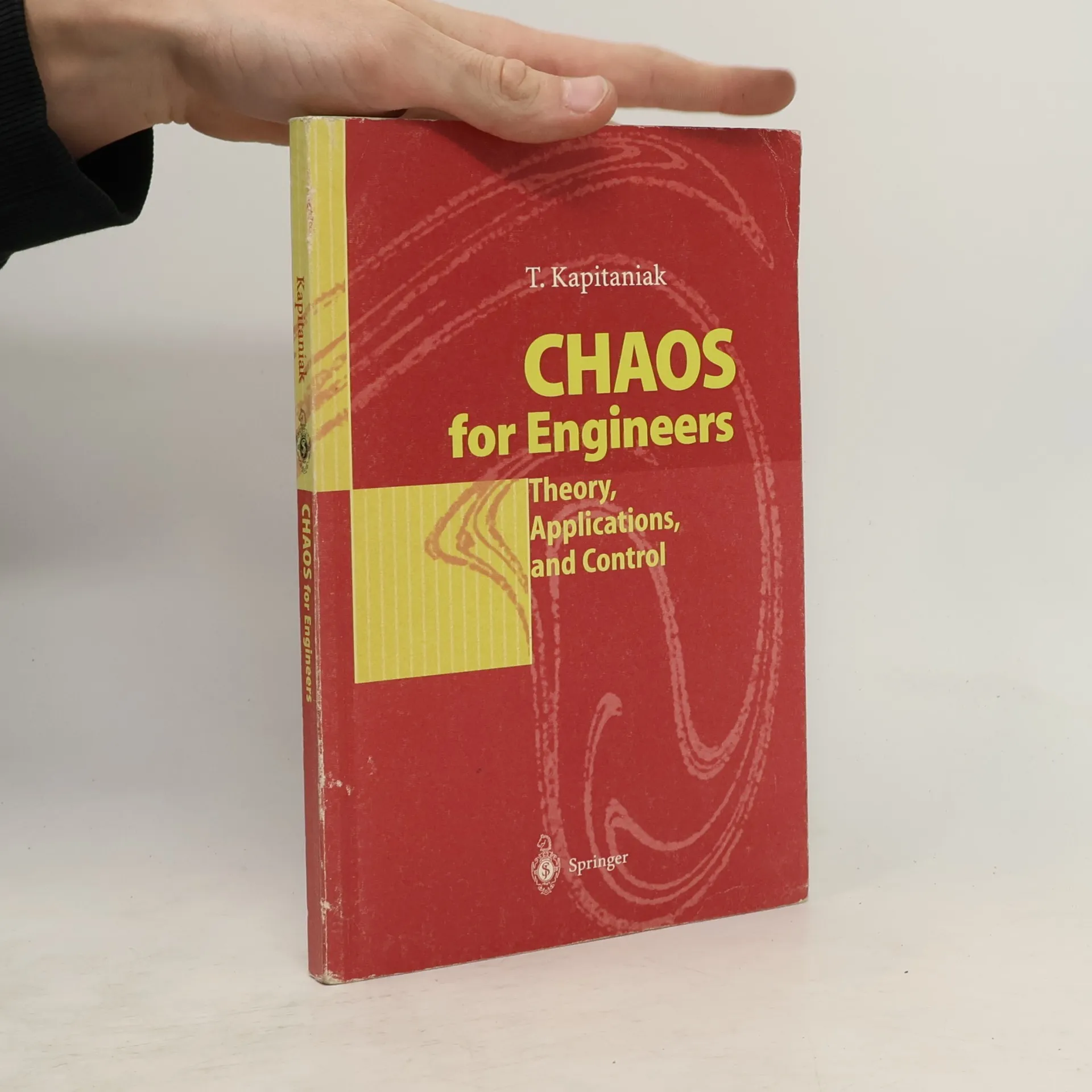
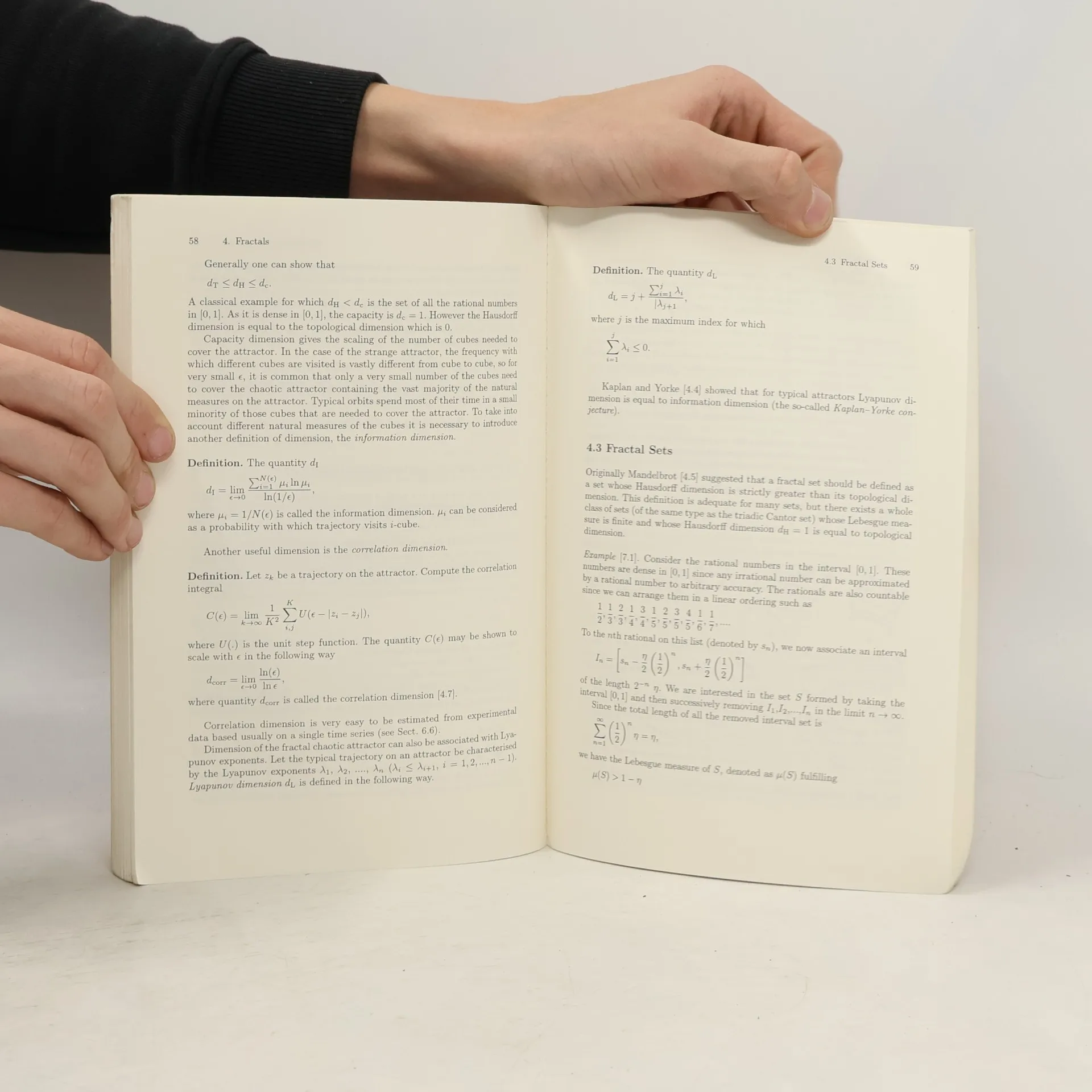
Chaos occurs widely in engineering and natural systems. Historically it has been noted only as irregular or unpredictable behaviour and often attributed to random external influences. Further studies have shown that chaotic phenomena are completely deterministic and characteristic for typical nonlinear systems. These studies posed the question of the practical applications of chaos. One of the possible answers is to control chaotic behaviour in such a way as to make it predictable. Recently there have been examples of the potential usefulness of chaotic behaviour and this has caused growing interest among engineers and applied scientists. In this book the new mathematical ideas in nonlinear dynamics are described such that engineers can apply them in real physical systems.
Book purchase
Chaos for Engineers, Tomasz Kapitaniak
- Language

- Released
- 1998
- Binding
- (Paperback),
- Book condition
- Good
- Price
- €19.99
Payment methods
No one has rated yet.
- Title
- Chaos for Engineers
- Subtitle
- Theory, Applications, and Control
- Language
- English
- Authors
- Tomasz Kapitaniak
- Publisher
- Springer
- Released
- 1998
- Format
- Paperback
- Pages
- 150
- ISBN10
- 3540635157
- ISBN13
- 9783540635154
- Series
- Categories
- Tags
- Science, Technology, Professional Literature, Communication, Engineering, Artificial Intelligence, Chaos, Behaviour, Ethology, Theoretical Physics, Chaos Theory
- Description
- Chaos occurs widely in engineering and natural systems. Historically it has been noted only as irregular or unpredictable behaviour and often attributed to random external influences. Further studies have shown that chaotic phenomena are completely deterministic and characteristic for typical nonlinear systems. These studies posed the question of the practical applications of chaos. One of the possible answers is to control chaotic behaviour in such a way as to make it predictable. Recently there have been examples of the potential usefulness of chaotic behaviour and this has caused growing interest among engineers and applied scientists. In this book the new mathematical ideas in nonlinear dynamics are described such that engineers can apply them in real physical systems.