


Exercise Therapy And Behavioural Change
Influencing Behavior Through Occupational, Physio-, And Exercise Therapists
Authors
More about the book
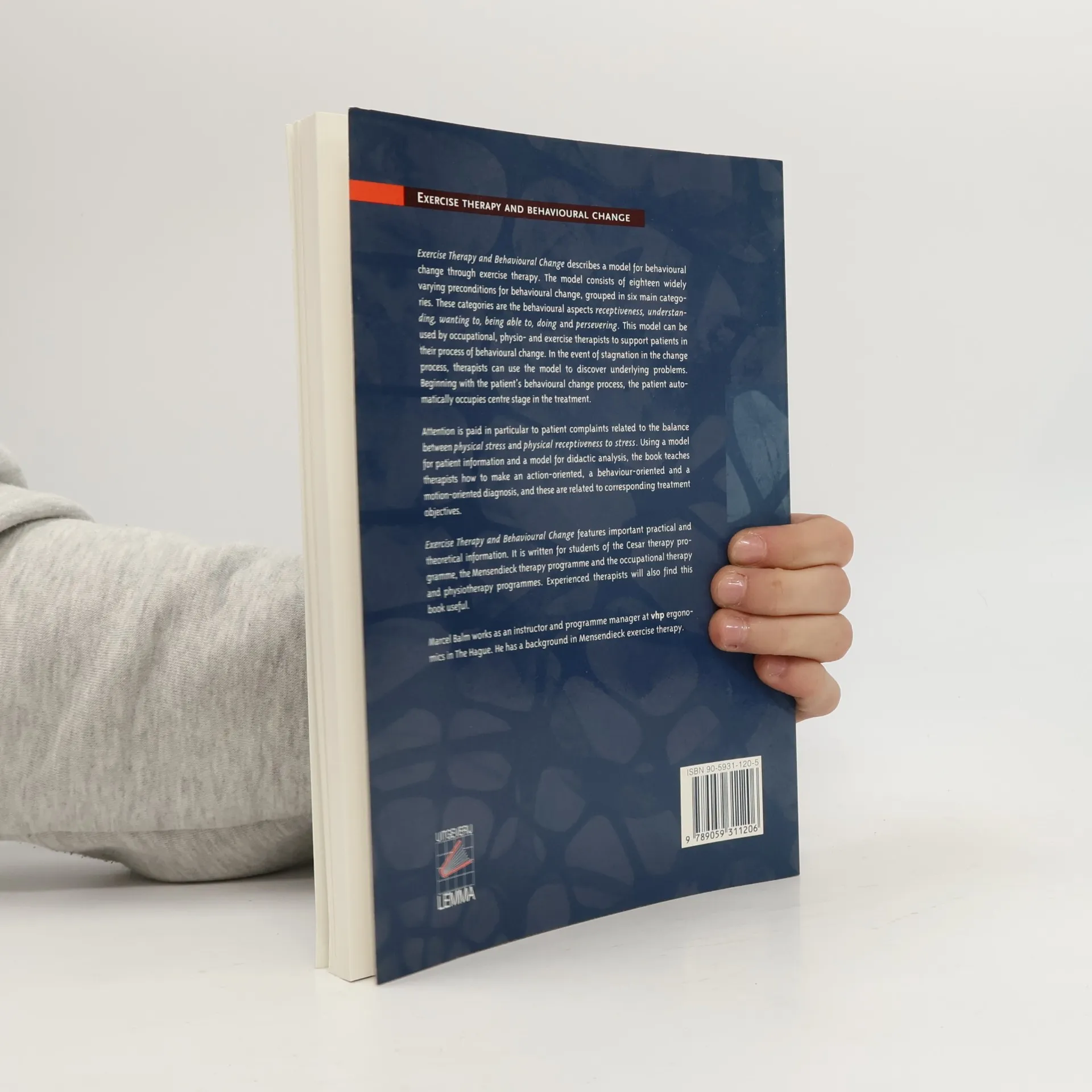
Exercise Therapy and Behavioural Change describes a model for behavioural change through exercise therapy. The model consists of eighteen widely varying preconditions for behavioural change, grouped in six main categories. These categories are the behavioural aspects receptiveness, understanding, wanting to, being able to, doing and persevering. This model can be used by occupational, physio- and exercise therapists to support patients in their process of behavioural change. In the event of stagnation in the change process, therapists can use the model to discover underlying problems. Beginning with the patient's behavioural change process, the patient automatically occupies centre stage in the treatment. Attention is paid in particular to patient complaints related to the balance between physical stress and physical receptiveness to stress. Using a model for patient information and a model for didactic analysis, the book teaches therapists how to make an action-oriented, a behaviour-oriented and a motion-oriented diagnosis, and these are related to corresponding treatment objectives. Exercise Therapy and Behavioural Change features practical and theoretical information. It is written for students of the Cesar therapy programme, the Mensendieck therapy programme and the occupational therapy and physiotherapy programmes. Experienced therapists will also find this book useful.
Book purchase
Exercise Therapy And Behavioural Change, M.F.K. Balm
- Language

- Released
- 2002
- Binding
- (Paperback),
- Book condition
- Very Good
- Price
- €37.89
Payment methods
No one has rated yet.
- Title
- Exercise Therapy And Behavioural Change
- Subtitle
- Influencing Behavior Through Occupational, Physio-, And Exercise Therapists
- Language
- English
- Authors
- M.F.K. Balm
- Publisher
- Purdue University Press
- Released
- 2002
- Format
- Paperback
- Pages
- 229
- ISBN10
- 9059311205
- ISBN13
- 9789059311206
- Series
- Description
- Exercise Therapy and Behavioural Change describes a model for behavioural change through exercise therapy. The model consists of eighteen widely varying preconditions for behavioural change, grouped in six main categories. These categories are the behavioural aspects receptiveness, understanding, wanting to, being able to, doing and persevering. This model can be used by occupational, physio- and exercise therapists to support patients in their process of behavioural change. In the event of stagnation in the change process, therapists can use the model to discover underlying problems. Beginning with the patient's behavioural change process, the patient automatically occupies centre stage in the treatment. Attention is paid in particular to patient complaints related to the balance between physical stress and physical receptiveness to stress. Using a model for patient information and a model for didactic analysis, the book teaches therapists how to make an action-oriented, a behaviour-oriented and a motion-oriented diagnosis, and these are related to corresponding treatment objectives. Exercise Therapy and Behavioural Change features practical and theoretical information. It is written for students of the Cesar therapy programme, the Mensendieck therapy programme and the occupational therapy and physiotherapy programmes. Experienced therapists will also find this book useful.