

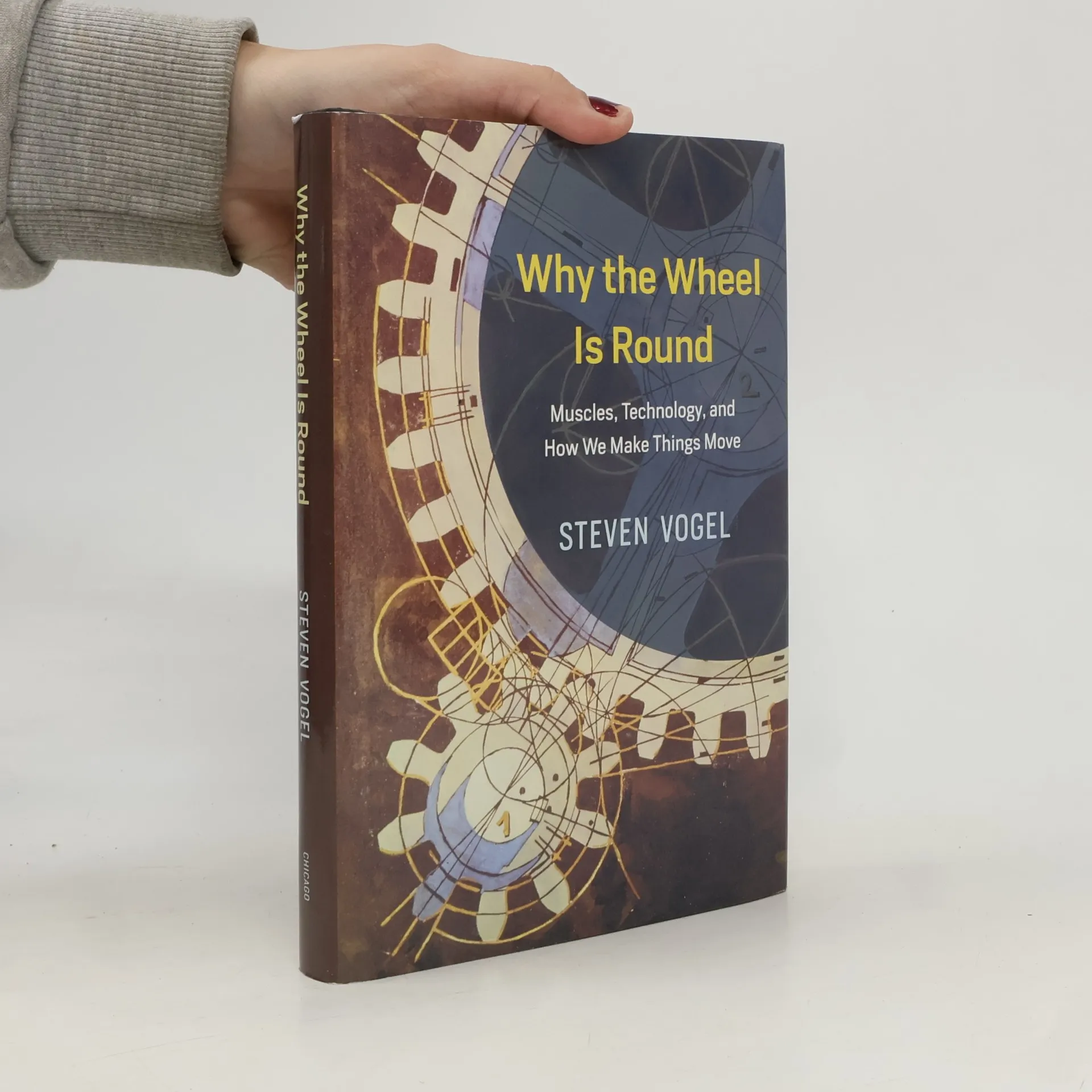


Why the Wheel Is Round
Authors
Parameters
- 327 pages
- 12 hours of reading
More about the book
Our bodies can only twist to a certain extent, yet the wheel represents a fundamental human invention that enables complete rotation. Throughout history, humans have created technologies that enhance our physical capabilities while compensating for our limitations. This unique exploration of the wheel and other rotational devices—such as cranks, cranes, carts, and capstans—delves into the innovations that allow us to navigate and manipulate the physical world more effectively. The author, combining engineering expertise with a deep curiosity, investigates how these mechanisms were historically powered by human and animal muscle. The narrative covers a variety of devices, including treadwheels, hand-spikes, and gears, and illustrates their evolution into tools like hand-held drills and hurdy-gurdies. Many of these devices can be constructed from everyday materials, and the book provides instructions for readers interested in creating their own muscle-powered technologies, such as trebuchets and ballista. This work appeals to those intrigued by the history of mechanics and technology, as well as hobbyists with workshops, offering a captivating look at our shared technological heritage rooted in the concept of rotation. From leg muscles powering bicycles to hands manipulating computer mice, the book highlights the remarkable innovations behind everyday devices.
Book purchase
Why the Wheel Is Round, Steven Kent Vogel
- Language

- Released
- 2016
- Binding
- (Hardcover)
Payment methods
No one has rated yet.
- Title
- Why the Wheel Is Round
- Language
- English
- Authors
- Steven Kent Vogel
- Publisher
- The University of Chicago Press
- Released
- 2016
- Format
- Hardcover
- Pages
- 327
- ISBN10
- 022638103X
- ISBN13
- 9780226381039
- Series
- Tags
- Historical Themes, Natural sciences, Science, Medicine, Technology, Professional Literature, Engineering, Evolution, Human Body, Humanities, Innovation, Basics, Mechanics, Physiology, History of Technology, Human Physiology, Joints, Biomechanics
- Description
- Our bodies can only twist to a certain extent, yet the wheel represents a fundamental human invention that enables complete rotation. Throughout history, humans have created technologies that enhance our physical capabilities while compensating for our limitations. This unique exploration of the wheel and other rotational devices—such as cranks, cranes, carts, and capstans—delves into the innovations that allow us to navigate and manipulate the physical world more effectively. The author, combining engineering expertise with a deep curiosity, investigates how these mechanisms were historically powered by human and animal muscle. The narrative covers a variety of devices, including treadwheels, hand-spikes, and gears, and illustrates their evolution into tools like hand-held drills and hurdy-gurdies. Many of these devices can be constructed from everyday materials, and the book provides instructions for readers interested in creating their own muscle-powered technologies, such as trebuchets and ballista. This work appeals to those intrigued by the history of mechanics and technology, as well as hobbyists with workshops, offering a captivating look at our shared technological heritage rooted in the concept of rotation. From leg muscles powering bicycles to hands manipulating computer mice, the book highlights the remarkable innovations behind everyday devices.