

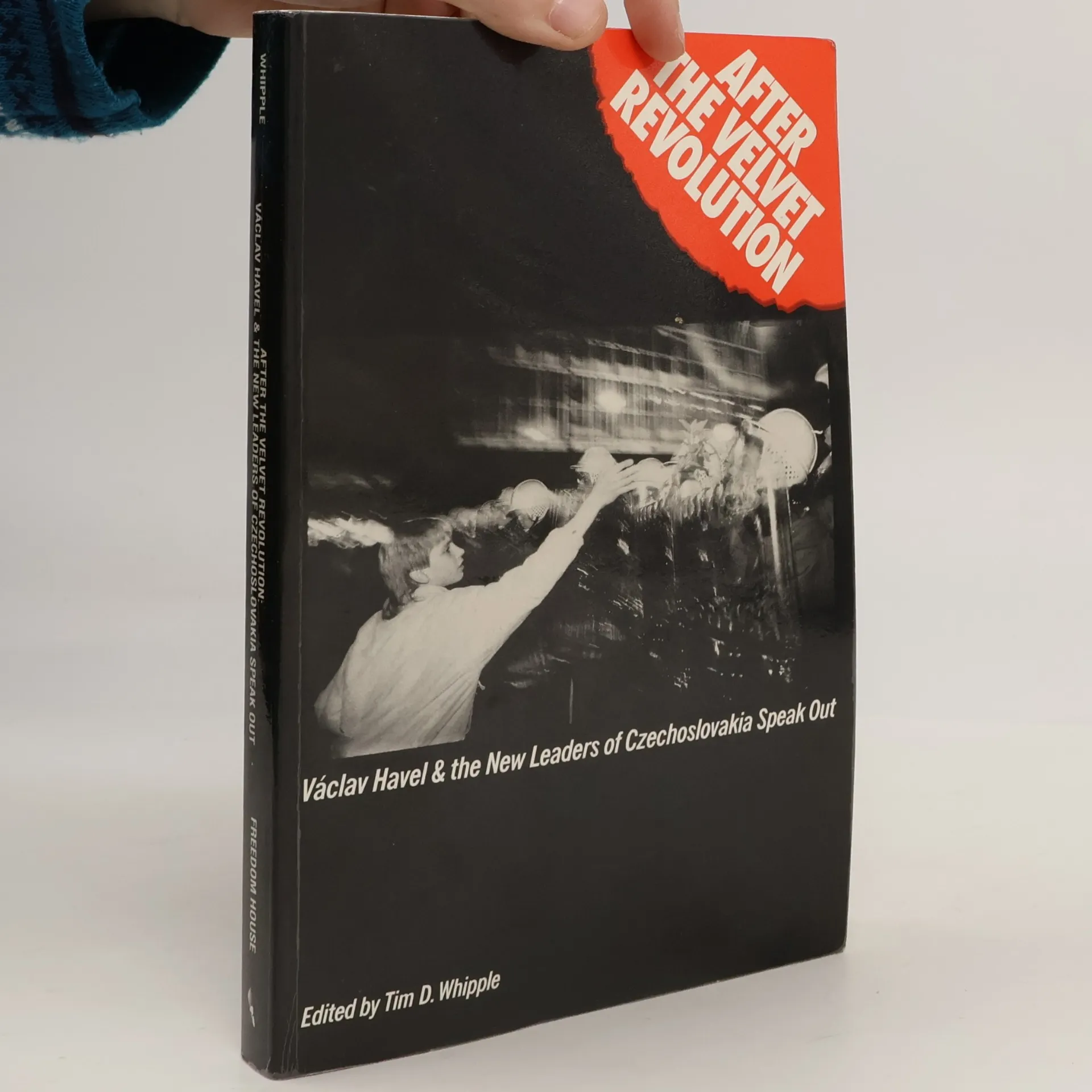


After the Velvet Revolution
Vaclav Havel and the New Leaders of Czechoslovakia Speak Out
Authors
More about the book
Since November 1989, when they threw off the yoke of Communist rule, the citizens of Czechoslovakia have had to face the legacy of Communism: a comatose economy, the worst pollution in Europe, and the brutal legal and political distortions of a one-party state. In this volume of recent speeches, interviews, and essays by members of the federal and republican governments, independents, and the First Secretary of the Czechoslovak Communist Party, the most influential and articulate of the new leaders share their assessments of the past and hopes for the future. Vaclav Havel expands on the broad vision offered in his address to a joint session of the U.S. Congress last February. The views expressed here with wit, incisiveness and elegance give us a glimpse of the country as it takes a new shape, while representing the declared values against which the future acts of these amateur politicians will be measured. Tim Whipple's commentary gives the historical and biographical backgrounds necessary for people who bring to their reading little information about Czechoslovakia.
Book purchase
After the Velvet Revolution, Tim D. Whipple
- Language

- Released
- 1991
- Binding
- (Paperback),
- Book condition
- Good
- Price
- €24.49
Payment methods
No one has rated yet.
- Title
- After the Velvet Revolution
- Subtitle
- Vaclav Havel and the New Leaders of Czechoslovakia Speak Out
- Language
- English
- Authors
- Tim D. Whipple
- Publisher
- University Press of America
- Released
- 1991
- Format
- Paperback
- Pages
- 342
- ISBN10
- 0932088619
- ISBN13
- 9780932088611
- Series
- Description
- Since November 1989, when they threw off the yoke of Communist rule, the citizens of Czechoslovakia have had to face the legacy of Communism: a comatose economy, the worst pollution in Europe, and the brutal legal and political distortions of a one-party state. In this volume of recent speeches, interviews, and essays by members of the federal and republican governments, independents, and the First Secretary of the Czechoslovak Communist Party, the most influential and articulate of the new leaders share their assessments of the past and hopes for the future. Vaclav Havel expands on the broad vision offered in his address to a joint session of the U.S. Congress last February. The views expressed here with wit, incisiveness and elegance give us a glimpse of the country as it takes a new shape, while representing the declared values against which the future acts of these amateur politicians will be measured. Tim Whipple's commentary gives the historical and biographical backgrounds necessary for people who bring to their reading little information about Czechoslovakia.