

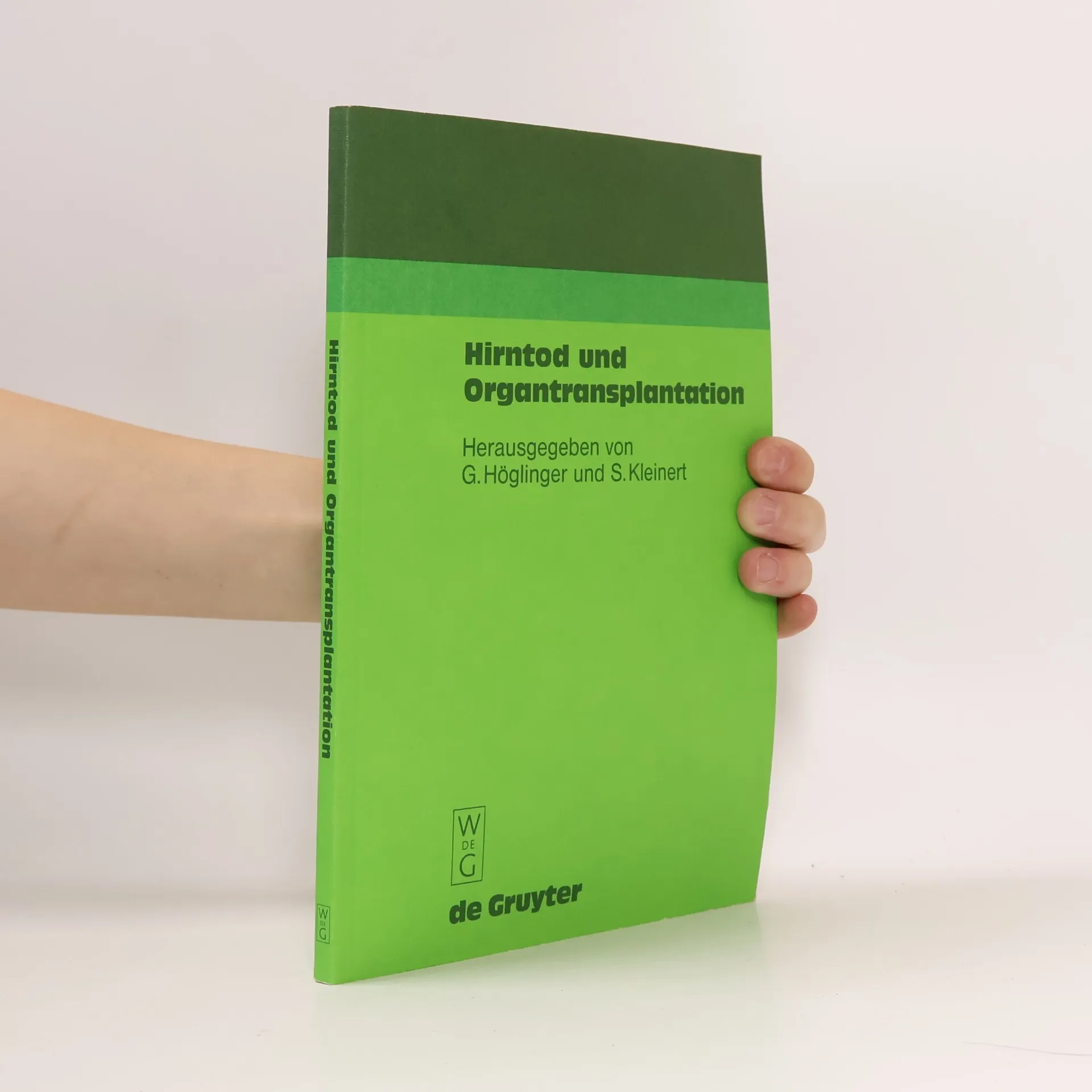


Hirntod und Organtransplantation
More about the book
This work explores various aspects of death and organ transplantation through a collection of essays by different authors. It begins with a historical overview of the literature on signs and timing of death, followed by an examination of brain death from a forensic and biological perspective. The complexity of defining human death is discussed, highlighting the moral implications of different definitions. The boundaries of medical jurisdiction are also questioned, alongside interdisciplinary insights into the current debates surrounding brain death criteria. Legal perspectives on when a person is considered dead are presented, along with constitutional questions regarding transplantation practices. The development of organ demand in Central Europe through Eurotransplant is analyzed, as well as the objectives of the German Foundation for Organ Transplantation. The criteria for organ allocation are scrutinized for their objectivity and fairness, and the potential of living kidney donation as a solution to organ shortages is considered. Additionally, the psychological burdens faced by organ recipients are addressed, along with ethical considerations surrounding fetal tissue transplantation for Parkinson's disease. The significance of animal models in organ transplantation research and future prospects for xenotransplantation are also discussed. The collection concludes with information about the authors contributing to this mul
Book purchase
Hirntod und Organtransplantation, Günter U. Höglinger, Stefan Kleinert
- Language

- Released
- 1998
- Binding
- (Hardcover),
- Book condition
- Very Good
- Price
- €25.89
Payment methods
No one has rated yet.
- Title
- Hirntod und Organtransplantation
- Language
- German
- Authors
- Günter U. Höglinger, Stefan Kleinert
- Publisher
- De Gruyter
- Released
- 1998
- Format
- Hardcover
- Pages
- 178
- ISBN10
- 3110162032
- ISBN13
- 9783110162035
- Series
- Description
- This work explores various aspects of death and organ transplantation through a collection of essays by different authors. It begins with a historical overview of the literature on signs and timing of death, followed by an examination of brain death from a forensic and biological perspective. The complexity of defining human death is discussed, highlighting the moral implications of different definitions. The boundaries of medical jurisdiction are also questioned, alongside interdisciplinary insights into the current debates surrounding brain death criteria. Legal perspectives on when a person is considered dead are presented, along with constitutional questions regarding transplantation practices. The development of organ demand in Central Europe through Eurotransplant is analyzed, as well as the objectives of the German Foundation for Organ Transplantation. The criteria for organ allocation are scrutinized for their objectivity and fairness, and the potential of living kidney donation as a solution to organ shortages is considered. Additionally, the psychological burdens faced by organ recipients are addressed, along with ethical considerations surrounding fetal tissue transplantation for Parkinson's disease. The significance of animal models in organ transplantation research and future prospects for xenotransplantation are also discussed. The collection concludes with information about the authors contributing to this mul