

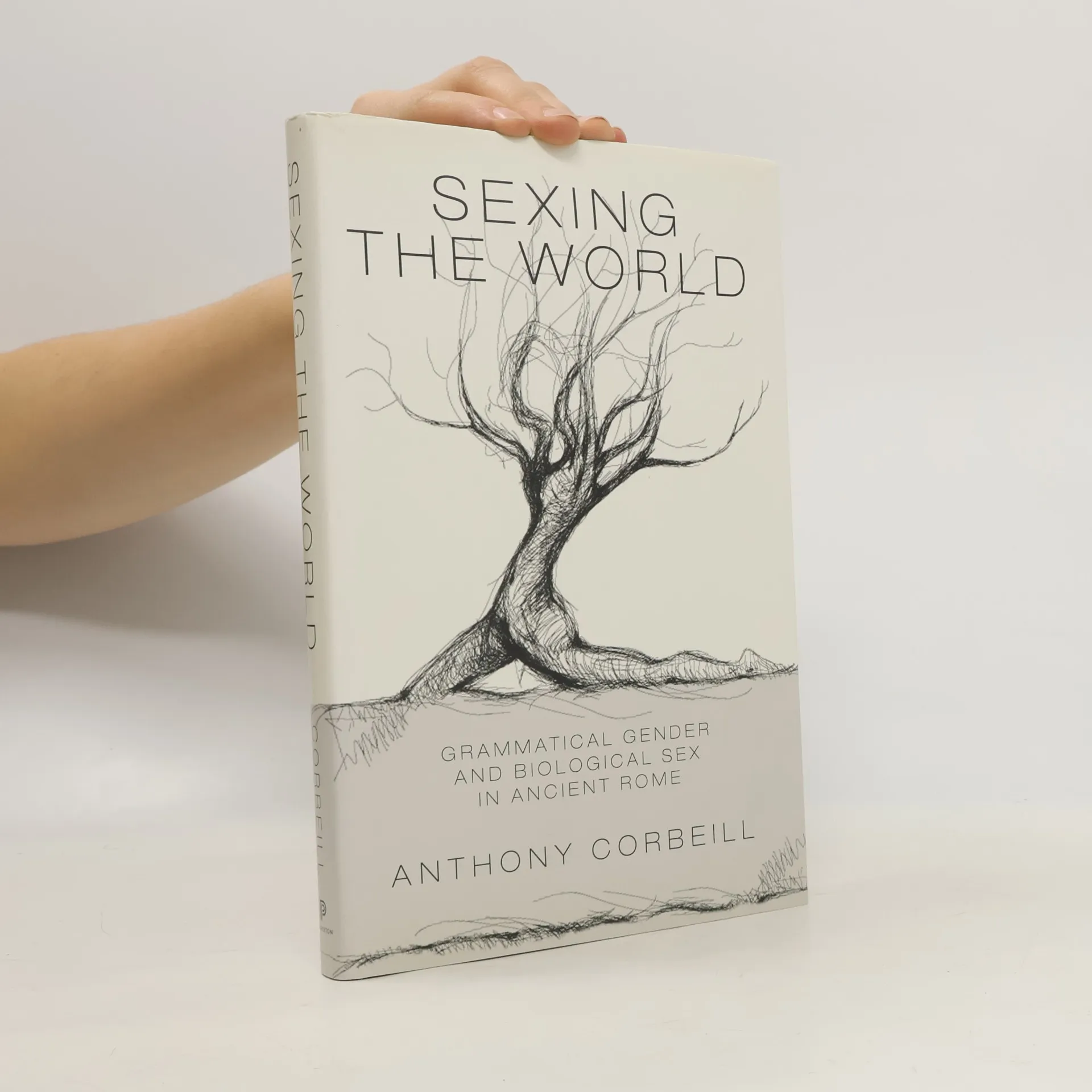


Sexing the World
Grammatical Gender and Biological Sex in Ancient Rome
Authors
More about the book
From the moment a child in ancient Rome began to speak Latin, they encountered a world filled with objects categorized by grammatical gender—masculine eyes, feminine trees, and neuter bodies. This examination surveys how grammatical gender allowed Latin speakers to organize their society into sexual categories and how this association influenced perceptions of Latin poetry, divine power, and the human hermaphrodite. Beginning with ancient grammarians, the author explores how these scholars used noun gender to determine the sex of the corresponding object, whether animate or inanimate. This understanding influenced Roman poets, who occasionally altered the grammatical gender of seemingly lifeless words like "dust" or "tree bark." The author extends this concept to Roman religion and state politics, highlighting how early divinities were often depicted as male-female pairs, a trend that diminished over time. Similarly, the significance of the dual-sexed hermaphrodite waned as the republican government transitioned to autocracy. Throughout, the author illustrates how the once-fluid boundaries of sex and gender became increasingly rigid, resulting in opposing and exclusive categories. This work enhances our understanding of the power of language in shaping human perception.
Book purchase
Sexing the World, Anthony Corbeill
- Language

- Released
- 2015
- Binding
- (Hardcover),
- Book condition
- Very Good
- Price
- €18.39
Payment methods
No one has rated yet.
- Title
- Sexing the World
- Subtitle
- Grammatical Gender and Biological Sex in Ancient Rome
- Language
- English
- Authors
- Anthony Corbeill
- Publisher
- Princeton University Press
- Released
- 2015
- Format
- Hardcover
- Pages
- 216
- ISBN10
- 0691163227
- ISBN13
- 9780691163222
- Series
- Categories
- Tags
- References & Manuals, Women, USA, Erotica, Europe, Southern Europe, Italy, Linguistics, Ancient History, History of Europe, Writing, Prehistoric and ancient times, Grammar, Rome, Western Europe, Jokes & Anecdotes, Gender, Roman Empire, Ancient Rome, Latin, Childbirth, Rhetoric, Uncertainty, Etymology, Masculinity, Latin Literature, Suggestion
- Description
- From the moment a child in ancient Rome began to speak Latin, they encountered a world filled with objects categorized by grammatical gender—masculine eyes, feminine trees, and neuter bodies. This examination surveys how grammatical gender allowed Latin speakers to organize their society into sexual categories and how this association influenced perceptions of Latin poetry, divine power, and the human hermaphrodite. Beginning with ancient grammarians, the author explores how these scholars used noun gender to determine the sex of the corresponding object, whether animate or inanimate. This understanding influenced Roman poets, who occasionally altered the grammatical gender of seemingly lifeless words like "dust" or "tree bark." The author extends this concept to Roman religion and state politics, highlighting how early divinities were often depicted as male-female pairs, a trend that diminished over time. Similarly, the significance of the dual-sexed hermaphrodite waned as the republican government transitioned to autocracy. Throughout, the author illustrates how the once-fluid boundaries of sex and gender became increasingly rigid, resulting in opposing and exclusive categories. This work enhances our understanding of the power of language in shaping human perception.