

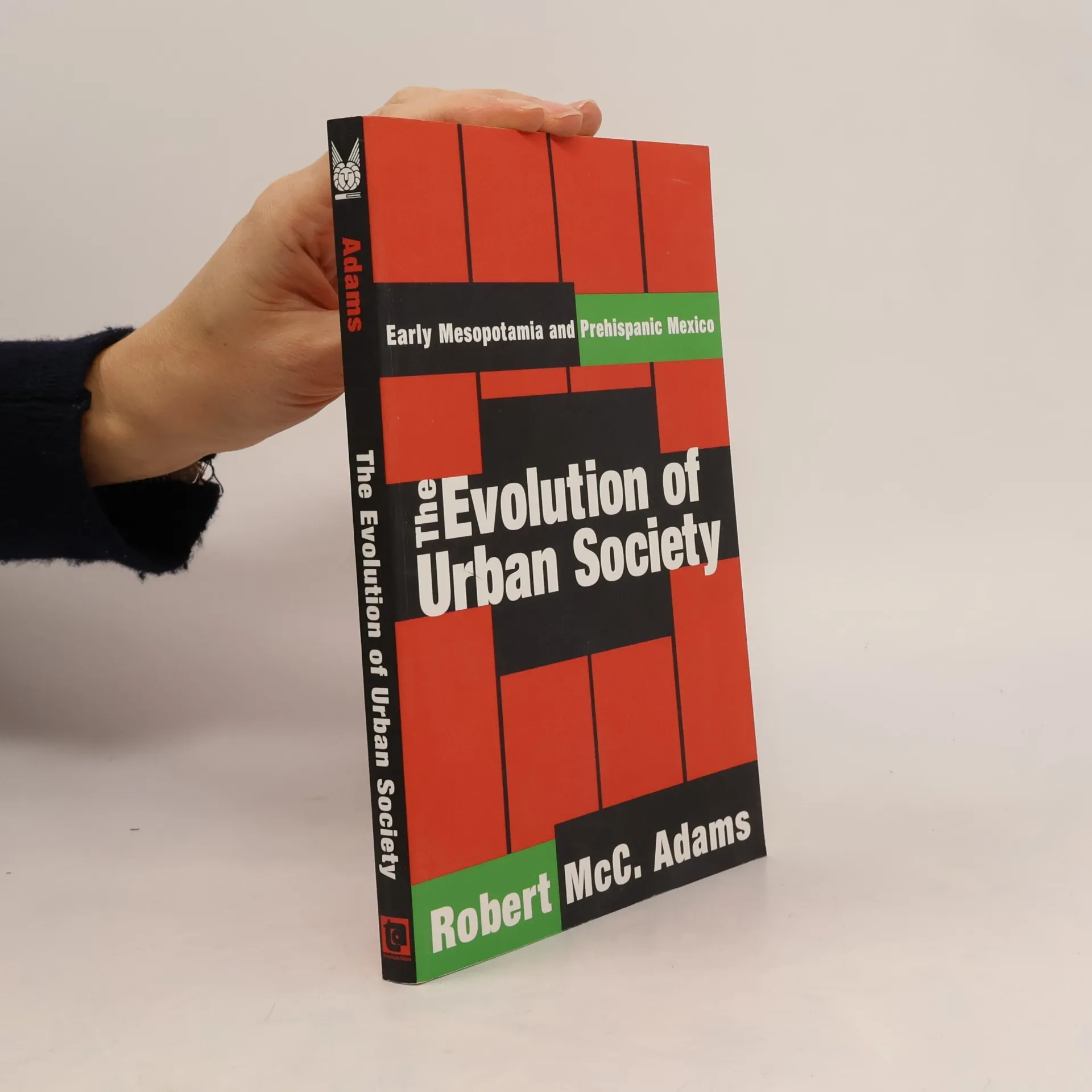


The Evolution of Urban Society
Early Mesopotamia and Prehispanic Mexico
Authors
Parameters
- 204 pages
- 8 hours of reading
More about the book
This work focuses on the analysis of early, independent urban societies in Mesopotamia and central Mexico, highlighting their institutional forms and growth trends. It emphasizes structural similarities over distinct cultural features, suggesting that both societies represent variants of a single evolutionary process. Early anthropological studies often stressed cultural diversity in the origins of ancient civilizations, but this volume illustrates significant regularities in human behavior across early societies. The emergence of states—stratified, politically organized societies with complex divisions of labor—marks a transformative phase in human civilization. The author underscores the importance of studying societal evolution, which remains a compelling area of anthropological interest. Originally published in 1966 and based on lectures at the University of Rochester honoring Lewis Henry Morgan, this work continues to be essential for students of anthropology, ethnography, ancient civilizations, and world history. As noted in Science, the book has significantly influenced contemporary research on early urbanism in the Mesopotamian region.
Book purchase
The Evolution of Urban Society, Robert McCormick Adams
- Language

- Released
- 2005
- Binding
- (Paperback),
- Book condition
- Good
- Price
- €29.49
Payment methods
No one has rated yet.
- Title
- The Evolution of Urban Society
- Subtitle
- Early Mesopotamia and Prehispanic Mexico
- Language
- English
- Authors
- Robert McCormick Adams
- Publisher
- Routledge
- Released
- 2005
- Format
- Paperback
- Pages
- 204
- ISBN10
- 0202308189
- ISBN13
- 9780202308180
- Series
- Tags
- References & Manuals, Professional Literature, Society, Ancient History, South America, Humanities, Mexico, Ethnology, Civilization, Latin America, Near and Middle East, Iraq, Mesopotamia, Municipalities
- Description
- This work focuses on the analysis of early, independent urban societies in Mesopotamia and central Mexico, highlighting their institutional forms and growth trends. It emphasizes structural similarities over distinct cultural features, suggesting that both societies represent variants of a single evolutionary process. Early anthropological studies often stressed cultural diversity in the origins of ancient civilizations, but this volume illustrates significant regularities in human behavior across early societies. The emergence of states—stratified, politically organized societies with complex divisions of labor—marks a transformative phase in human civilization. The author underscores the importance of studying societal evolution, which remains a compelling area of anthropological interest. Originally published in 1966 and based on lectures at the University of Rochester honoring Lewis Henry Morgan, this work continues to be essential for students of anthropology, ethnography, ancient civilizations, and world history. As noted in Science, the book has significantly influenced contemporary research on early urbanism in the Mesopotamian region.