

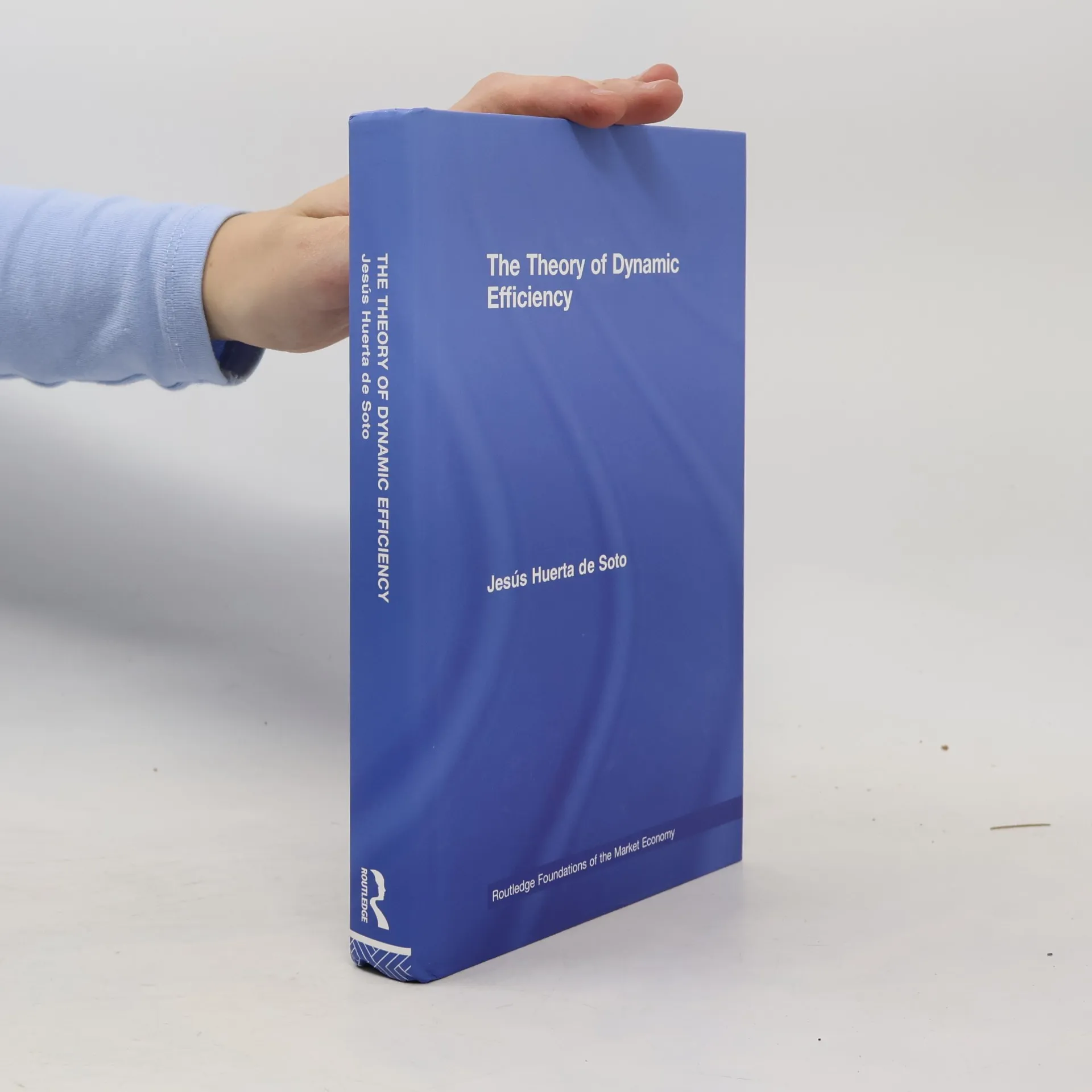


Routledge Foundations of the Market Economy: The Theory of Dynamic Efficiency
Authors
Parameters
- 372 pages
- 14 hours of reading
More about the book
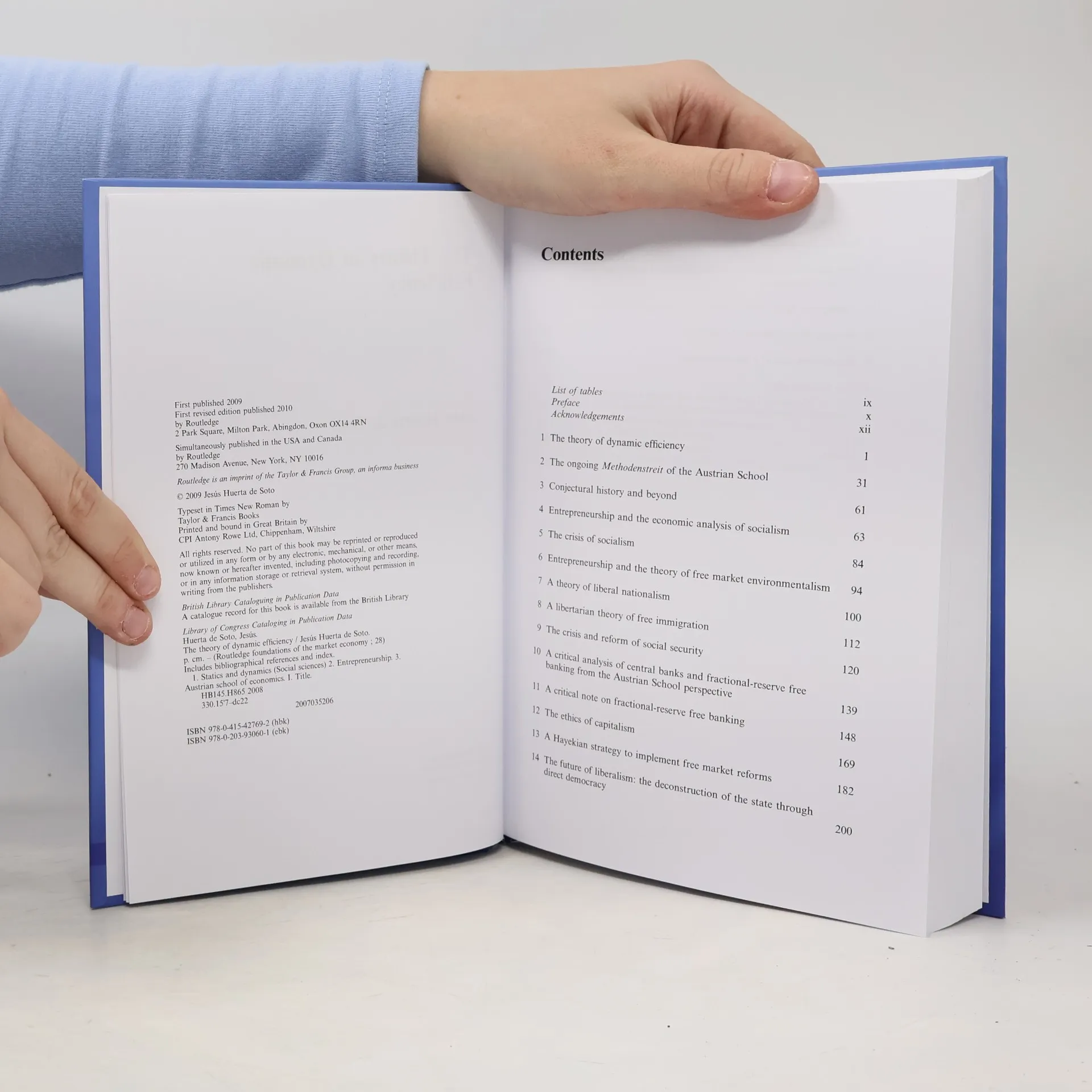
This book gathers a collection of English language essays by Jes�s Huerta de Soto over the past ten years, examining the dynamic processes of social cooperation which characterize the market, with particular emphasis on the role of both entrepreneurship and institutions. The author's multidisciplinary approach to the subject is in keeping with a trend in economic thought established by the Austrian school of economics; a discourse that had witnessed a significant revival over the last thirty years. Areas covered in this book include an introduction to the theory of dynamic efficiency as an alternative to the standard paretian criteria, an explanation of the differences between the Austrian and the neoclassical approach to economics, a generalized definition of socialism that allows the joint application of the analysis of interventionism, a dynamic Austrian approach to the analysis of free market environmentalism, nationalism, the reform of Social Security and the theory of banking and an evaluation of the role of Spanish Scholastics of the Sixteenth Century.
Book purchase
Routledge Foundations of the Market Economy: The Theory of Dynamic Efficiency, Jesús Huerta de Soto
- Language

- Released
- 2010
- Binding
- (Hardcover),
- Book condition
- Very Good
- Price
- €41.39
Payment methods
No one has rated yet.
- Title
- Routledge Foundations of the Market Economy: The Theory of Dynamic Efficiency
- Language
- English
- Authors
- Jesús Huerta de Soto
- Publisher
- Routledge
- Released
- 2010
- Format
- Hardcover
- Pages
- 372
- ISBN10
- 041542769X
- ISBN13
- 9780415427692
- Series
- Tags
- Business, Compilations, Anthologies, Finance, Collected Works, Political Economy, Microeconomics, Austrian School of Economics
- Description
- This book gathers a collection of English language essays by Jes�s Huerta de Soto over the past ten years, examining the dynamic processes of social cooperation which characterize the market, with particular emphasis on the role of both entrepreneurship and institutions. The author's multidisciplinary approach to the subject is in keeping with a trend in economic thought established by the Austrian school of economics; a discourse that had witnessed a significant revival over the last thirty years. Areas covered in this book include an introduction to the theory of dynamic efficiency as an alternative to the standard paretian criteria, an explanation of the differences between the Austrian and the neoclassical approach to economics, a generalized definition of socialism that allows the joint application of the analysis of interventionism, a dynamic Austrian approach to the analysis of free market environmentalism, nationalism, the reform of Social Security and the theory of banking and an evaluation of the role of Spanish Scholastics of the Sixteenth Century.