

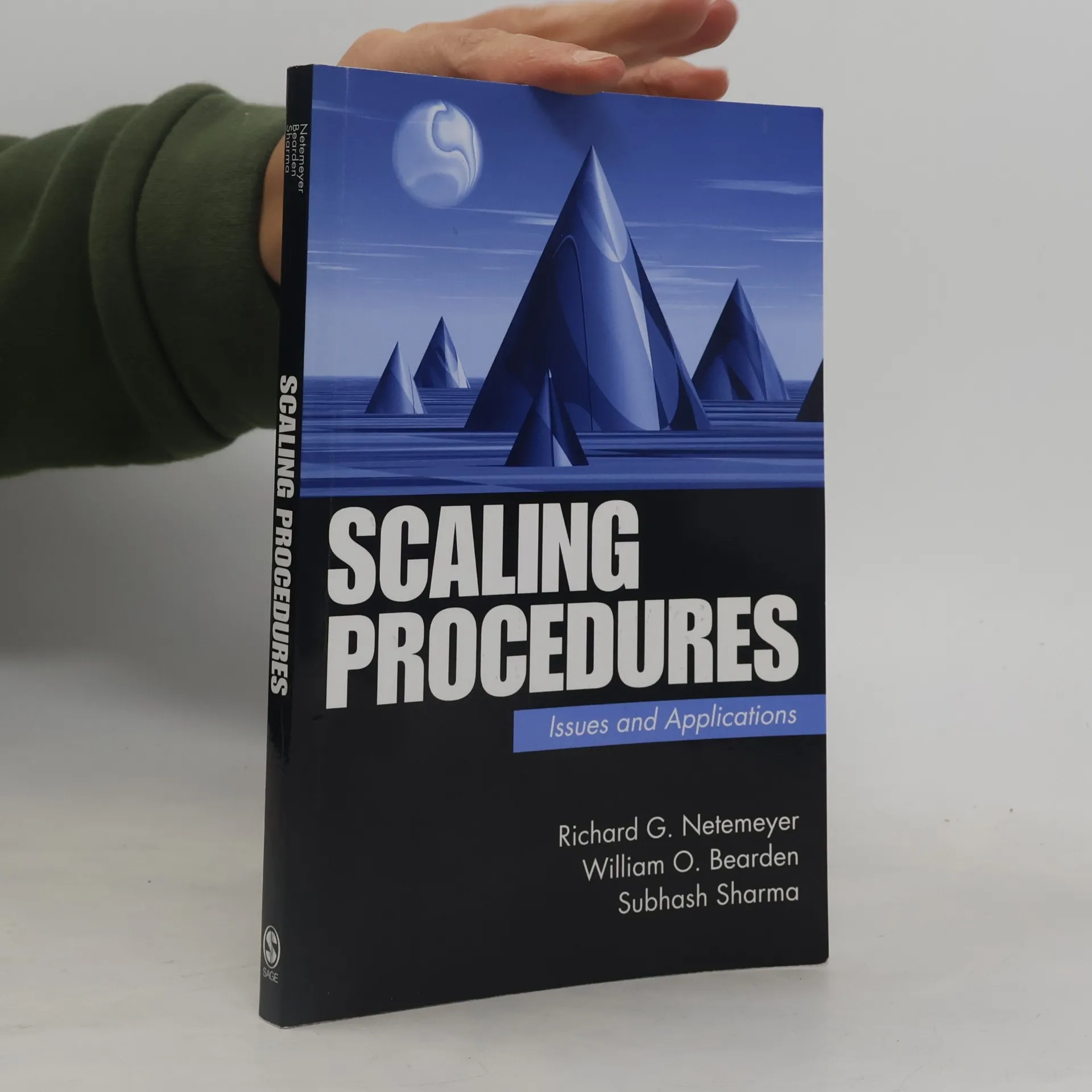
Scaling Procedures
Issues and Applications
More about the book
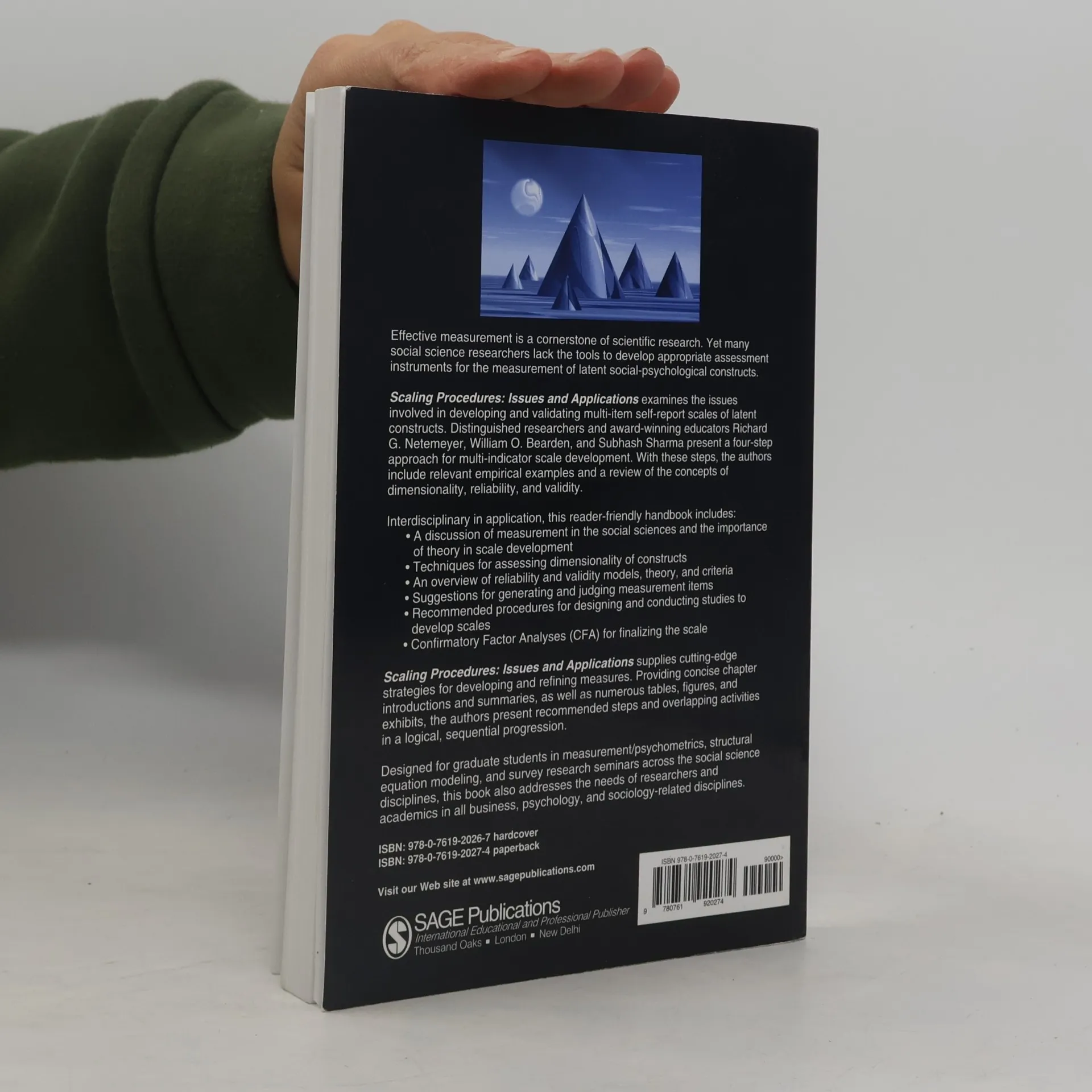
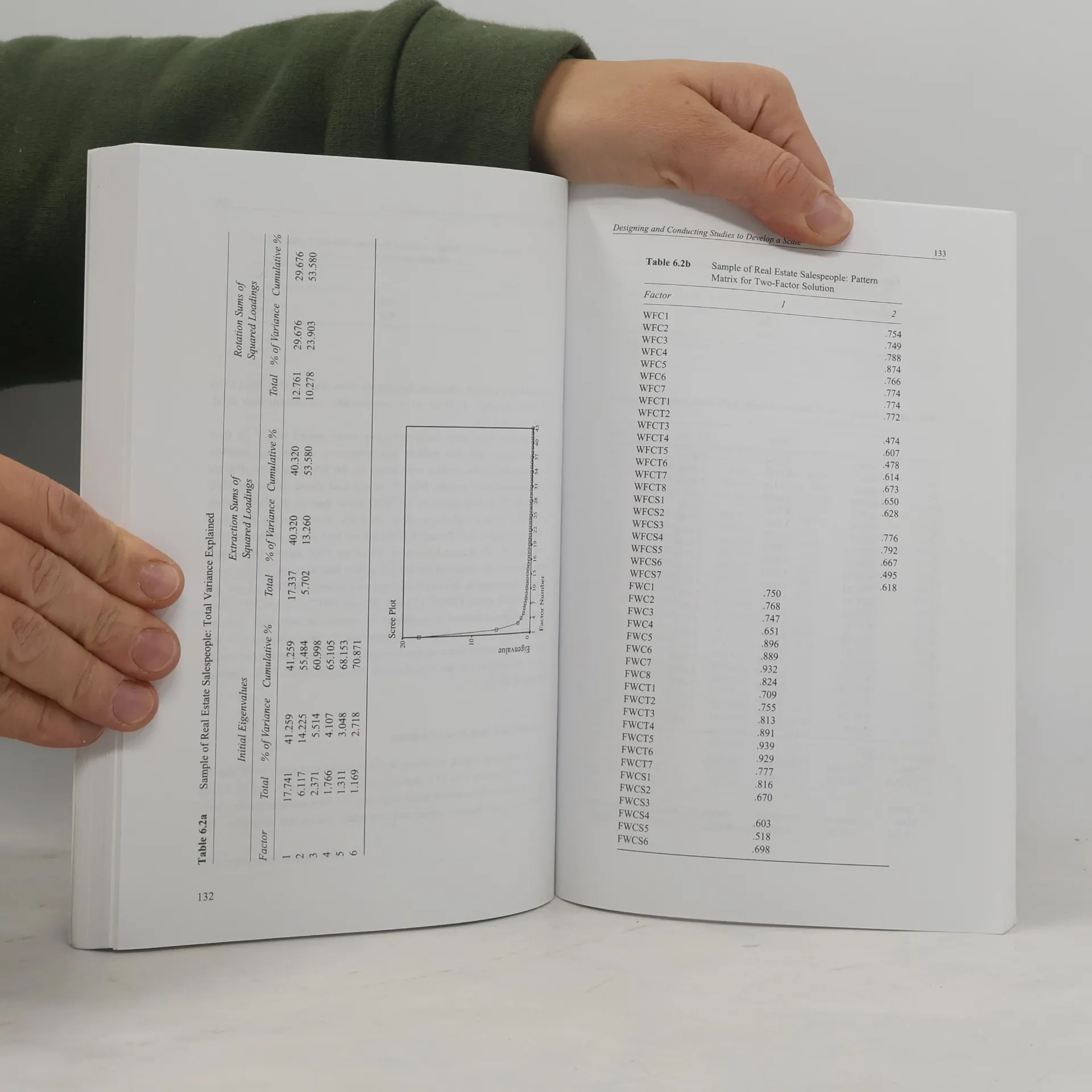
Scaling Procedures: Issues and Applications examines the issues involved in developing and validating multi-item self-report scales of latent constructs. Distinguished researchers and award-winning educators Richard G. Netemeyer, William O. Bearden, and Subhash Sharma present a four-step approach for multi-indicator scale development. With these steps, the authors include relevant empirical examples and a review of the concepts of dimensionality, reliability, and validity. Scaling Procedures: Issues and Applications supplies cutting-edge strategies for developing and refining measures. Providing concise chapter introductions and summaries, as well as numerous tables, figures, and exhibits, the authors present recommended steps and overlapping activities in a logical, sequential progression.
Book purchase
Scaling Procedures, William O. Bearden, Richard G. Netemeyer, Subhashini Sharma Tripathi
- Language

- Released
- 2003
- Binding
- (Paperback),
- Book condition
- Very Good
- Price
- €6.49
Payment methods
No one has rated yet.
- Title
- Scaling Procedures
- Subtitle
- Issues and Applications
- Language
- English
- Publisher
- SAGE Publications Ltd
- Released
- 2003
- Format
- Paperback
- Pages
- 224
- ISBN10
- 0761920277
- ISBN13
- 9780761920274
- Series
- Tags
- Research, Statistics, Methodology, Tertiary
- Description
- Scaling Procedures: Issues and Applications examines the issues involved in developing and validating multi-item self-report scales of latent constructs. Distinguished researchers and award-winning educators Richard G. Netemeyer, William O. Bearden, and Subhash Sharma present a four-step approach for multi-indicator scale development. With these steps, the authors include relevant empirical examples and a review of the concepts of dimensionality, reliability, and validity. Scaling Procedures: Issues and Applications supplies cutting-edge strategies for developing and refining measures. Providing concise chapter introductions and summaries, as well as numerous tables, figures, and exhibits, the authors present recommended steps and overlapping activities in a logical, sequential progression.