

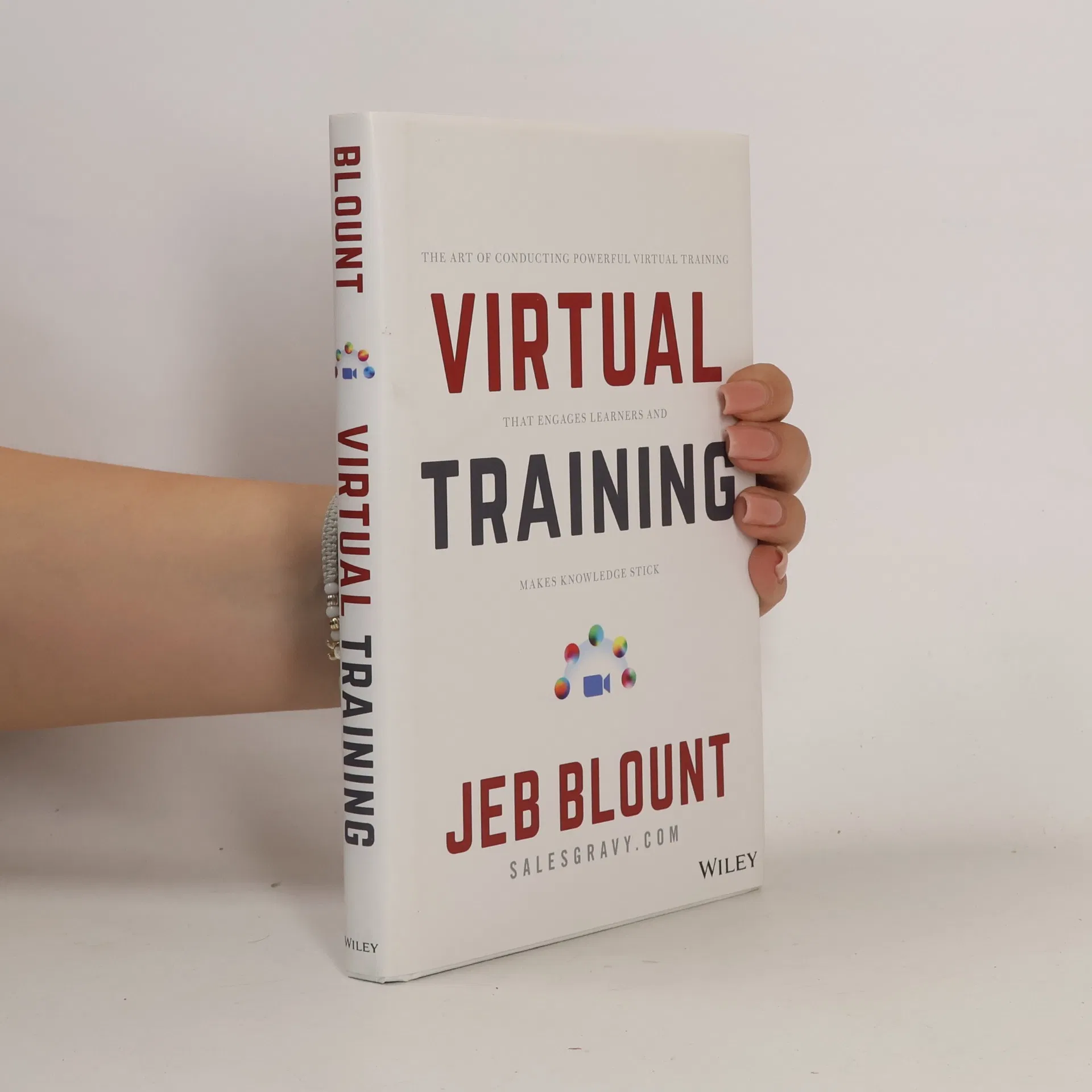


Virtual Training
The Art of Conducting Powerful Virtual Training that Engages Learners and Makes Knowledge Stick
Authors
Parameters
- 288 pages
- 11 hours of reading
More about the book
Remote learning dates back to the 18th century when Caleb Phillips introduced correspondence courses, allowing people to learn new skills regardless of their location. Over the past 300 years, virtual training has gradually evolved, but the global pandemic dramatically accelerated its adoption. Social distancing and remote work transformed the landscape, revealing that traditional classroom training is often costly, inefficient, and yields poor returns on investment. While replicating the collaborative atmosphere of physical classrooms in a virtual setting poses challenges, virtual training offers structure, accountability, and social learning benefits, all while providing speed, agility, and substantial cost savings. It enables organizations to rapidly upskill employees and achieve a higher return on training investments. Additionally, virtual training is environmentally friendly, consuming nearly 90% less energy and producing 85% fewer CO2 emissions than in-person training. However, the historical resistance to virtual training stems from negative experiences, often characterized by disengaging sessions. The delivery method is crucial; when the virtual learning experience is positive, participants engage more, retain knowledge better, and are more likely to attend future sessions. This book serves as a comprehensive guide to creating engaging virtual training that fosters skill acquisition and behavioral change.
Book purchase
Virtual Training, Jeb Blount
- Language

- Released
- 2021
- Binding
- (Hardcover),
- Book condition
- Very Good
- Price
- €6.09
Payment methods
No one has rated yet.
- Title
- Virtual Training
- Subtitle
- The Art of Conducting Powerful Virtual Training that Engages Learners and Makes Knowledge Stick
- Language
- English
- Authors
- Jeb Blount
- Publisher
- John Wiley & Sons Inc
- Released
- 2021
- Format
- Hardcover
- Pages
- 288
- ISBN10
- 1119755832
- ISBN13
- 9781119755838
- Series
- Tags
- Business, Education & School System, Training, Development, Knowledge, Coaching, Coaches, Virtual Reality
- Description
- Remote learning dates back to the 18th century when Caleb Phillips introduced correspondence courses, allowing people to learn new skills regardless of their location. Over the past 300 years, virtual training has gradually evolved, but the global pandemic dramatically accelerated its adoption. Social distancing and remote work transformed the landscape, revealing that traditional classroom training is often costly, inefficient, and yields poor returns on investment. While replicating the collaborative atmosphere of physical classrooms in a virtual setting poses challenges, virtual training offers structure, accountability, and social learning benefits, all while providing speed, agility, and substantial cost savings. It enables organizations to rapidly upskill employees and achieve a higher return on training investments. Additionally, virtual training is environmentally friendly, consuming nearly 90% less energy and producing 85% fewer CO2 emissions than in-person training. However, the historical resistance to virtual training stems from negative experiences, often characterized by disengaging sessions. The delivery method is crucial; when the virtual learning experience is positive, participants engage more, retain knowledge better, and are more likely to attend future sessions. This book serves as a comprehensive guide to creating engaging virtual training that fosters skill acquisition and behavioral change.