

Explore the latest books of this year!
Bookbot

Carles Boix

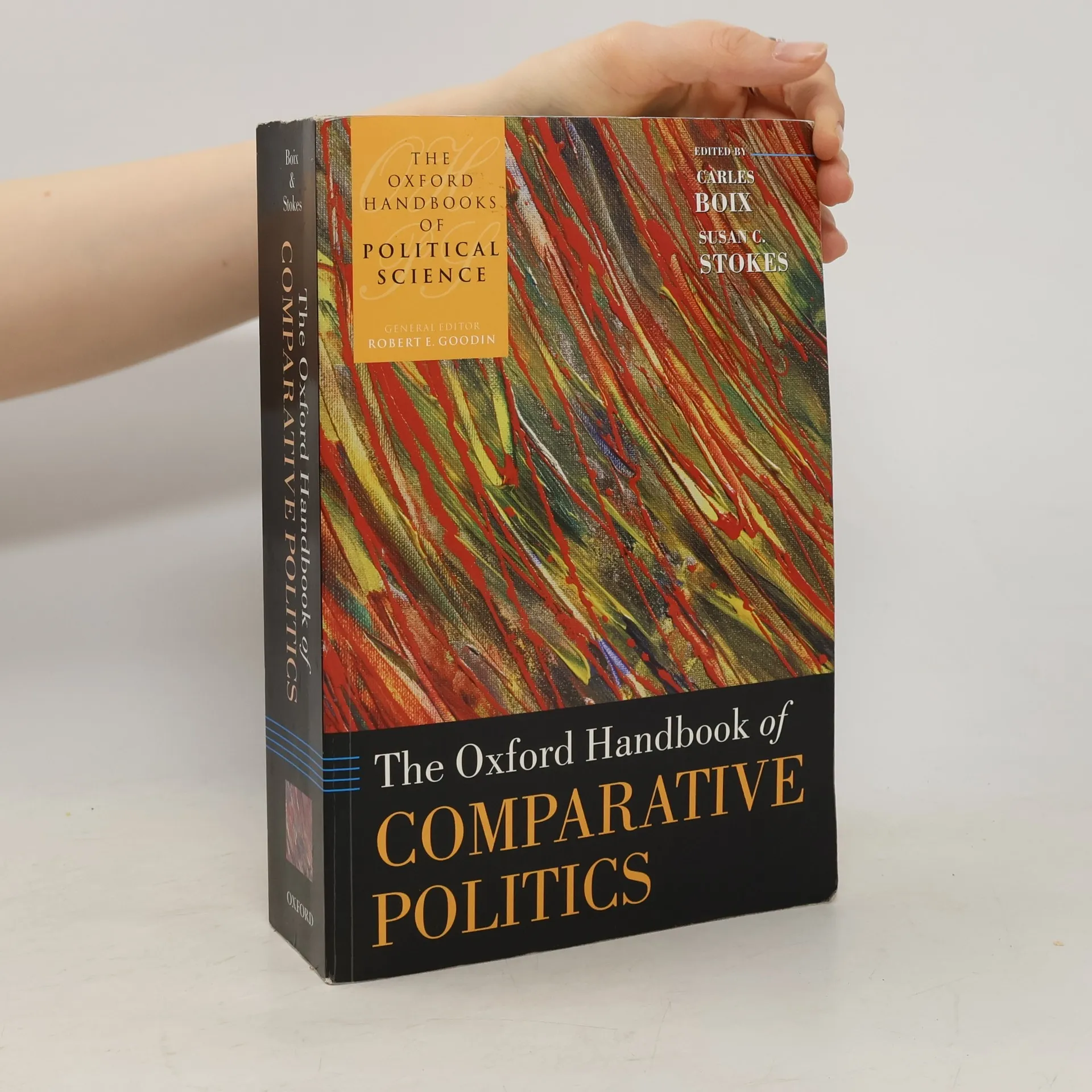
    The Oxford Handbooks of Political Science: The Oxford Handbook of Comparative Politics
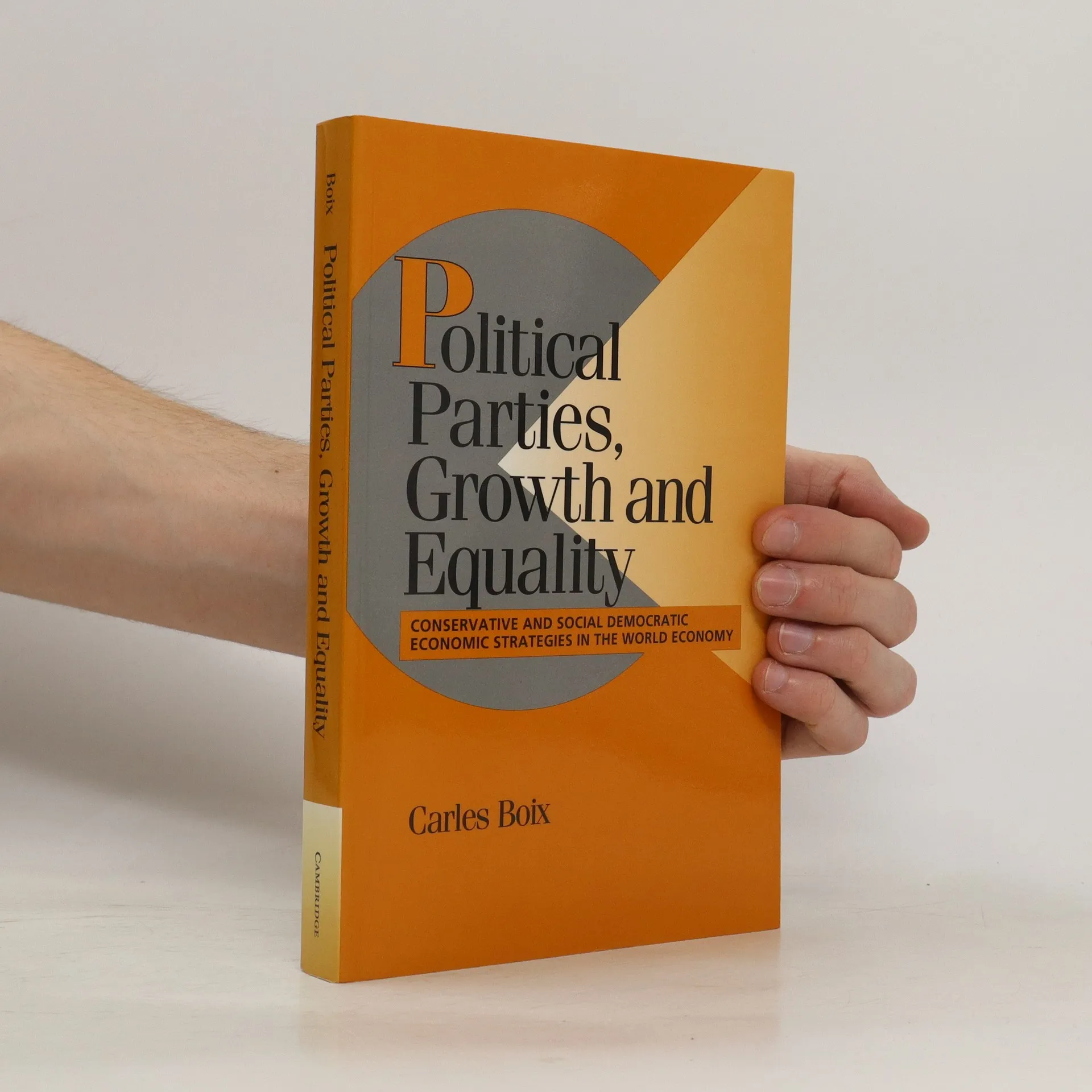
    Political Parties, Growth and Equality
    Democratic Capitalism at the Crossroads
    Democracy and Redistribution
    Political Order and Inequality
    • Political Order and Inequality

      • 334 pages
      • 12 hours of reading

      This book describes the foundations of stateless societies, why and how states emerge, and the basis of political obligation.

      Political Order and Inequality
      4.1
    • Democracy and Redistribution

      • 284 pages
      • 10 hours of reading

      Utilizing game theory, Carles Boix presents a comprehensive theory of political transitions, emphasizing the influence of economic asset distribution and social power dynamics on political regimes. Through thorough historical research and statistical analysis, the work explores the emergence of democracy in classical Athens and its early successes in agrarian Norway, Switzerland, and northeastern America, while also examining its failures in regions dominated by a powerful landowning class.

      Democracy and Redistribution
      3.7
    • Democratic Capitalism at the Crossroads

      Technological Change and the Future of Politics

      • 272 pages
      • 10 hours of reading

      Exploring the evolving dynamics between democracy and capitalism, this book delves into how these two systems have influenced each other throughout history. It examines key events and shifts that have shaped their interdependence, highlighting the tensions and synergies that arise as societies navigate economic and political landscapes. Through rigorous analysis, it offers insights into the implications of their relationship for contemporary governance and economic practices.

      Democratic Capitalism at the Crossroads
      3.6
    • Given the increased openness of countries to international trade and financial flows, the general public and the scholarly literature have grown skeptical about the capacity of policy-makers to affect economic performance. Challenging this view, Political Parties, Growth, and Equality shows that the increasingly interdependent world economy and recent technological shocks have actually exacerbated the dilemmas faced by governments in choosing among various policy objectives, such as generating jobs and reducing income inequality, thereby granting political parties and electoral politics a fundamental and growing role in the economy. To make growth and equality compatible, social democrats employ the public sector to raise the productivity of capital and labor. By contrast, conservatives rely on the private provision of investment. Based on analysis of the economic policies of all OECD countries since the 1960s and in-depth examination of Britain and Spain in the 1980s, this book offers a new understanding of how contemporary democracies work.

      Political Parties, Growth and Equality
      3.2
    • <em>The Oxford Handbook of Comparative Politics</em> offers a critical survey of the field of empirical political science through the collection of a set of chapters written by 48 top scholars in the discipline of comparative politics. Part I includes chapters surveying the key research methodologies employed in comparative politics (the comparative method; the use of history; the practice and status of case-study research; the contributions of field research) and assessing the possibility of constructing a science of comparative politics. Parts II to IV examine the foundations of political order: the origins of states and the extent to which they relate to war and to economic development; the sources of compliance or political obligation among citizens; democratic transitions, the role of civic culture; authoritarianism; revolutions; civil wars and contentious politics. Parts V and VI explore the mobilization, representation and coordination of political demands. Part V considers why parties emerge, the forms they take and the ways in which voters choose parties. It then includes chapters on collective action, social movements and political participation. Part VI opens up with essays on the mechanisms through which political demands are aggregated and coordinated. This sets the agenda to the systematic exploration of the workings and effects of particular institutions: electoral systems, federalism, legislative-executive relationships, the judiciary and bureaucracy. Finally, Part VII is organized around the burgeoning literature on macropolitical economy of the last two decades.

      The Oxford Handbooks of Political Science: The Oxford Handbook of Comparative Politics