
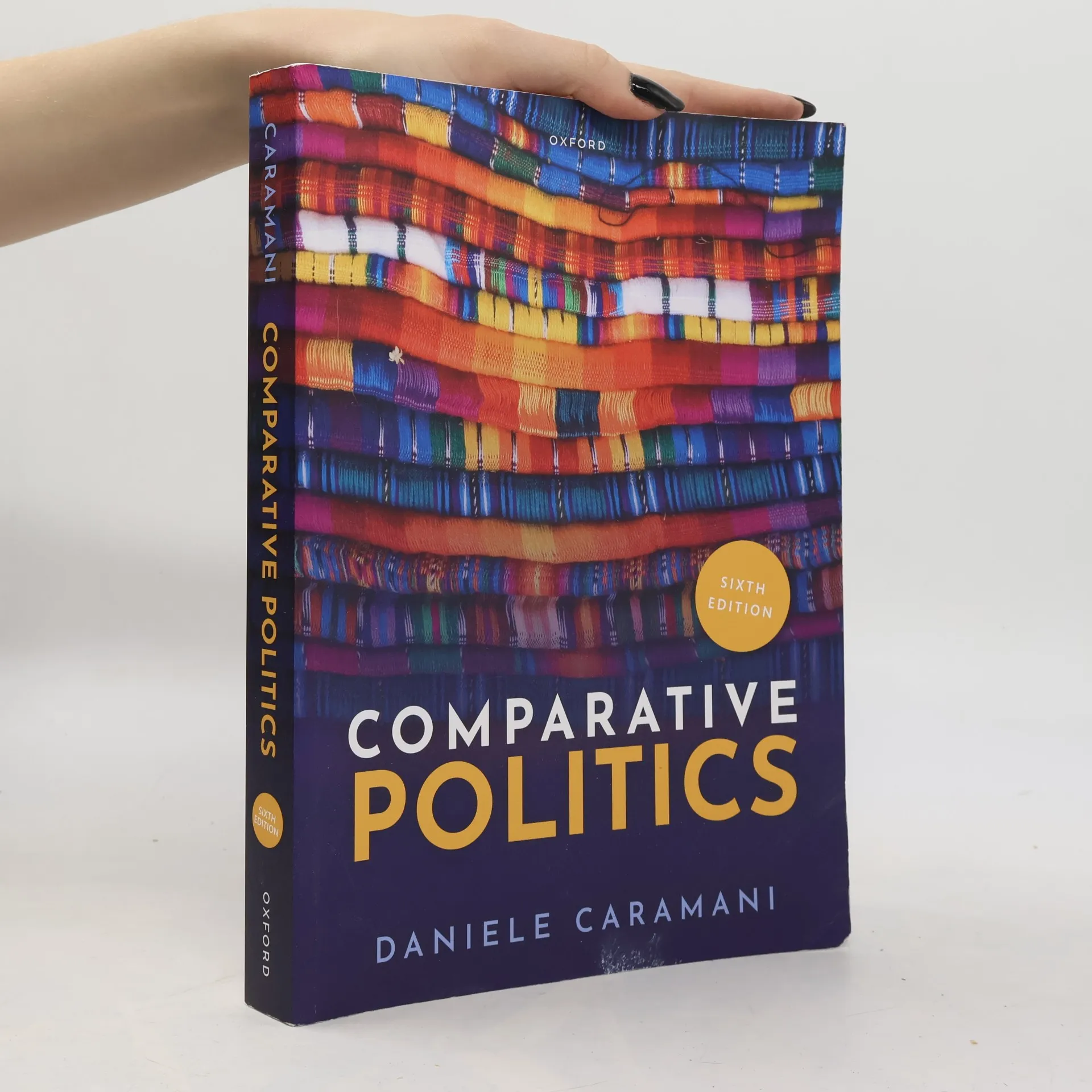
This comprehensive introduction to comparative politics, crafted by leading experts, offers a diverse international perspective and features contributions from six new authors in its sixth edition. The text has been updated to include discussions on the Covid-19 pandemic, Russia's invasion of Ukraine, and the global international order's challenges. A new chapter on the Nation-State and multicultural citizenship addresses identity, community, ethnicity, migration, and regional issues. Additionally, Chapter 11 introduces 'Direct Democracy,' analyzing referendums and citizen assemblies. Chapter 22 focuses on gender equality, poverty, and climate change from a global perspective, examining public policy impacts. Chapter 25, 'Promoting and Protecting Democracy,' discusses recent trends towards authoritarianism and democracy promotion. The book is rich in empirical material, illustrating key political system similarities and differences while encouraging students to explore the 'how' of comparison. The sixth edition features embedded digital resources, including multiple-choice questions, interactive graphs, and a library of web links for further exploration. It also provides videos, comparative tables, and an interactive flashcard glossary for enhanced understanding. Teaching resources for lecturers include seminar activities and a question bank to assess students' grasp of key concepts. This textbook is essential for students of
Daniele Caramani Book order (chronological)


The Nationalization of Politics
The Formation of National Electorates and Party Systems in Western Europe
- 368 pages
- 13 hours of reading
Focusing on the evolution of voting behavior, Daniele Caramani examines the shift from regional diversity to national homogeneity in politics from the mid-nineteenth century to today. Utilizing constituency-level data, he illustrates how national and industrial revolutions fostered a uniform political landscape, supplanting preindustrial territorial influences. His analysis, structured around party families, explains the varying degrees of homogeneity observed in different countries today, highlighting the historical context behind these transformations.
Comparative Politics
- 624 pages
- 22 hours of reading
This exciting and authoritative introduction to comparative politics provides a range of perspectives, methods, and theories at the heart of political systems around the world. Alongside explanations of the most important themes, students are presented with a wealth of empirical data to demonstrate similarities and differences in practice, and to encourage research. This new edition takes account of the latest developments in the wake of democratic uprisings in North Africa and the Middle East, and sees a much stronger emphasis on the financial crisis, paying particular attention to state finances, and stressing the effects of the crisis on political attitudes and forms of participation.