
Explore the latest books of this year!
Bookbot

Nicholas H. Stern Book order (chronological)

    Sir Nicholas Stern is a prominent economist who led the UK Government Economic Service and previously served as the Chief Economist of the World Bank. His work delves into critical economic issues of our time, with his expertise penetrating the complexities of financial systems. His influence as an economist is evident in his pursuit of understanding and addressing global economic challenges.

    Boston Review: Making Aid Work
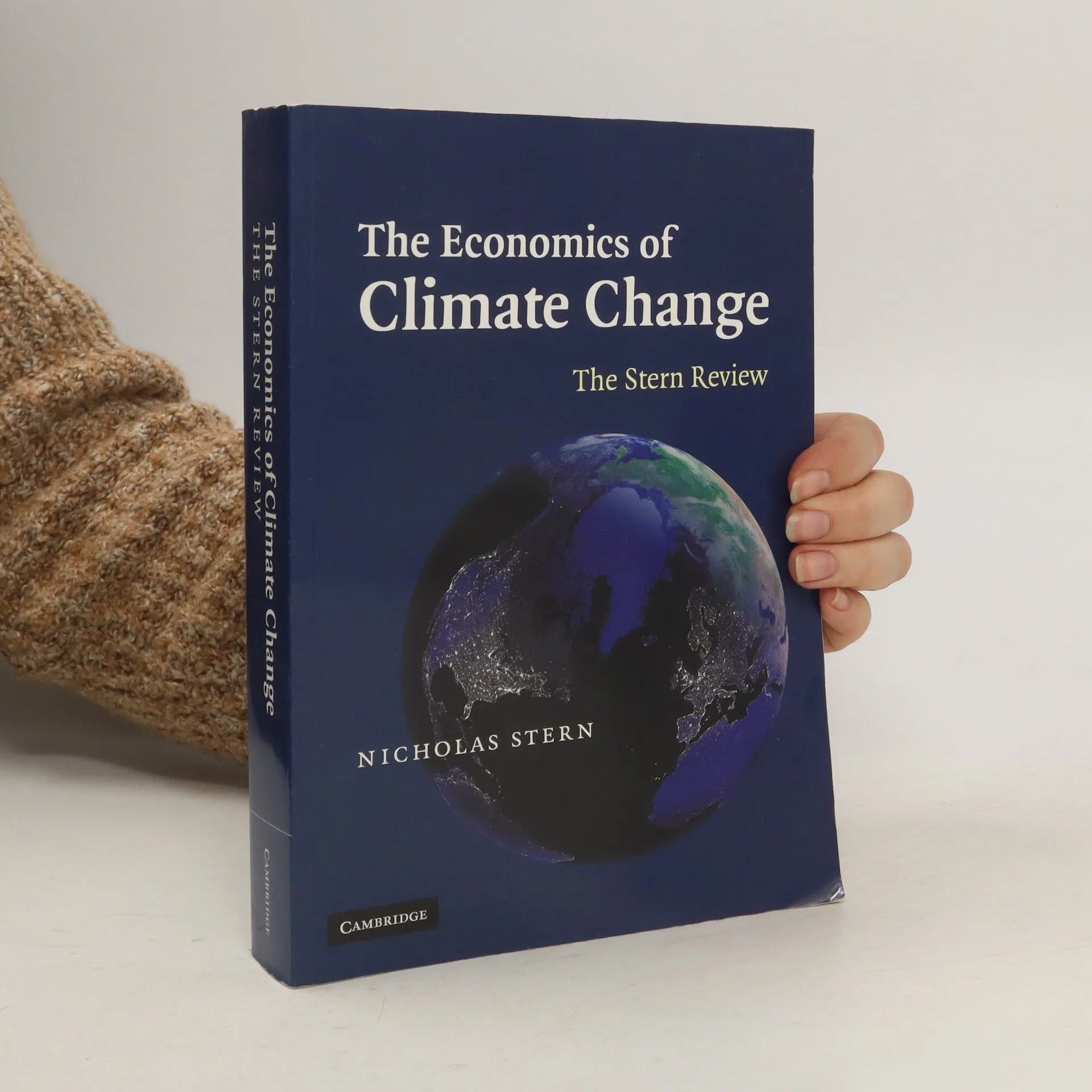
    The Economics of Climate Change
    Blueprint for a Safer Planet
    • Blueprint for a Safer Planet

      • 256 pages
      • 9 hours of reading

      Further substantial climate change is unavoidable, posing immense risks to the natural world, economy, and daily lives. The next thirty years will be crucial in determining how we invest, use energy, organize transport, and manage forests, influencing whether these risks materialize. While poor countries, the least responsible for climate change, will face the earliest and most severe impacts, all nations must adapt to effects such as hurricanes in New Orleans and Mumbai, flooding in England and Mozambique, droughts in Australia and Darfur, and rising sea levels affecting Florida and Bangladesh. As a leading authority on climate change, Lord Stern, author of the Stern Review and former Chief Economist at the World Bank, emphasizes the need for international collaboration to address this unprecedented threat. Successful action on climate change could secure not just our future but also our prosperity. Stern examines the economic management of investment and growth, addressing urgent questions: What is the problem? What are the dangers? What can be done to reduce emissions, and at what cost? How can the world adapt? What implications do these challenges have for corporations, governments, and individuals? The book provides authoritative, inspirational, and hopeful answers to these critical issues.

      Blueprint for a Safer Planet2009
      4.2
    • Boston Review: Making Aid Work

      • 170 pages
      • 6 hours of reading

      With over a billion people living on less than a dollar a day and eight million dying annually due to extreme poverty, global poverty presents a significant moral challenge. Despite the flow of millions in aid to poor countries, results often fall short. In this context, Abhijit Banerjee, an "aid optimist," asserts that aid can be effective, but inefficiencies arise from a lack of analysis regarding which programs truly work. This inefficiency breeds unwarranted pessimism about aid's role in economic development. Banerjee calls on aid donors to improve their approaches by employing field experiments and randomized trials to evaluate programs, similar to the methods used for new drug assessments. He suggests that current development assistance could focus exclusively on programs with proven success. In response, prominent figures in the field, such as Nicholas Stern and Angus Deaton, question whether randomized trials are universally applicable for evaluating success. They also explore broader issues regarding the role of aid in economic development and the types of interventions—whether micro or macro, political or economic—that will genuinely enhance the lives of impoverished individuals. With one in six people living in extreme poverty, finding effective solutions is imperative.

      Boston Review: Making Aid Work2007
    • There is now clear scientific evidence that emissions from economic activity, particularly the burning of fossil fuels for energy, are causing changes to the Earth's climate. A sound understanding of the economics of climate change is needed in order to underpin an effective global response to this challenge. The Stern Review is an independent, rigourous and comprehensive analysis of the economic aspects of this crucial issue. It has been conducted by Sir Nicholas Stern, Head of the UK Government Economic Service, and a former Chief Economist of the World Bank. The Economics of Climate Change will be invaluable for all students of the economics and policy implications of climate change, and economists, scientists and policy makers involved in all aspects of climate change.

      The Economics of Climate Change2007
      4.0