Explore the latest books of this year!
Bookbot

Étienne Gilson

    June 13, 1884 – September 19, 1978

    Étienne Gilson was a preeminent scholar of medieval philosophy, revitalizing interest in the era and illuminating its connections to modern thought. His profound grasp of medieval thought, particularly its Christian foundations and relationship with reason and faith, earned him global acclaim. Gilson's work demonstrates how medieval perspectives can continue to inform contemporary philosophical discussions, offering insight into an unwavering conviction in God's existence as the bedrock of meticulous rational inquiry.

    Étienne Gilson
    The Philosophy of St. Thomas Aquinas
    Mass Society and Its Culture, and Three Essays concerning Etienne Gilson on Bergson, Christian Philosophy, and Art
    The Spirit of Medieval Philosophy
    Wisdom and Love in St. Thomas Aquinas
    Medieval Essays
    Methodical Realism: A Handbook for Beginning Realists
    • This short book is a work of one of the 20th century's greatest philosophers and historians of philosophy, Etienne Gilson. The book's title, taken from the first chapter, may sound esoteric but it reflects a common-sense outlook on the world, applied in a methodical way. That approach, known as realism, consists in emphasizing the fact that what is real precedes our concepts about it. In contrast to realism stands idealism, which refers to the philosophical outlook that begins with ideas and tries to move from them to things. Gilson shows how the common-sense notion of realism, though denied by many thinkers, is indispensible for a correct understanding of things--of what is and how we know what is. He shows the flaws of idealism and he critiques efforts to introduce elements of idealism into realist philosophy (immediate realism). At the same time, the author criticizes failures of certain realist philosophers--including Aristotle--to be consistent in their own principles and to begin from sound starting points. To these problems, Gilson traces medieval philosophy's failure in the realm of science, which led early modern scientific thinkers of the 17th century unnecessarily to reject even the best of medieval scholastic philosophy. He concludes with The Realist Beginner's Handbook, a summary of key points for thinking clearly about reality and about the knowledge of it.
      Methodical Realism: A Handbook for Beginning Realists
      4.4
    • Medieval Essays

      • 236 pages
      • 9 hours of reading

      Etienne Gilson, a prominent medievalist and key figure in the revival of Thomistic philosophy, presents a collection of nine insightful articles. His distinguished career included membership in the French Academy and teaching at prestigious institutions like the Sorbonne and the College de France. Ultimately, he chose to lead the Pontifical Institute of Medieval Studies at the University of Toronto, shaping the field for decades. This compilation showcases his significant contributions to medieval studies and philosophy.

      Medieval Essays
      4.7
    • Wisdom and Love in St. Thomas Aquinas

      • 80 pages
      • 3 hours of reading

      The Aristotelian Society of Marquette University each year invites a scholar to speak on the Philosophy of St. Thomas Aquinas. Those lectures have come to be called the Aquinas Lectures and are customarily delivered on the Sunday nearest March 7, the feast day of the Society's patron saint

      Wisdom and Love in St. Thomas Aquinas
      4.5
    • The Spirit of Medieval Philosophy

      • 500 pages
      • 18 hours of reading

      In this book (a translation of his well-known work L'esprit de la philosophie medievale) , Etienne Gilson undertakes the task of defining the spirit of mediaeval philosophy. Gilson asks whether we can form the concept of a Christian philosophy and whether mediaeval philosophy is not its most adequate historical expression. He maintains that the spirit of mediaeval philosophy is the spirit of Christianity penetrating the Greek tradition, working within it, and drawing out of it a certain view of the world that is specifically Christian. To support his hypothesis, Gilson examines mediaeval thought in its nascent state, at that precise point where the Judeo-Christian graft was inserted into the Hellenic tradition. Gilson's demonstration is primarily historical and occasionally theoretical in suggesting how doctrines that satisfied our predecessors for so many centuries may still be found conceivable today.

      The Spirit of Medieval Philosophy
      4.3
    • Exploring the philosophy of art, Etienne Gilson challenges the validity of contemporary artistic reproductions. He delves into the complexities of defining art, questioning the essence of what constitutes true artistic expression. For instance, he distinguishes between original works and their reproductions, such as photographs of paintings or images of sculptures. Gilson's inquiry raises fundamental issues about the nature of art in a modern context, particularly regarding the nuances of recorded music and its relationship to traditional forms of artistic creation.

      Mass Society and Its Culture, and Three Essays concerning Etienne Gilson on Bergson, Christian Philosophy, and Art
      4.5
    • The Philosophy of St. Thomas Aquinas

      • 318 pages
      • 12 hours of reading

      Leather Binding on Spine and Corners with Golden Leaf Printing on round Spine (extra customization on request like complete leather, Golden Screen printing in Front, Color Leather, Colored book etc.) Reprinted in 2019 with the help of original edition published long back [1924]. This book is printed in black & white, sewing binding for longer life, Printed on high quality Paper, re-sized as per Current standards, professionally processed without changing its contents. As these are old books, we processed each page manually and make them readable but in some cases some pages which are blur or missing or black spots. If it is multi volume set, then it is only single volume, if you wish to order a specific or all the volumes you may contact us. We expect that you will understand our compulsion in these books. We found this book important for the readers who want to know more about our old treasure so we brought it back to the shelves. Hope you will like it and give your comments and suggestions. - eng, Pages 320. EXTRA 10 DAYS APART FROM THE NORMAL SHIPPING PERIOD WILL BE REQUIRED FOR LEATHER BOUND BOOKS. COMPLETE LEATHER WILL COST YOU EXTRA US$ 25 APART FROM THE LEATHER BOUND BOOKS. {FOLIO EDITION IS ALSO AVAILABLE.}

      The Philosophy of St. Thomas Aquinas
      5.0
    • In this final edition of his classic study of St. Thomas Aquinas, Etienne Gilson presents the sweeping range and organic unity of Thomistic philosophical thought. The philosophical thinking of Aquinas is the result of reason being challenged to relate to many theological conceptions of the Christian tradition. Gilson carefully reviews how Aquinas grapples with the relation itself of faith and reason and continuing through the existence and nature of God and His creation, the world and its creatures, especially human beings with their power of intellect, will, and moral life. He concludes this study by discussing the life of people in society, along with their purpose and final destiny. Gilson demonstrates that Aquinas drew from a wide spectrum of sources in the development of his thought-from the speculations of the ancient Greeks such as Aristotle, to the Arabic and Jewish philosophers of his time, as well as from Christian writers and scripture. The Christian Philosophy of St. Thomas Aquinas offers students of philosophy and medieval studies an insightful introduction to the thought of Aquinas and the Scholastic philosophy of the Middles Ages, insights that are still revelant for today.

      The Christian Philosophy of St. Thomas Aquinas
      4.3
    • The highly regarded French philosopher, tienne Gilson, brilliantly plumbs the depths of Thomistic Realism, and false Thomisms as well, in this answer to Kantian modernism. The important work, exquisitely translated by Mark Wauck, brings the essential elements of philosophy into view as a cohesive, readily understandable, and erudite structure, and does so rigorously in the best tradition of St. Thomas. Written as the definitive answer to those philosophers who sought to reconcile critical philosophy with scholastic realism, Gilson saw himself as an historian of philosophy whose main task was one of restoration, and principally the restoration of the wisdom of the Common Doctor of the Church, St. Thomas Aquinas. Gilsons thesis was that realism was incompatible with the critical method and that realism, to the extent that it was reflective and aware of its guiding principles, was its own proper method. He gives a masterful account of the various forces that shaped the neo-scholastic revival, but Gilson is concerned with the past only as it sheds light on the present. In addition to his criticisms, Gilson presents a positive exposition of true Thomist realism, revealing the foundation of realism in the unity of the knowing subject.

      Thomist Realism and the Critique of Knowledge
      4.2
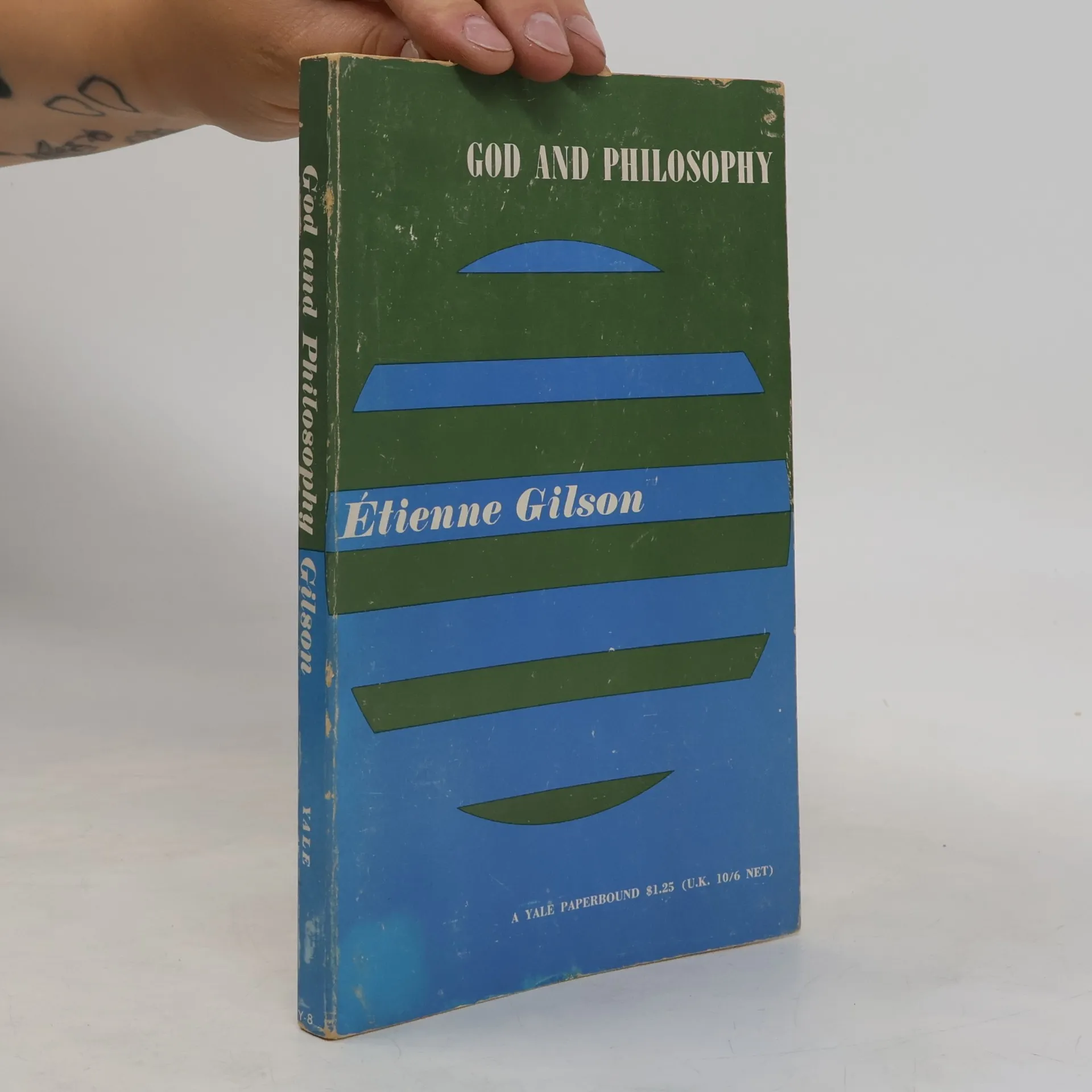
    • In this work, the Catholic philosopher Etienne Gilson deals with one of the most important and perplexing metaphysical problems: the relation between our notion of God and demonstrations of his existence.

      God and Philosophy
      4.2
    • The Metamorphoses of the City of God

      • 272 pages
      • 10 hours of reading

      Exploring the philosophical evolution of society, this work delves into the transformation of human thought and culture through the lens of historical events. It examines the interplay between divine influence and societal change, offering insights into the moral and ethical implications of these metamorphoses. The text serves as a critical reflection on the relationship between humanity and the divine, making it a significant contribution to philosophical literature.

      The Metamorphoses of the City of God
      3.7
    • Excerpt from History of Philosophy and Philosophical Education: Under the Auspices of the Aristotelian Society of Marquette University God and Philosophy (the Powell lec tures of 1940) New Haven, Yale University Press, and Oxford, Oxford University Press, 1941, 144 pages. About the Publisher Forgotten Books publishes hundreds of thousands of rare and classic books. Find more at www.forgottenbooks.com This book is a reproduction of an important historical work. Forgotten Books uses state-of-the-art technology to digitally reconstruct the work, preserving the original format whilst repairing imperfections present in the aged copy. In rare cases, an imperfection in the original, such as a blemish or missing page, may be replicated in our edition. We do, however, repair the vast majority of imperfections successfully; any imperfections that remain are intentionally left to preserve the state of such historical works.

      HISTORY OF PHILOSOPHY AND PHILOSOPHICAL EDUCATION
    • John Duns Scotus

      • 632 pages
      • 23 hours of reading

      Étienne Gilson's Jean Duns Scot: Introduction À Ses Positions Fondamentales is widely understood to be one of the most important works on John Duns Scotus' texts, famous for their complexity. James Colbert's translation is the first time that Gilson's work on Scotus has been put into English, with an introduction by Trent Pomplun and an afterword by John Millbank. Scotus contributed to the development of a metaphysical system that was compatible with Christian doctrine, an epistemology that altered the 13th century understanding of human knowledge, and a theology that stressed both divine and human will. Gilson, in turn, offers a thoroughly comprehensive introduction to the fundamental positions that Scotus stood for. Explaining Scotus's views on metaphysics, the existence of infinite being and divine nature, the matter of the physical spiritual and angelic, intellectual knowledge and will and Scotus' relationship with other scholars, Gilson and Colbert show how deeply Scotus left a mark on discussions of such disparate topics as the semantics of religious language, the problem of universals, divine illumination, and the nature of human freedom. This work has been translated from the original work in French Jean Duns Scot. Introduction à ses positions fondamentales (© 1952 by Librairie Philosophique J. Vrin).

      John Duns Scotus
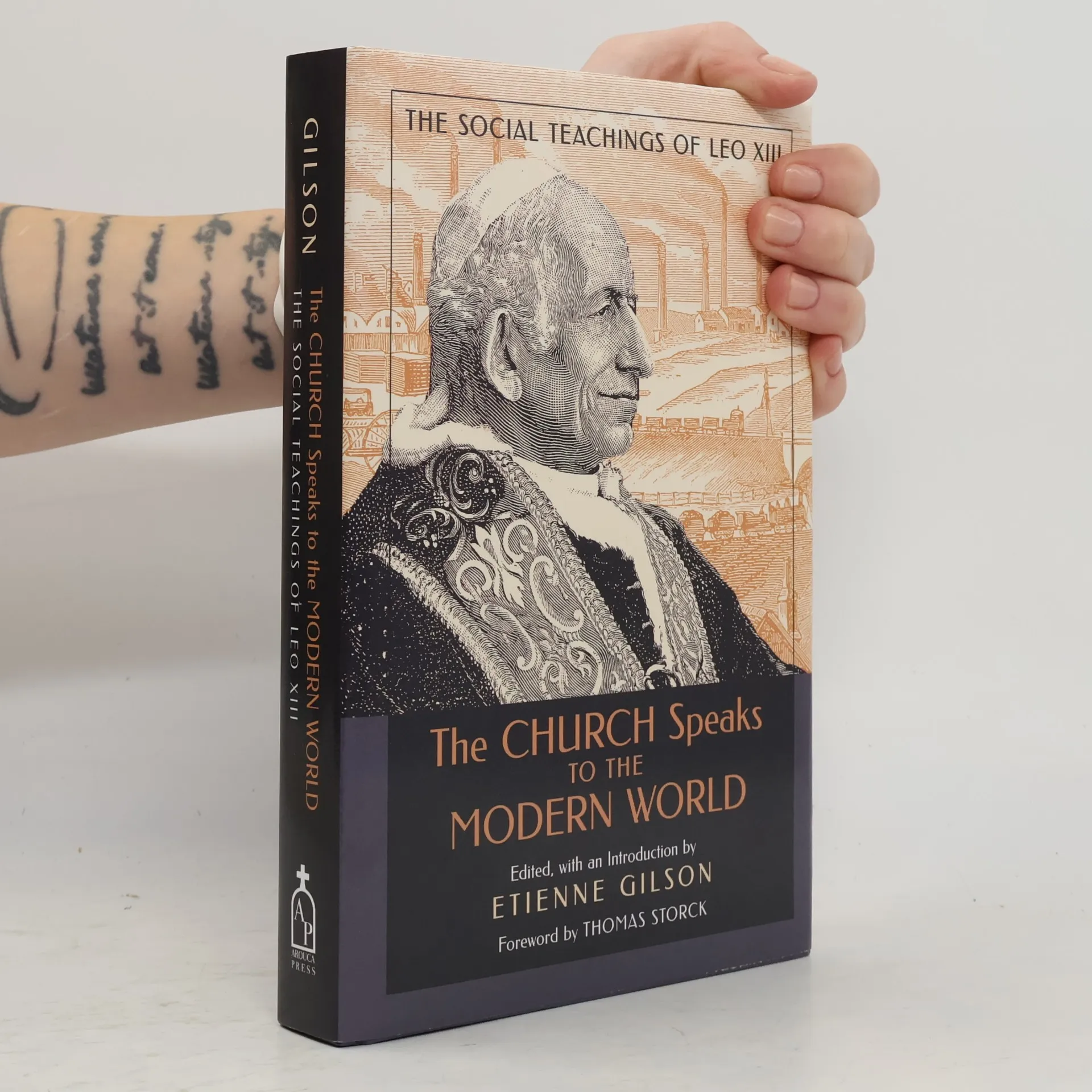
    • In The Church Speaks to the Modern World, Etienne Gilson presented for the first time the basic encyclicals of Leo XIII arranged in the order expressly indicated by the Pope himself. Gilson's sparkling introduction provides the proper perspective for the encyclicals; his notes brilliantly clarify obscure points; his summaries provide an immediate grasp of each encyclical; and his study of the variant translations is invaluable. In short, here is the definitive collection of the most important and far-reaching papal pronouncements of the modern age.

      The Church Speaks to the Modern World. The Social Teachings of Leo XIII
    • Filozoficzne stałe bytu

      • 320 pages
      • 12 hours of reading

      Praca Filozoficzne stałe bytu zajmuje na tle całej twórczości Gilsona miejsce szczególne. Jest to dzieło, które zostało opublikowane po jego śmierci, a obejmuje teksty i przeróbki artykułów powstających w latach 1952-67, niemniej sam autor, jak stwierdza w Przedmowie J.-F. Courtine, zamierzył to dzieło jako całość. Gilson chciał sformułować tam nową filozofię bytu i w tym sensie książka ta stanowi kontynuację dzieła Byt i istota (1963). Rozważania dotyczące poznania zasady, jej natury, zasad i przyczyn, poznania transcendentaliów, zwłaszcza bytu, prowadzone są w kontekście metafizyki Zachodu, także tej nowożytnej i współczesnej, a szczególnie interesujące są odwołania do myśli Martina Heideggera. Wszystkie te rozważania prowadzone są na tle analiz źródłowych, analiz tekstów, prezentując Gilsonowski niedościgniony warsztat historyka filozofii.

      Filozoficzne stałe bytu
      3.0
    • Zachęta Narodowa Galeria Sztuki oddaje w ręce czytelników pierwszy tom serii wydawniczej, w ramach której publikowane będą teksty najwybitniejszych autorów z zakresu filozofii sztuki i estetyki, dotąd niedostępne w języku polskim. Na tytuł serii wybrany został łaciński termin esse, określający istnienie rozumiane jako akt bytu. Materie i formy. Pojetyki szczegółowe sztuk głównych (1964) to ważne dzieło jednego z głównych współczesnych przedstawicieli nurtu filozofii realistycznej, francuskiego filozofa tiennea Gilsona (18841978), analizujące kwestię sztuki z perspektywy realizmu poznawczego. Gilson, członek Akademii Francuskiej, ceniony jest przede wszystkim jako jeden z największych znawców historii filozofii, zwłaszcza średniowiecznej i nowożytnej, ale także współczesnej. W charakterystyczny dla myślicieli nurtu realistycznego systematyczny sposób Gilson porządkuje kluczowe aspekty problematyki sztuki, już w pierwszym kroku swoich rozważań rozstrzygając kwestię rozumienia piękna jako właściwości każdego bytu, a nie kategorii idealnej czy jedynie estetycznej. W konsekwencji tego rozróżnienia piękno, jak podkreśla filozof, przynależy każdemu dziełu sztuki i jest celem sztuki, a artysta nie odtwarza piękna zastanego w świecie, a je wytwarza (ze wstępu Janusza S. Janowskiego). Kolejną książką, jaka ukaże się w serii Esse, będzie Obraz i rzeczywistość (1958) tego samego autora.

      Materie i formy. Pojetyki szczegółowe sztuk...
    • Społeczeństwo masowe i jego kultura to zbiór esejów, które Etienne Gilson przygotowywał w latach sześćdziesiątych na potrzeby publikacji i wykładów wygłoszonych na uczelniach całego świata. Podstawowe zagadnienie, które go interesowało, wiązało się z relacją sztuki, a szerzej kultury z procesami industrializacji, zmieniającymi oblicza społeczeństw lat sześćdziesiątych na Zachodzie. W zbiorze tym autor zastanawia się na ile technika, automatyzacja i ich masowe upowszechnienie może służyć sztuce, pięknu i kulturze, a na ile staje się zagrożeniem i pułapką. W tym kontekście w szeregu esejów Etienne Gilson pochyla się nad tematami takimi jak: malarstwo, literatura, muzyka, liturgia (w tym ta transmitowana), które na swojej aktualności wcale nie straciły i dziś.

      Społeczeństwo masowe i jego kultura
    • Malarstwo i rzeczywistość

      • 504 pages
      • 18 hours of reading

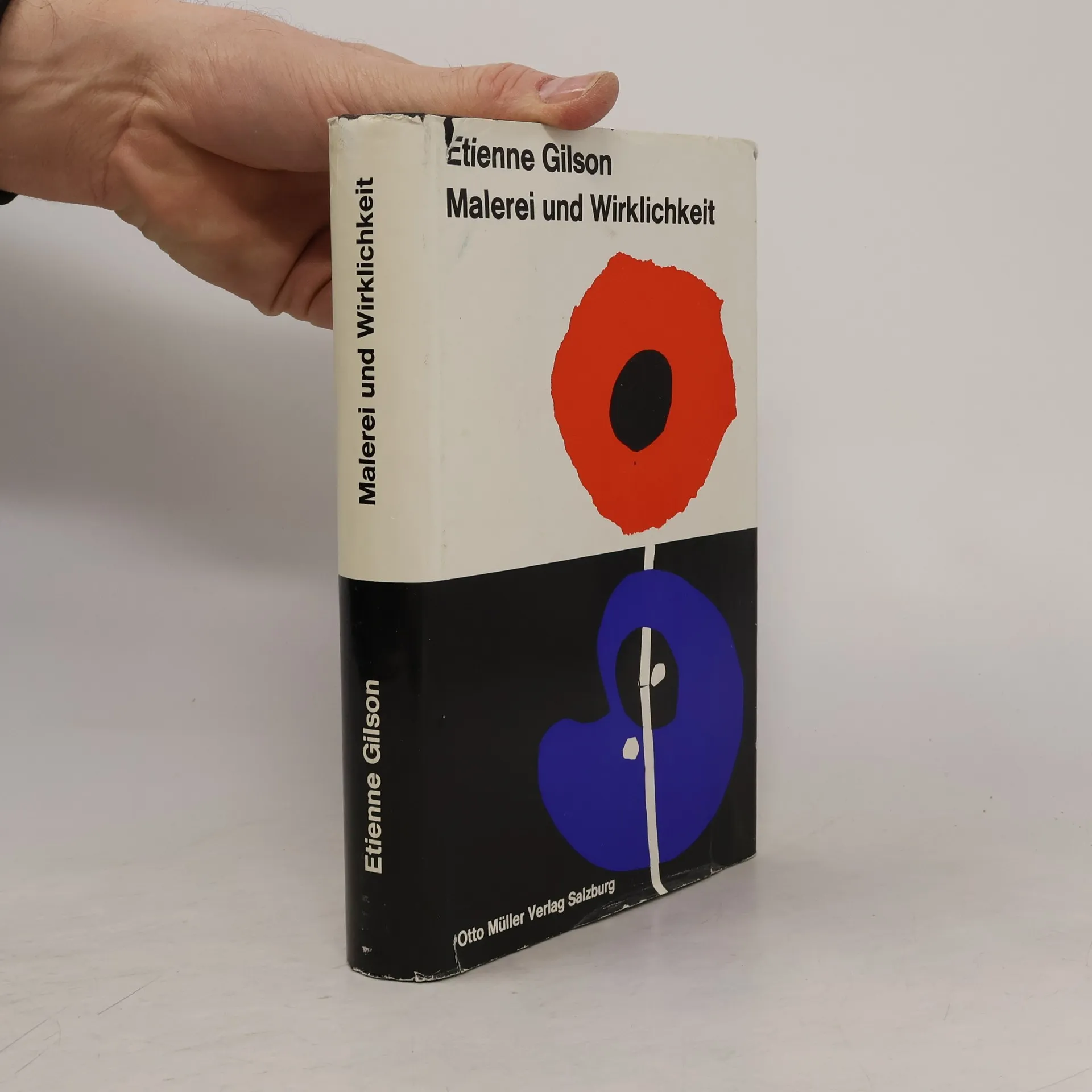
      Książka Malarstwo i rzeczywistość (1964), tłumaczenie dzieła francuskiego historyka filozofii, Etiennea Gilsona, stanowi nie tyle filozoficzne wprowadzenie do malarstwa, co raczej obrazowe wprowadzenie do filozofii. To próba filozofowania na podstawie pewnego porządku faktów, którymi są obrazy, w celu wyciągnięcia z nich filozoficznych wniosków i ukazania swoistej ontologii malarstwa. Gilson przedstawia w niej odważną interpretację rzeczywistości przedstawionej w obrazach, opierając się na spostrzeżeniach zawartych w pismach wielkich malarzy od Leonarda da Vinci, przez Joshuę Reynoldsa, Johna Constablea i Eugenea Delacroix, po m.in. Pieta Mondriana i Paula Klee, w celu uchwycenia istoty związku kształtowania artystycznego wyrazu z procesem malarskim. Książka zawiera sześć rozdziałów dotyczących kwestii istnienia obrazu, osobliwego charakteru jego bytowania, indywidualności, istoty bytowości sztuki, ontogenezy obrazu, jego relacji wobec swego przedmiotu, wobec słowa i metafizyki.

      Malarstwo i rzeczywistość
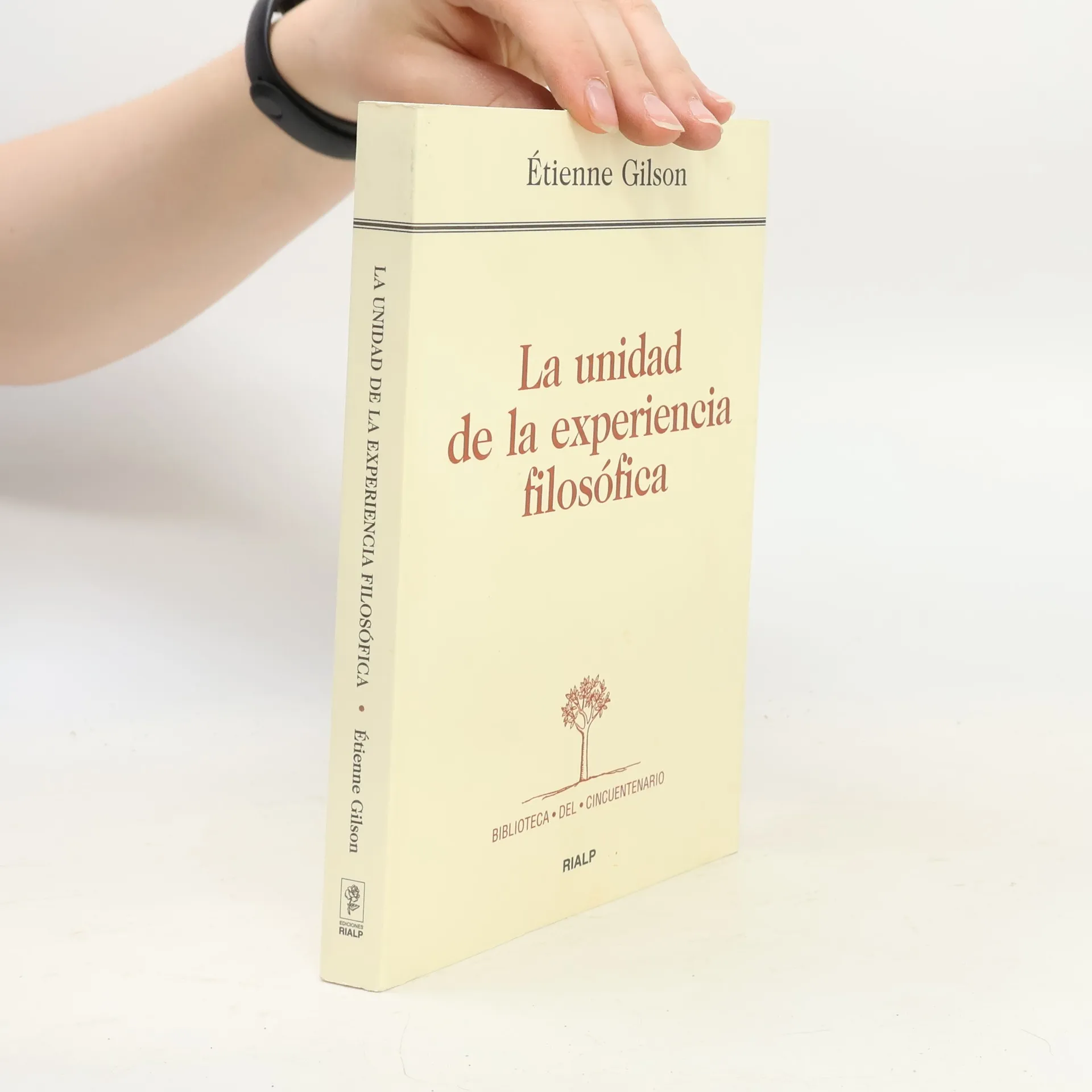
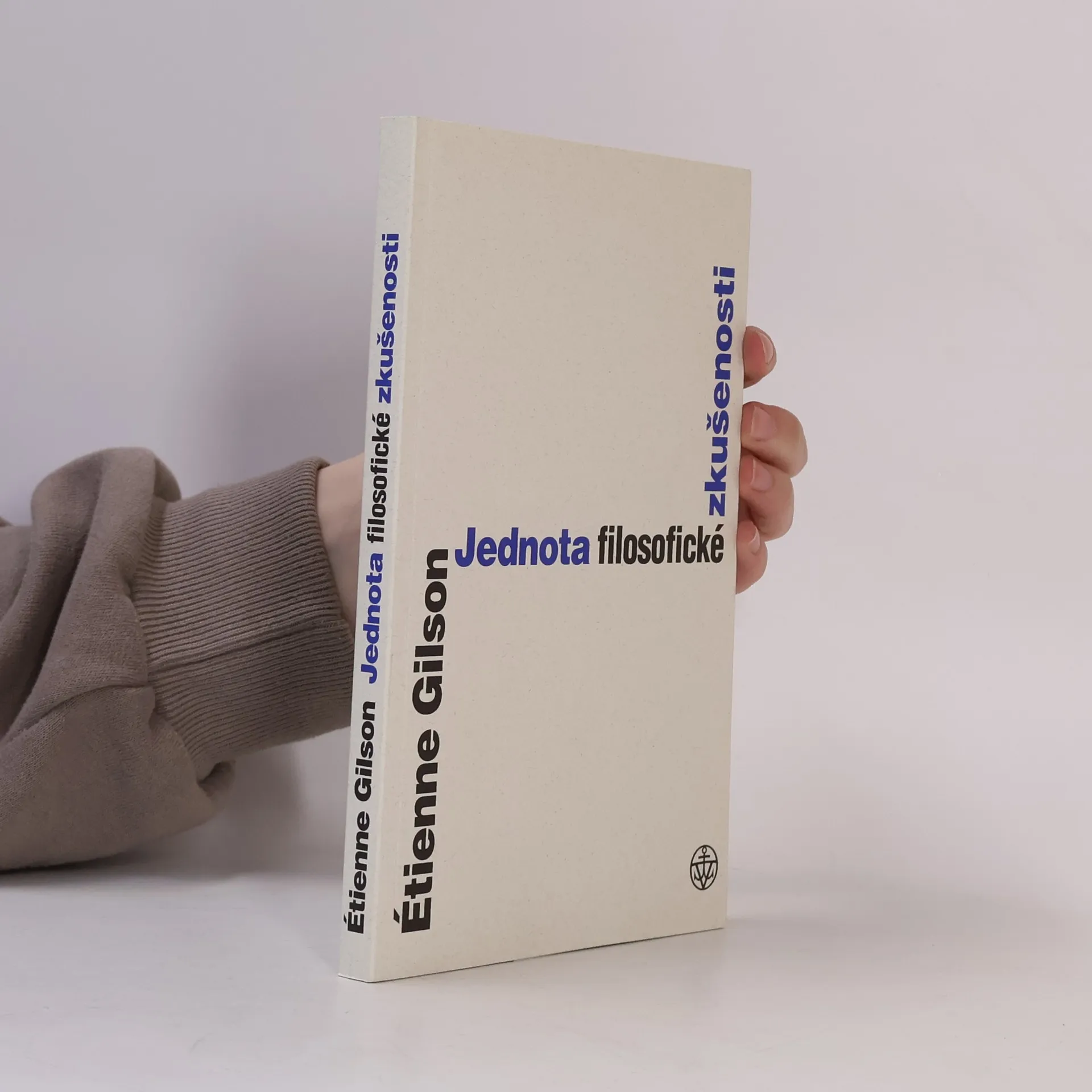
    • Z dějin filosofie můžeme vyčíst určitý filosoficky relevantní smysl, který spočívá v povaze samotného filosofického poznávání. Takový je zhruba názor autora, jenž zkoumá nejdůležitější témata a pojmy středověkého, karteziánského a moderního (kantovského) myšlení jako řadu konkrétních myšlenkových „experimentů“. Každý z nich představuje pokus o metodické uchopení filosofického poznání, všechny však tvoří „filosofickou zkušenost“, která je pozoruhodně jednotná. Nikoli nějaká konkrétní filosofie, nýbrž filosofie jako taková si v jednotě svého meta-fyzického směřování zaslouží název philosophia perennis — „věčná filosofie“: co je vpravdě filosofické, je taktéž trvalé, věčné. Étienne Gilson (1884—1978) proslul jako znalec středověkého myšlení. Působil jako profesor středověké filosofie na pařížské Sorbonně a jako ředitel Institutu středověkých studií na univerzitě v Torontu. Je autorem řady děl, z nichž některá vyšla i v češtině (Bytí a někteří filosofové; Bůh a filosofie). Základem jeho knihy Jednota filosofické zkušenosti se staly přednášky proslovené na Harvardské univerzitě roku 1936.

      Jednota filosofické zkušenosti