
Explore the latest books of this year!
Bookbot

Eriko Sato

    January 1, 1962

    N/A

    Japan Now! a Japanese Language Reader
    Learning Japanese Kanji Practice Book Volume 2
    Japanese Grammar: A Workbook for Self-Study
    Practice Makes Perfect Complete Japanese Grammar, 2nd Edition
    Learning Japanese Kanji Practice Book Volume 1
    My First Japanese Kanji Book
    • My First Japanese Kanji Book

      Learning Kanji the Fun and Easy Way! (Audio Included)

      • 64 pages
      • 3 hours of reading

      This engaging introduction to kanji for children features 109 characters, focusing on first-grade level kanji along with select second to sixth-grade characters. It combines colorful illustrations and poems by 14-year-old Anna Sato, providing a creative context for learning. Each character includes furigana, stroke-order diagrams, and vocabulary examples, along with spaces for writing practice. Ideal for self-study or as a supplement in language schools, the book also offers companion audio to enhance pronunciation. Access to additional media content is available online.

      My First Japanese Kanji Book
      4.5
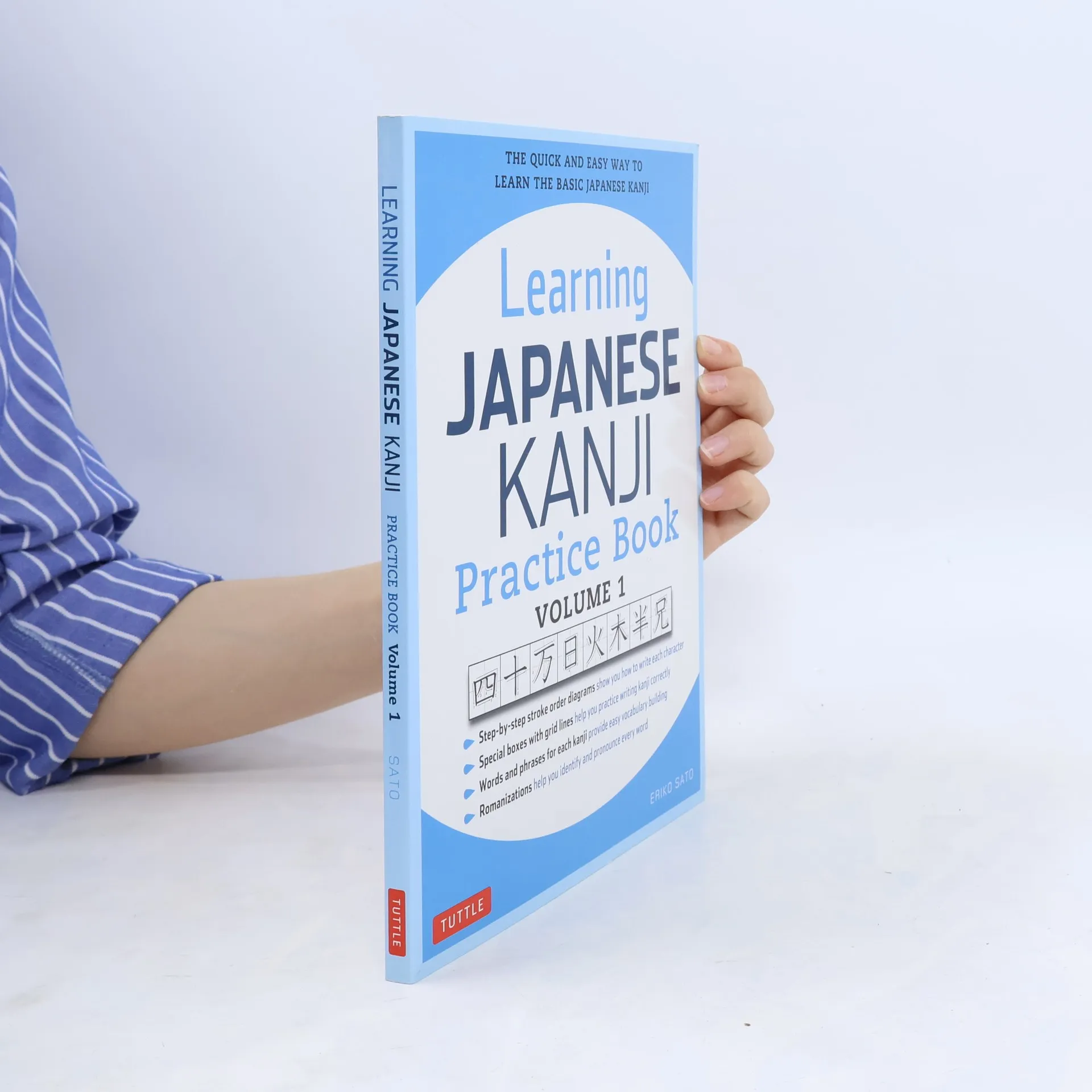
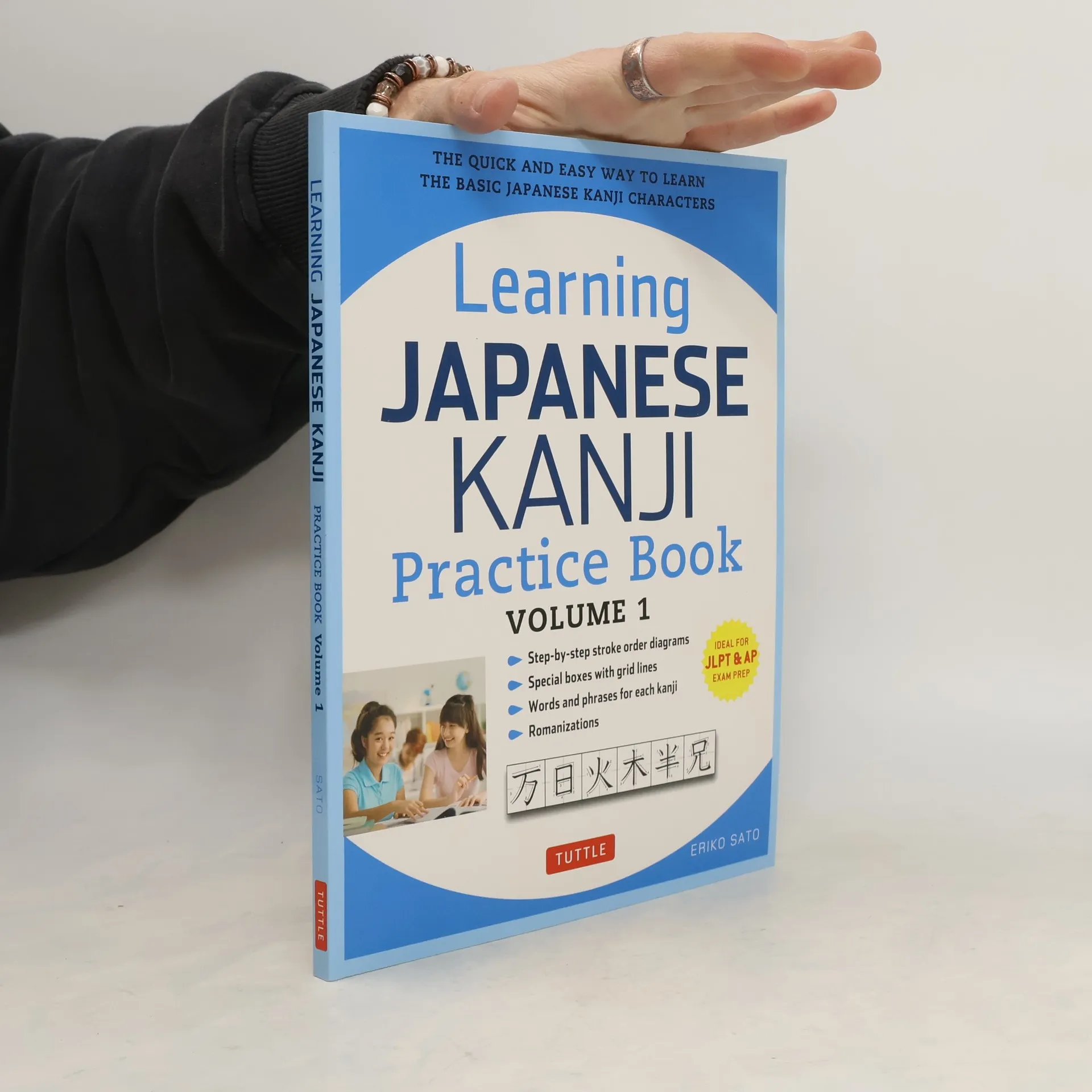
    • The quick and easy way to learn the basic Japanese kanji! Learning Japanese Kanji Practice Book is intended for beginning students or experienced speakers who need to practice their written Japanese. Kanji are an essential part of the Japanese language and together with kana (hiragana and katakana) comprise written Japanese. This book presents the most commonly used kanji characters. All the kanji and related vocabulary words in this book are those that students are expected to know for Level 5 of the Japanese Language Proficiency Test. (JLPT). Characters that appear in the AP Japanese Language and Culture Exam are flagged. Readings, meanings, and common compounds are presented. The correct method of writing each character is indicated and practice boxes with strokes that can be traced are provided, along with empty boxes for freehand writing practice. Lots of exercises are included to give students the opportunity to practice writing sentences containing the Kanji. Indexes at the back allow you to look up the characters by their readings and English meanings. This kanji book includes: Step-by-step stroke order diagrams for each character. Individual boxes with grid lines to practice writing characters. Extra printable practice grids Words and phrases using each kanji. Romanizations (romanji) to help identify and pronounce every word.
      Learning Japanese Kanji Practice Book Volume 1
      4.3
    • Each of the 12 chapters is devoted to one widely-used sentence structure and its variations. Online audio files recorded by a native speaker are available for all key Japanese dialogues, and all texts are written in Japanese characters with romanized Japanese and English translation. The book is illustrated throughout with drawings that reinforce the meaning of the written text.

      Japanese Grammar: A Workbook for Self-Study
      4.0
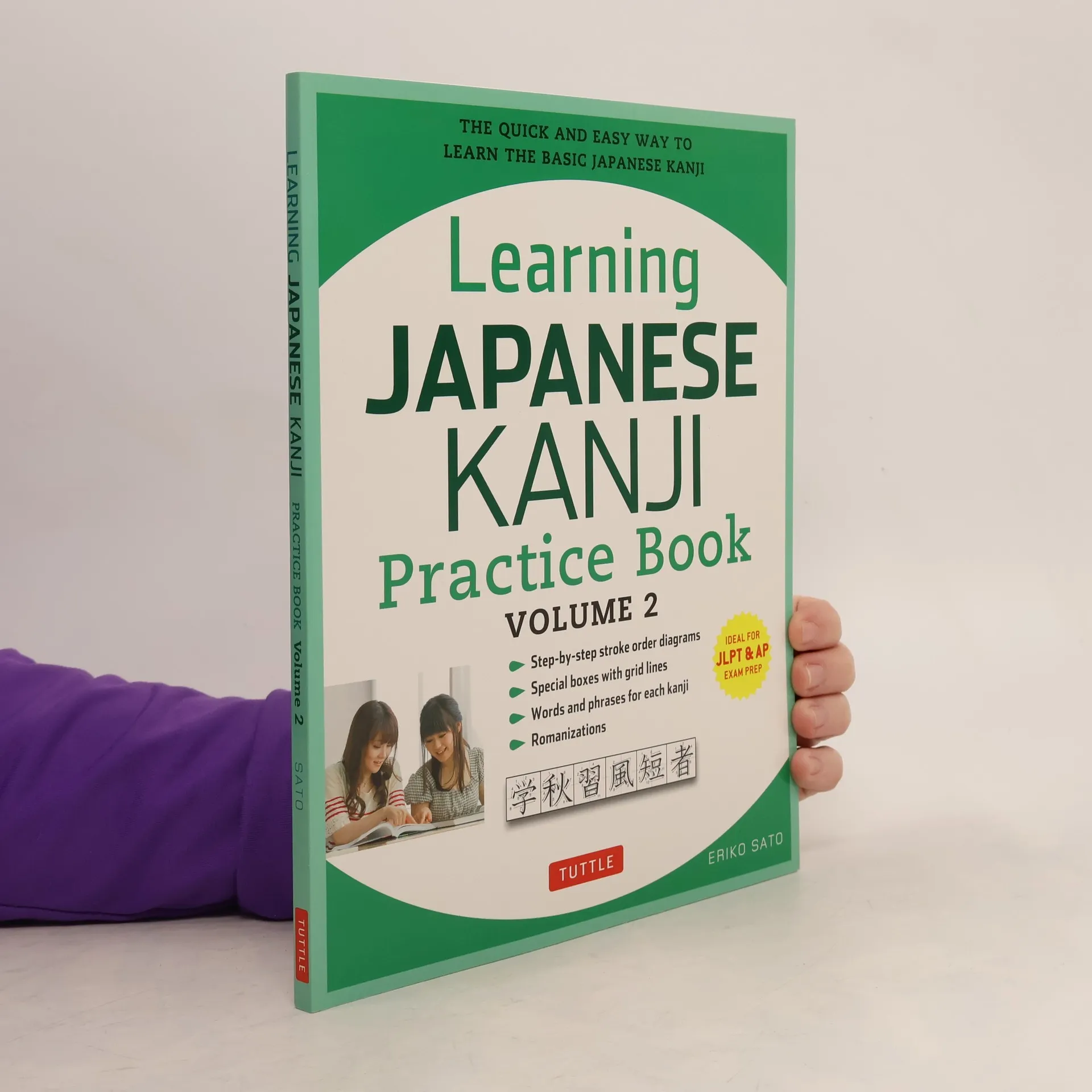
    • This is an invaluable study guide and practice book for learning basic Japanese kanji. Learning Japanese Kanji Practice Book is intended for beginning students or experienced speakers who need to practice their written Japanese. Kanji are an essential part of the Japanese language and together with kana (hiragana and katakana) comprise written Japanese. This book presents the kanji characters that are most commonly used. All the kanji and related vocabulary words in this book are those that students are expected to know for Level 4 of the Japanese Language Proficiency Test (JLPT). Characters that appear in the AP Japanese Language and Culture Exam are flagged. Readings, meanings, and common compounds are presented. The correct method of writing each character is clearly indicated, and practice boxes with strokes that can be traced are provided, along with empty boxes for freehand writing practice. Lots of exercises are included to give students the opportunity to practice writing sentences containing the kanji. Indexes at the back allow you to look up the characters by their readings and English meanings. This kanji book includes: Step-by-step stroke order diagrams for each character. Special boxes with grid lines to practice writing characters. Words and phrases using each kanji. Romanizations (romanji) to help identify and pronounce every word.
      Learning Japanese Kanji Practice Book Volume 2
      4.2
    • Japan Now! a Japanese Language Reader

      Bilingual Stories and Essays about Contemporary Japan (with Free Online Audio Recordings)

      • 192 pages
      • 7 hours of reading

      Focusing on contemporary Japanese society, this language reader features 17 engaging stories and essays presented in parallel Japanese and English. Written by various experienced commentators, each piece offers a unique perspective. The book includes vocabulary lists, notes, exercises, and discussion questions, making it suitable for both classroom settings and self-study. Its diverse topics not only enhance language skills but also provide insight into modern Japan, appealing to both learners and general readers.

      Japan Now! a Japanese Language Reader
      3.0
    • Japanese Folktales for Language Learners

      • 320 pages
      • 12 hours of reading

      Learn about Japanese culture while improving your language skills!Japanese Folktales for Language Learners presents 22 traditional stories in parallel Japanese and English versions on facing pages, with detailed notes and exercises aimed at beginning to intermediate learners. This book can be used as a language reader and will be of great interest to anyone wishing to learn more about Japanese culture and folklore.The stories in this collection gradually increase in length and complexity as the book progresses. They include:• The Candy-Buying Ghost - A female ghost mysteriously buys candy every night from a small village shop, until one night she reveals her true identity and her tragic story.• The Old Man Who Made Trees Blossom - Regarded as one of the five greatest Japanese folktales, this touching story tells of a kind old man who uses his magical powers for good.• The Abandoned Mother - An elderly woman is abandoned at the top of a mountain by her own son, a reference to the old practice of senicide in Japan.Vocabulary lists, cultural notes, exercises and discussion questions help to reinforce an understanding of the stories and bolster language skills. Free online recordings of all the stories are provided.

      Japanese Folktales for Language Learners
      4.2
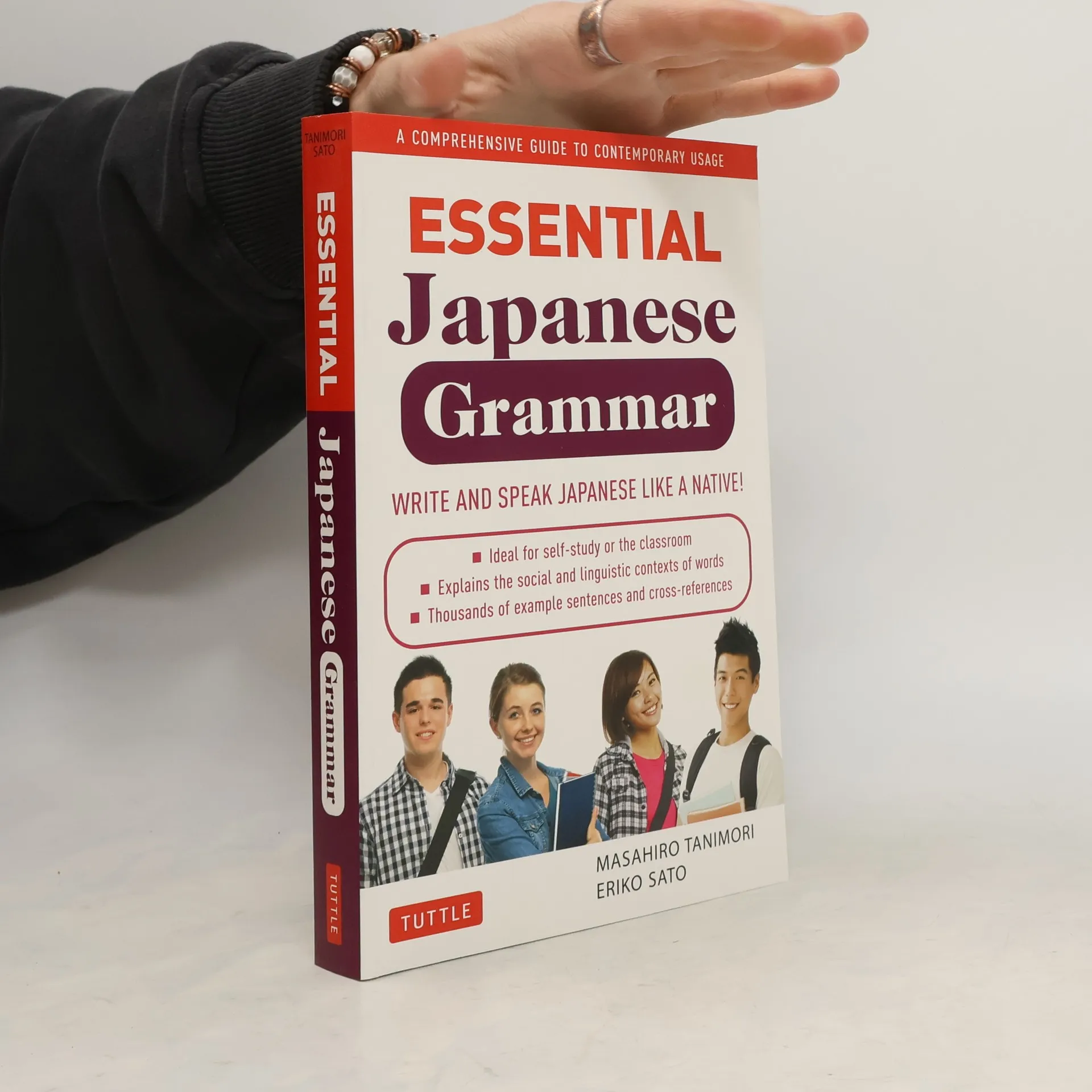
    • Essential Japanese Grammar

      • 416 pages
      • 15 hours of reading

      Essential Japanese Grammar is an indispensable study guide for students of the Japanese language at all levels. Long the standard in Japanese language education, it provides clear, jargon-free explanations of how Japanese grammar works and offers hundreds of example sentences. It is an essential handbook for self-study or the classroom and should be a valued resource for years to come. A strong foundation in grammar is vital to those wishing to learn Japanese as a whole. Essential Japanese Grammar presents many unique features. First, grammatical terminology has been kept to a minimum so that extensive prior knowledge of grammar is not required. Second, abundant example sentences are written in Japanese characters (kana and kanji) followed by romanji and English translations. Third, the authors have tried to reveal aspects of grammar that may not be found in comparable grammar books such as rare Japanese verbs, adjectival nouns, clauses adverbs, etc. This Japanese grammar book contains: parts of speech. sentence constructions. conjugations forms. speech styles and tones. accentuation rules. essential words and functional elements. an appendix for referencing and cross-referencing Japanese words.

      Essential Japanese Grammar
      4.1
    • Practice Makes Perfect Basic Japanese

      • 192 pages
      • 7 hours of reading

      Helps you learn to communicate in authentic Japanese - how to meet new people, engage in small talk, make suggestions and requests, express ideas, and more. This book includes: everyday Japanese presented in both Japanese characters(hiragana, katakana, and kanji) and phonetic translation; and high- frequency vocabulary; grammar basics.

      Practice Makes Perfect Basic Japanese
      3.9
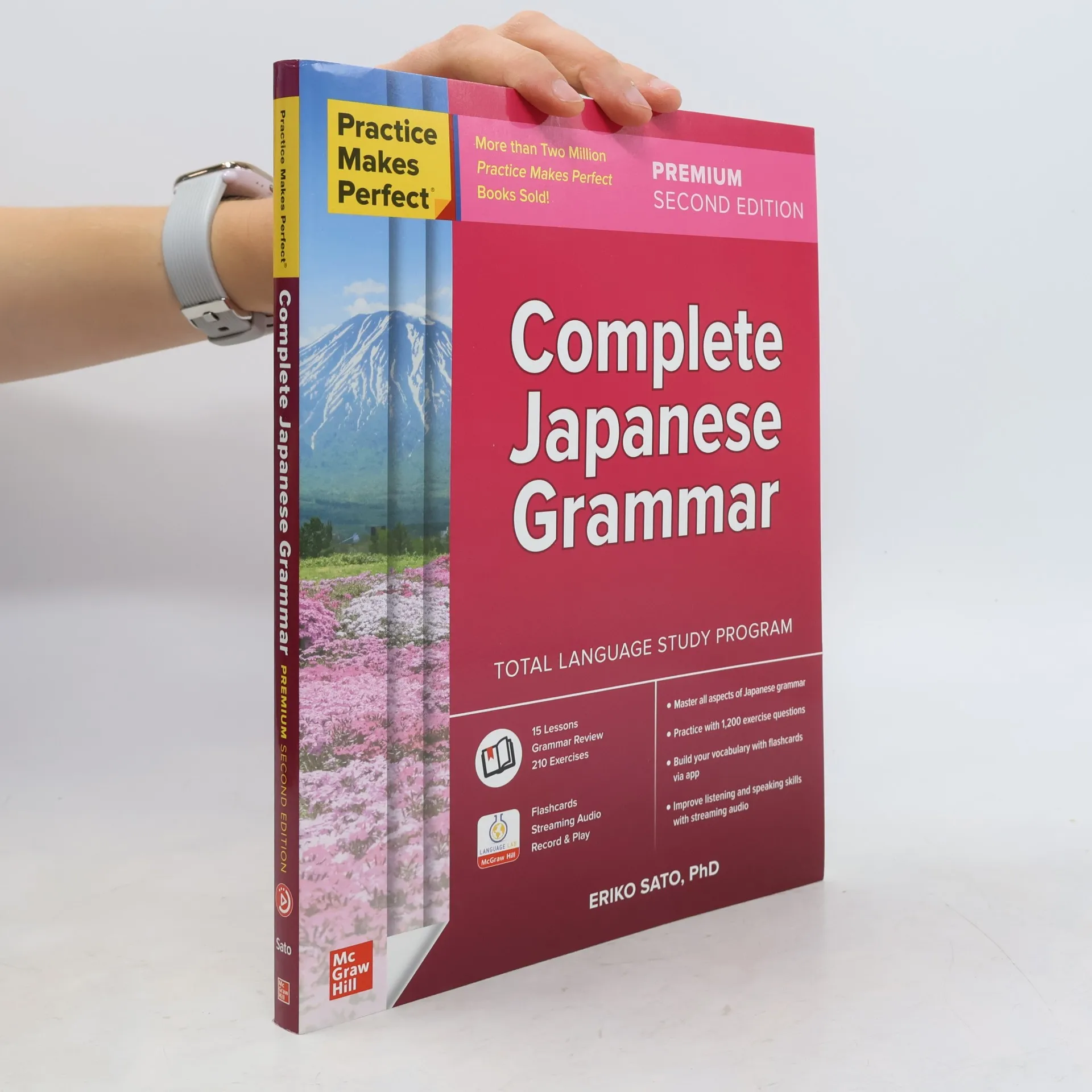
    • Strengthen your Japanese grammar skills with practice, practice, practice! From particles to pronouns, this comprehensive workbook covers all those aspects of Japanese grammar that you might find a little intimidating or hard to remember. Practice Makes Perfect: Complete Japanese Grammar introduces the fundamentals of the language and then progresses to show how these building blocks connect to create complex sentences. Each chapter features clear explanations, numerous realistic examples, and dozens of engaging exercises in a variety of formats for whatever your learning style. You will, of course, get plenty of practice, practice, practice using your new skills in context. With its winning formula for getting a handle on Japanese grammar right away, Practice Makes Perfect: Complete Japanese Grammar is your ultimate resource for mastering the grammar of this complex language. Practice Makes Perfect: Complete Japanese Grammar includes: Everyday Japanese presented in both Japanese characters (hiragana, katakana, and kanji) and phonetic translation A comprehensive introduction to Japanese grammar High-frequency vocabulary presented in context A clear pronunciation guide Hundreds of exercises in a variety of formats

      Practice Makes Perfect Complete Japanese Grammar
      4.0
    • Japanese Stories for Language Learners

      • 191 pages
      • 7 hours of reading

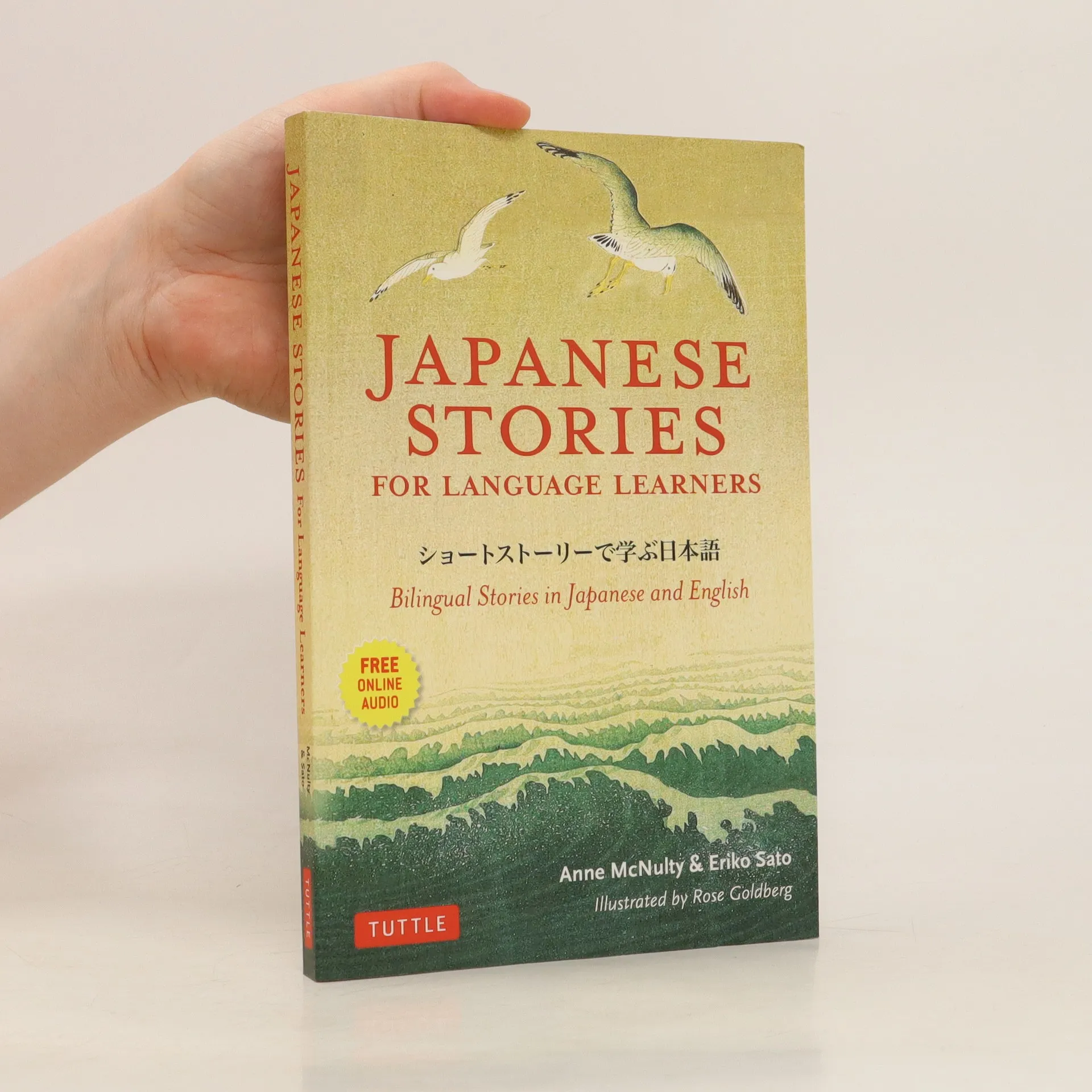
      A great story can lead a reader down a rabbit hole of discovery—especially if it's presented in two languages! Beautifully illustrated in a traditional style, Japanese Stories for Language Learners offers five compelling stories with Japanese and English language versions appearing on facing pages. Taking learners on an exciting cultural and linguistic journey, each story is followed by detailed translator's notes, vocabulary lists, and grammar points along with a set of discussion questions and exercises. The first two are very famous traditional folktales: Urashima Taro (Tale of a Fisherman) and Yuki Onna (The Snow Woman). These are followed by three short stories by notable 20th century authors: Kumo no Ito (The Spider's Thread) by Akutagawa Ryunosuke (1892u1927), Oborekaketa Kyodai (The Siblings Who Almost Drowned) by Arishima Takeo (1878u1923), and Serohiki no Goshu (Gauche the Cellist) by Miyazawa Kenji (1896-1933). The latter stories are unabridged and unedited except for the addition of furigana pronunciations above the kanji characters. Reading these stories in the original Japanese—and hearing native-speakers read them aloud in the accompanying free audio recording—helps students at every level deepen their comprehension of the beauty and subtlety of the Japanese language.

      Japanese Stories for Language Learners
      4.0
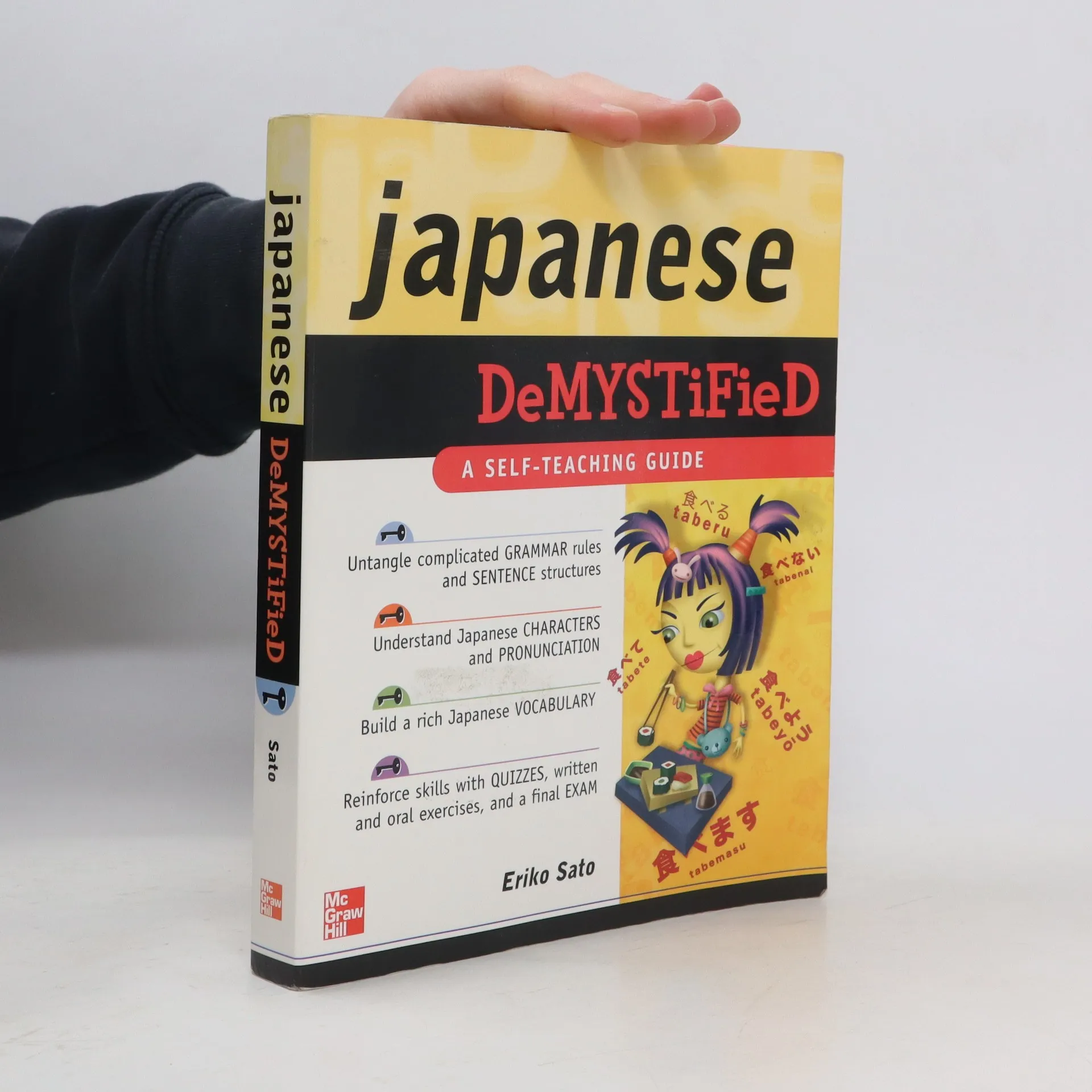
    • Japanese demystified

      • 461 pages
      • 17 hours of reading

      Say sayonara to your fears of speaking Japanese! Interested in learning to speak Japanese but feel intimidated by the complex characters and pronunciations? No need to worry! Even if your only experience is ordering sushi, Japanese Demystified will have you saying konnichiwa to your new language skills in no time. Beginning with a review of Japanese writing systems, basic pronunciation, and everyday expressions, this book covers key grammar fundamentals such as particles, nouns, verb forms, and honorifics. You'll build your Japanese vocabulary with essential words and phrases and quickly master this challenging language. Test yourself at the end of every chapter for reinforcement that you're fast on your way to speaking, writing, and understanding Japanese. This fast and easy guide Simple enough for a beginner, but challenging enough for a more experienced student, Japanese Demystified is your shortcut to mastering this complex language.

      Japanese demystified
      3.9
    • Japanese For Dummies

      • 382 pages
      • 14 hours of reading

      Author and Professor of Japanese Eriko Sato introduces the essentials of Japanese grammar and pronunciation, giving you a working sense of the Japanese language, before showing you Japanese in action. You'll also discover social customs, formalities, and manners, from how and when to bow to how to unwrap a present. Includes vocabulary summaries, a mini-dictionary, and an audio CD full of conversations and pronunciations.

      Japanese For Dummies
      3.7
    • Contemporary Japanese Textbook Volume 2

      • 256 pages
      • 9 hours of reading

      This textbook series is designed for beginning students of Japanese at the college or high school level, suitable for both classroom use and self-study. Each lesson is concise, intended to be completed in about an hour, with a clear objective. The active discovery approach fosters rapid learning through problem-solving and participation rather than rote memorization, making the process engaging and reducing the fear of making mistakes. This second volume features 45 short lessons organized into 12 chapters, each filled with diverse activities and exercises, all manageable within a single session. This daily multivitamin approach to language learning simplifies tracking progress and facilitates review. Additionally, free online audio files are available for download, providing native speaker recordings that ensure correct pronunciation for the dialogs and vocabulary presented. In this volume, learners will explore topics such as Kanji meanings, Japanese verb forms, expressing preferences, using common phrases, evaluating facts, and sharing opinions, as well as aspects of Japanese culture related to sightseeing and food. Accompanying the textbook is a workbook that serves as both supplementary material and a standalone resource for practicing and reviewing the language.

      Contemporary Japanese Textbook Volume 2
    • Everything you need to master first-year Japanese language essentials―clear explanations, tons of practice exercises, and NEW audio to improve your speaking and listening skills The most effective way to learn any new language is to practice, practice, and practice some more. In  Practice Makes Basic Japanese , you'll find all the practice you need to complete your first year of study. Based on the proven success of the Practice Makes Perfect series, this bestselling workbook offers easily digested short sections (each taking about 10 to 15 minutes to complete), clear explanations of grammar, and a solid grounding in basic vocabulary. Supported by the McGraw Hill Language Lab app,  Practice Makes Basic Japanese  also offers comprehensive digital support, with extensive audio recordings that provide the answer key for many exercises, so you can build your confidence in speaking and listening to the language by following the model of native Japanese speakers. With the instruction, explanations, and extensive practice in this book, you'll acquire all the knowledge and skills a first-year student is expected to master.

      Practice Makes Perfect: Basic Japanese, Premium Third Edition
    • Le japonais pour les nuls

      • 281 pages
      • 10 hours of reading

      Avec votre nouveau compagnon de voyage, vous pourrez vous faire comprendre, demander votre chemin, commander au restaurant... et même parler de la pluie ou du beau temps ! Véritable kit de conversation, cette version poche du Japonais pour les Nuls vous permet de maîtriser toutes les situations de communication. Pour vous exprimer simplement et efficacement, faites confiance à un Nul !

      Le japonais pour les nuls
      3.6
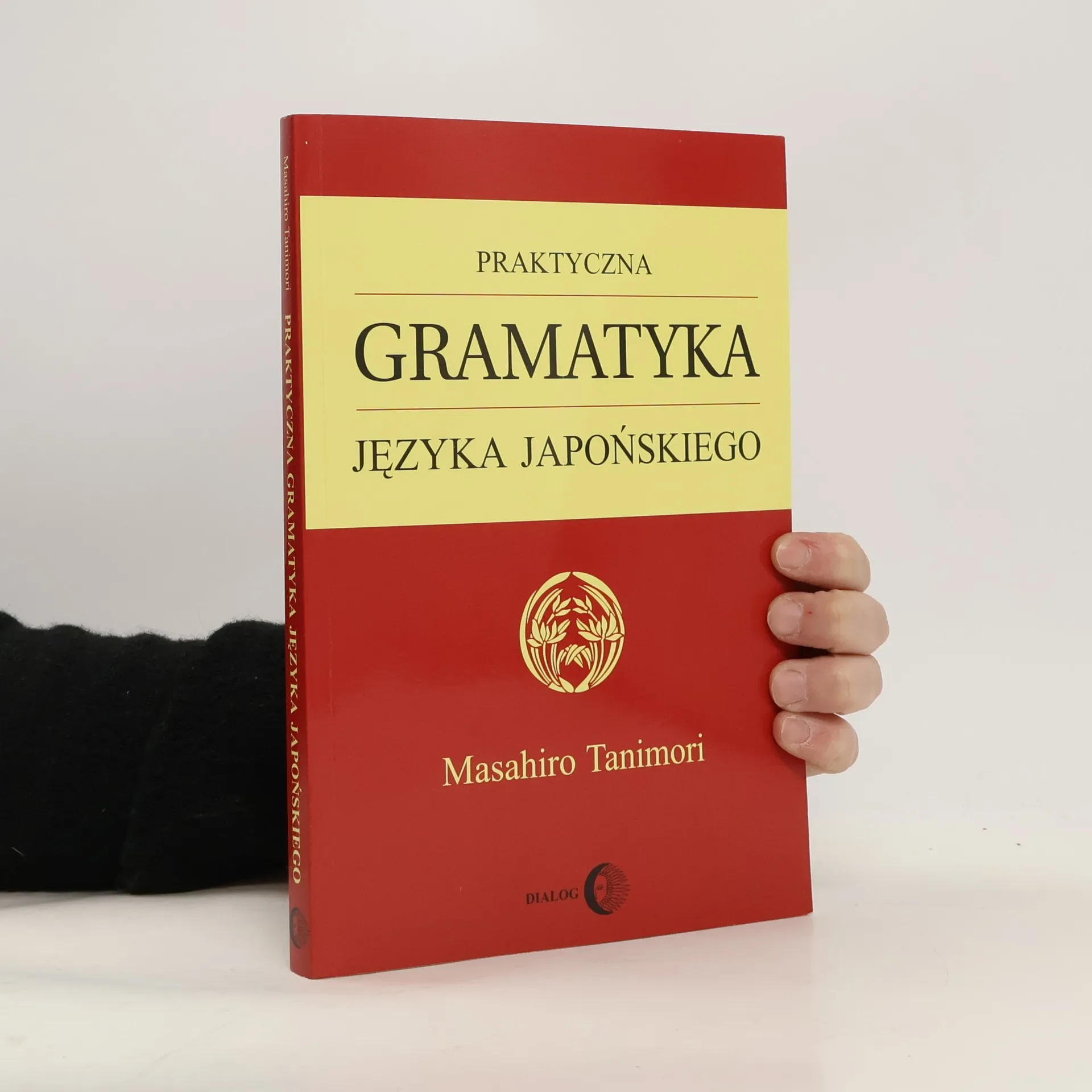
    • Podręcznik adresowany jest do osób zaczynających naukę japońskiego oraz średnio zaawansowanych. Książka ma charakter słownika, który składa się z dwóch części - w pierwszej, zawierającej ponad sześćset haseł w układzie alfabetycznym, omówiono podstawowe zwroty i konstrukcje gramatyczne oraz ich praktyczne użycie. Są one podane w standardowym zapisie japońskim i transkrypcji łacińskiej, przy zastosowaniu międzynarodowej transkrypcji Hepburna (romaji). W części drugiej przedstawiono zwięzły wykład gramatyki japońskiej, zwracając szczególną uwagę na części mowy oraz odmianę czasowników i przymiotników. Omówiono też klasę partykuł jako wykładników przypadków, a także charakterystyczne dla tego języka zjawiska, takie jak honoryfikatywność oraz klasyfikatory służące do liczenia tradycyjnie wyróżnionych klas słów.

      Praktyczna gramatyka języka japońskiego
    • Mit diesem Büchlein sind Sie für die nächste Reise nach Japan gerüstet. Ob Sie in Tokio in einer Shopping Mall einkaufen, in Kyoto in einer Bar Sushi bestellen oder in Osaka über das Wetter plaudern: Hier finden Sie die passenden Sätze für die jeweilige Situation. Ganz nebenbei erfahren Sie das Wichtigste über die japanische Grammatik und bekommen viele Tipps für die richtige Aussprache.

      Reise-Sprachführer Japanisch für Dummies