

An overview of the major topics in digital image processing, representation, processing techniques and communication, this work starts by presenting the mathematical tools required to handle image processing problems. It then discusses the major topics to enable the reader to learn the underlying techniques and concepts.
Anil K. Jain Books


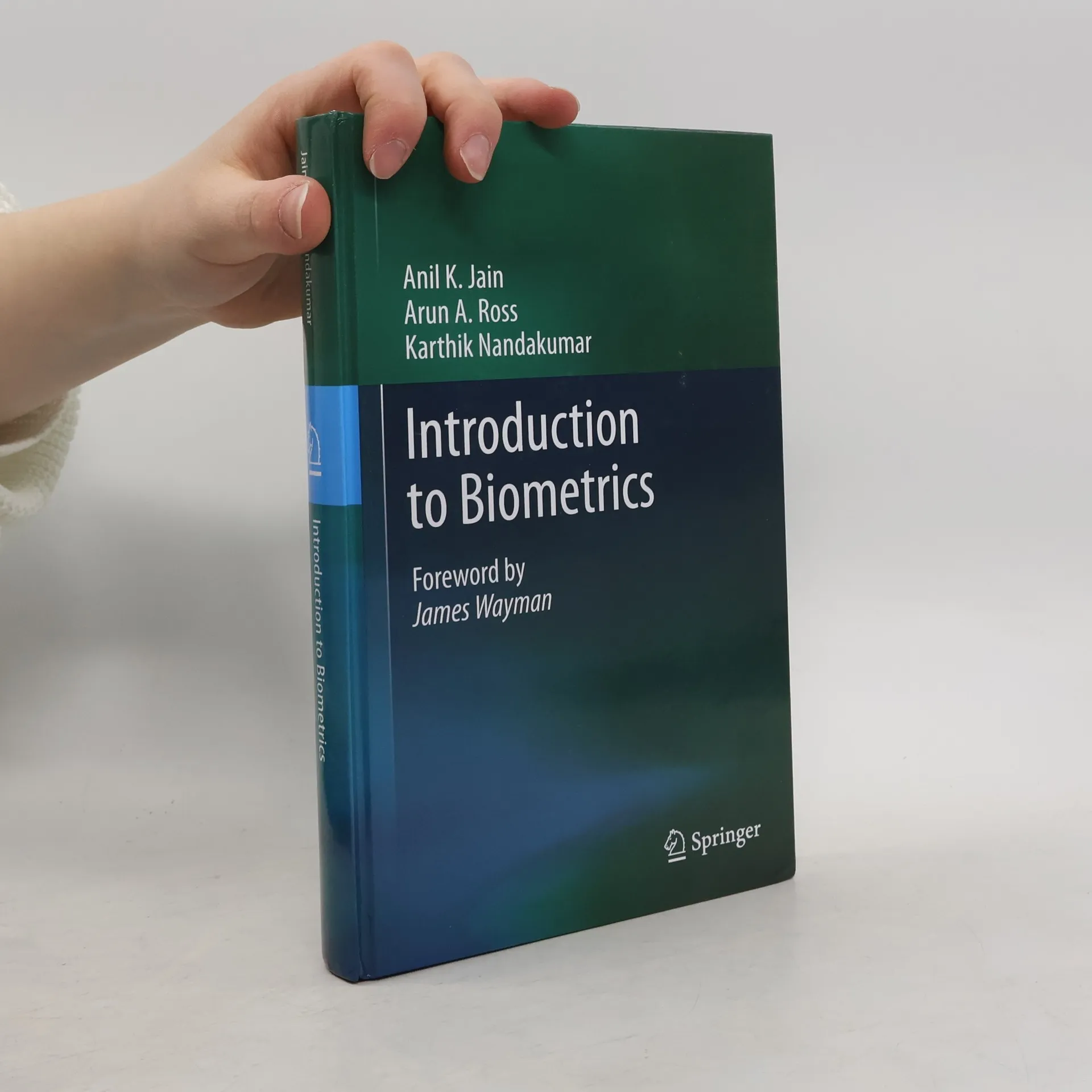

Introduction to Biometrics
- 328 pages
- 12 hours of reading
Biometric recognition, or simply biometrics, is the science of establishing the identity of a person based on physical or behavioral attributes. It is a rapidly evolving field with applications ranging from securely accessing one's computer to gaining entry into a country. While the deployment of large-scale biometric systems in both commercial and government applications has increased the public awareness of this technology, "Introduction to Biometrics" is the first textbook to introduce the fundamentals of Biometrics to undergraduate/graduate students. The three commonly used modalities in the biometrics field, namely, fingerprint, face, and iris are covered in detail in this book. Few other modalities like hand geometry, ear, and gait are also discussed briefly along with advanced topics such as multibiometric systems and security of biometric systems. Exercises for each chapter will be available on the book website to help students gain a better understanding of the topics and obtain practical experience in designing computer programs for biometric applications.
Handbook of Fingerprint Recognition
- 348 pages
- 13 hours of reading
This professional reference provides authoritative and comprehensive coverage of all major topics, concepts, and methods for fingerprint security systems.
Pathologie des Politischen
Zur Ideologie und Phänomenologie des neuen inkorporativen Faschismus
- 108 pages
- 4 hours of reading
»Ein Gespenst geht (wieder einmal) um – und nicht nur in Europa, sondern weltweit. Es ist das Gespenst des Faschismus. Der Faschismus ist ein ›Untoter‹. Längst glaubte man ihn ins ›Grab‹ der Geschichte abgelegt zu haben […] Tatsächlich ist er lebendiger denn je (und er war niemals tot). Er hat sich – ohne dass die meisten es überhaupt wahrgenommen haben – eingeschlichen und die Macht untergründig bereits übernommen oder ist zumindest im Begriff, sie zu erobern. Denn der gegenwärtige Faschismus ist wahrhaft gespenstisch. Er ist ein wandelbarer, kaum zu (be)greifender Spuk, der es geschafft hat, alles zu durchdringen und ins Gegenteil zu verkehren.« In dem Essay »Pathologie des Politischen« unternimmt Anil K. Jain eine überaus dichte Gegenwartsanalyse, die man in der Tradition der Kritischen Theorie verstehen kann, aber weit über deren Horizont hinausweist. Mit einigen hoch originellen Thesen – zu eliminatorischer Inklusion, Hypertotalitarismus, postmodernem Manichäismus, ökonomischer Obsoleszenz der Masse etc. – wird die aktuelle gesellschaftlich-politische Entwicklung als Manifestation eines neuen, inkorporativen Faschismus interpretiert. Dieser neue Faschismus ist nicht nur erfolgreich, weil er sich systematisch der Identifizierung entzieht, sondern weil er wirkliche Bedürfnisse befriedigt – und somit, als Ausdruck des Begehrens, Teil von uns allen ist. Ein Text, den man lesen und über den man streiten sollte.