

Never before published letters and uncollected short writings of R. H. Blyth, champion of Zen and the person who brought haiku to the world. Poetry and Zen assembles a remarkable literary feast: the letters, articles, translations, reviews, and selections from the papers of Reginald Horace Blyth (1898–1964). Following on the landmark success of Zen in English Literature and Oriental Classics (1942), Blyth’s voluminous writings on Zen, Japanese culture, and the Japanese verse forms haiku and senryū captured the imagination of English-speaking readers in the decades following World War II. His enlightening wit and inimitable style struck a particularly sensitive chord in the artistic community, providing inspiration to many poets and writers and helping to kindle global interest in Zen and haiku. Blyth’s penetrating insights on these topics in a series of books published between 1942 and 1970 helped lay the foundation for the remarkable expansion of Zen outside of East Asia, as well as the popularization of haiku as an international verse form that took place after his death. Poetry and Zen is the first collection of Blyth’s letters and short writings. The generous array of Blyth‘s literary output and personal writing on display here showcases the wide-ranging interests and brilliant mind of a pivotal figure in the history of modern Zen and Japanese poetry.
Norman Waddell Book order (chronological)

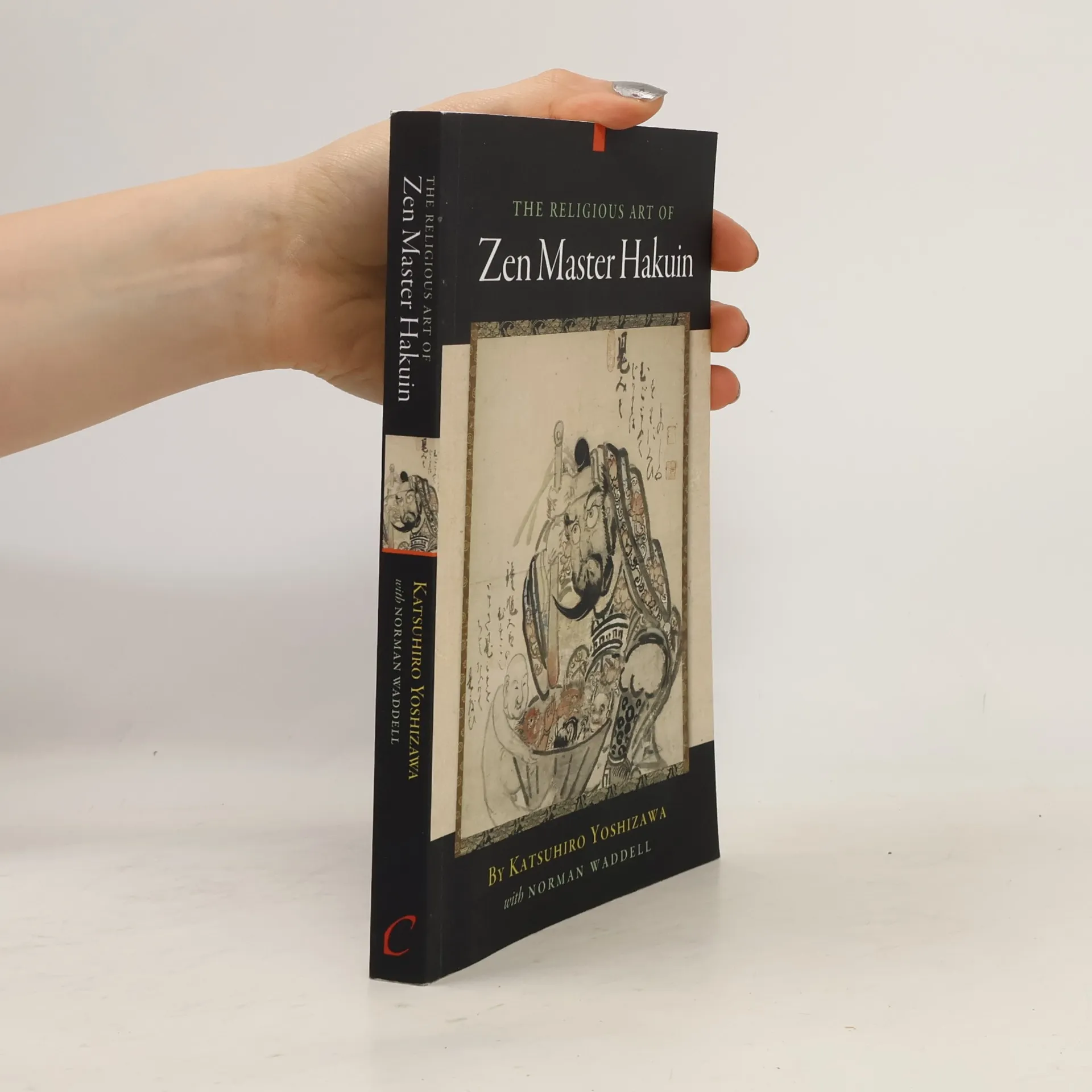


The Religious Art of Zen Master Hakuin
- 272 pages
- 10 hours of reading
A charismatic and extraordinary Zen teacher and artist, Hakuin (1686–1769) is credited with almost single–handedly reforming and revitalizing Japanese Zen from a state of extreme spiritual decline. As a teacher, he placed special emphasis on koan practice, inventing new koans such as the famous "What is the sound of one hand clapping?" He also stressed the need to extend the benefits of Zen to others. What made Hakuin even more remarkable was that he was not only a religious teacher but also a prolific artist. Using calligraphy and painting to create "visual Dharma," his teachings were rendered on paper in pictures, characters, and images, uniquely and magnificently expressing the nature of enlightenment as he wished to impart it to his students. The Religious Art of Zen Master Hakuin is a stunning volume containing many of Hakuin's finest calligraphies and paintings, along with brilliant commentary by Katsuhiro Yoshizawa, the leading Japanese expert on Hakuin and his work. Yoshizawa masterfully guides the reader from one piece of artwork to the next, sharing the story of Hakuin's life, revealing the profound religious meaning embedded in each illustration, and providing a detailed documentary of the lessons of one of Zen's most respected teachers.
The Essential Teachings of Zen Master Hakuin
- 137 pages
- 5 hours of reading
A fiery and intensely dynamic Zen teacher and artist, Hakuin (1686-1769) is credited with almost single-handedly revitalizing Japanese Zen after three hundred years of decline. As a teacher, he placed special emphasis on koan practice, inventing many new koans himself, including the famous "What is the sound of one hand clapping?" As an artist, Hakuin used calligraphy and painting to create "visual Dharma"--teachings that powerfully express the nature of enlightenment. The text translated here offers an excellent introduction to the work of this extraordinary teacher. Here, Hakuin sets forth his vision of authentic Zen teaching and practice, condemning his contemporaries, whom he held responsible for the decline of Zen, and exhorting his students to dedicate themselves to "breaking through the Zen barrier." Included are reproductions of several of Hakuin's finest calligraphies and paintings.
Die Zen-Lehre vom Ungeborenen
Leben und Lehre des großen japanischen Zen-Meisters Bankei Eitaku (1622-1693) - Aus den japanischen Quellen herausgegeben von Norman Waddell
- 205 pages
- 8 hours of reading