


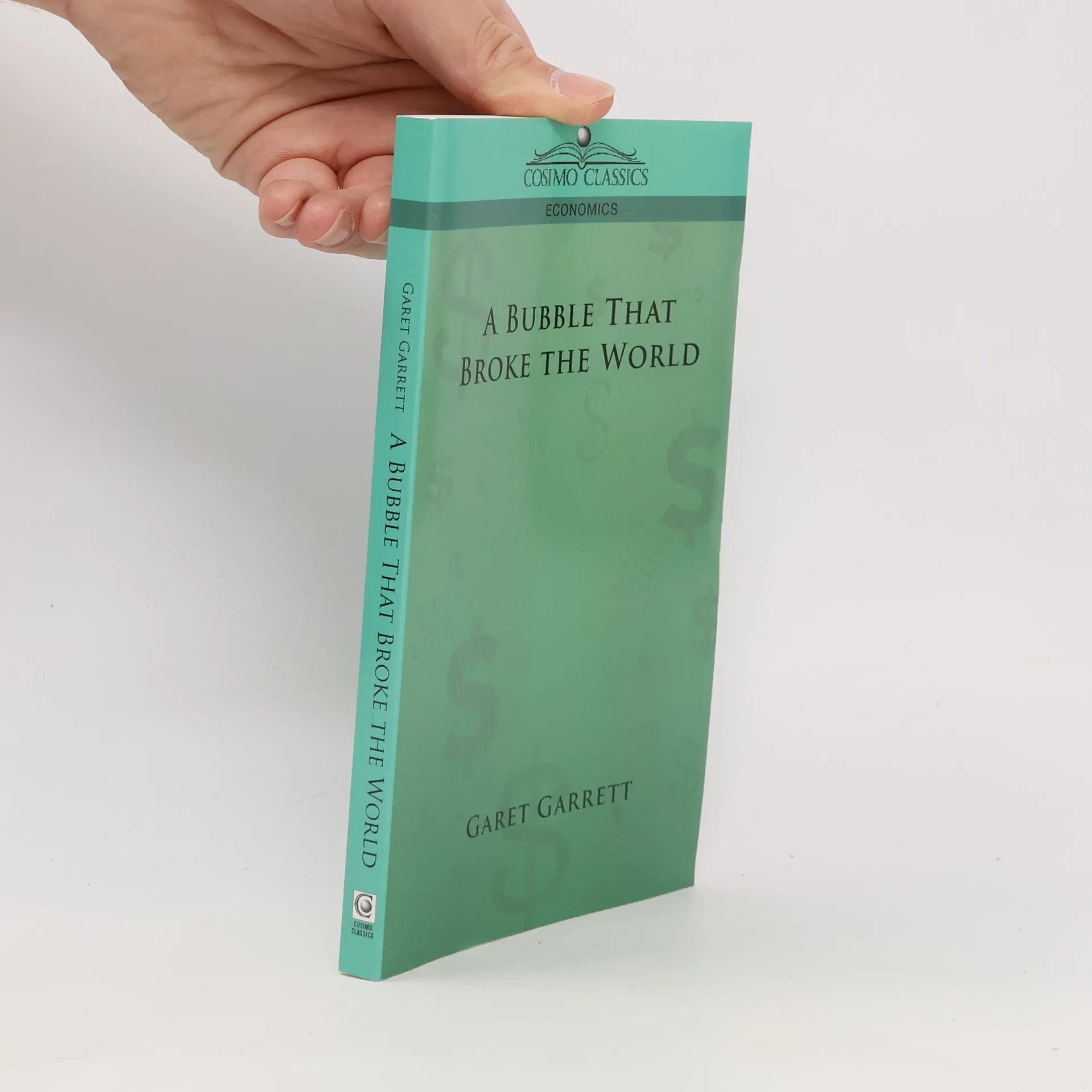
Cosimo Classics: A Bubble That Broke The World
- 188 pages
- 7 hours of reading
The burden of Europe's private debt to this country is now greater than the burden of her war debt; and the war debt, with arrears of interest, is greater than it was the day the peace was signed. And it is not Europe alone. Debt was the economic terror of the world when the war ended. How to pay it was the colossal problem. -from "Cosmology of the Bubble" The names of the players are different, but these cautionary essays about massive national debt-written in the long wake of World War I and as the Great Depression was starting to make its horrible power fully known-are still fully applicable today. A powerful libertarian voice of the early 20th century, Garet Garrett, writing originally in the Saturday Evening Post, warned about the extension of American credit to a Europe staggering under a massive debt leftover from the financing of World War I... a situation echoed, if reversed, today as the overextended United States continues her rampant borrowing. Collected in book form, Garrett's writings are a cry for a retreat from financial insanity, a clear-eyed look at a complicated and little understood era of financial history, and perhaps an ominous warning for today. American journalist GARET GARRETT (1878-1954) also wrote The American Omen (1928), Rise of Empire (1941), and Garet Garrett's: The People's Pottage (later retitled Ex America) (1951).