; Ziya Önis; Koç University; Soli Ozel, Bilgi University, Istanbul; William Quandt, University of Virginia; Jillian Schwedler, University of Maryland, College Park; Jean-François Seznec, Columbia University and Georgetown University; Emmanuel Sivan, Hebrew University; Mohamed Talbi, independent scholar; Robin Wright, Los Angeles Times.
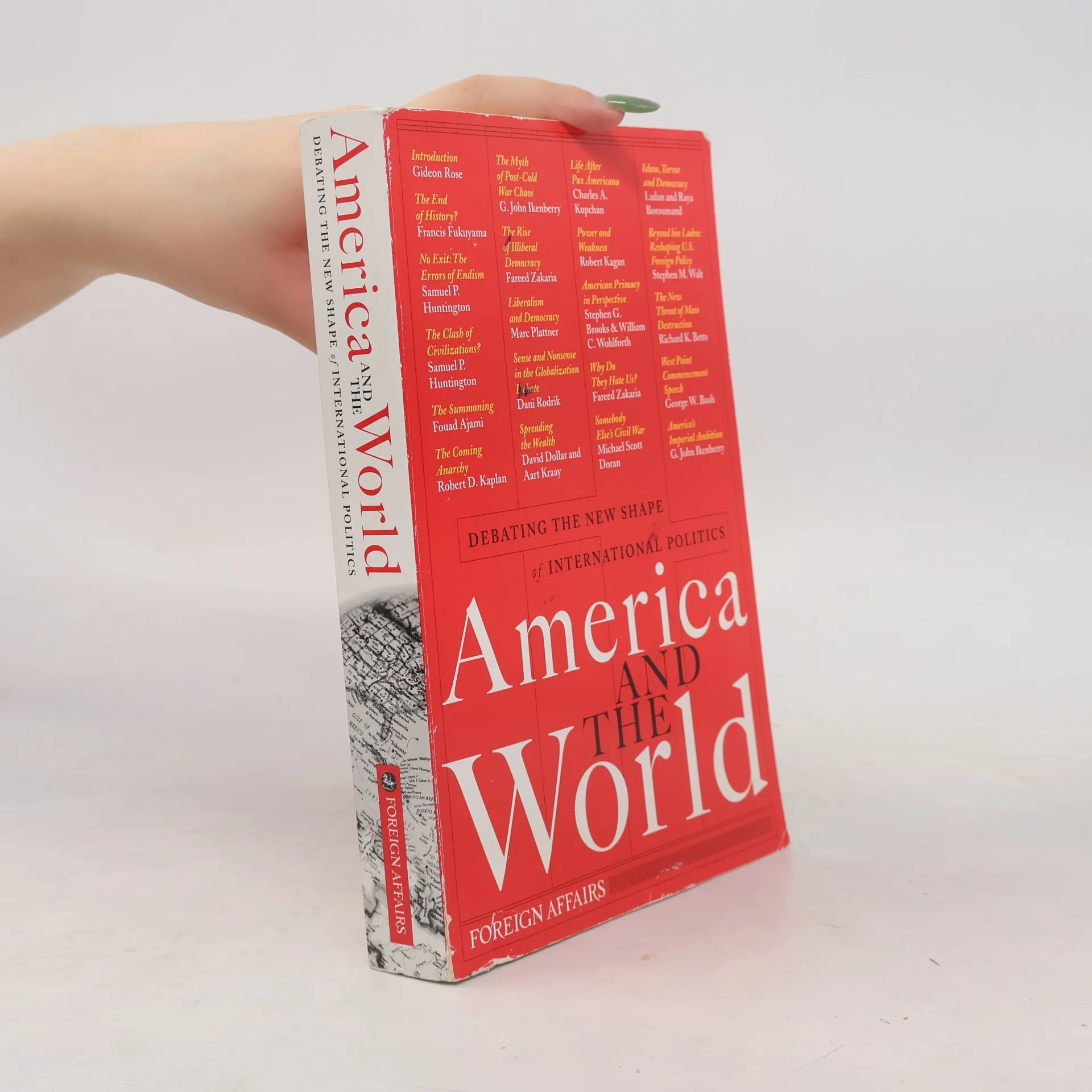
This comprehensive survey explores the key debates shaping U.S. foreign policy in the post-Cold War era. Following the Soviet Union's collapse, scholars have sought to understand the new international landscape. This collection showcases the insights of prominent thinkers, including Francis Fukuyama, Samuel P. Huntington, and Fareed Zakaria, who analyze the driving forces behind global events and America's response. Central questions addressed include the significance of ideology, culture, and power, as well as the future of global order versus chaos. The contributors examine the strength and vulnerabilities of the United States and discuss the appropriate use of its power for protection. Engaging with each other's arguments, these authors provide a rich dialogue that educates readers on contemporary international relations. Originally published in leading journals, these articles form an essential reading list for those interested in understanding current global dynamics. Notable contributors include Fouad Ajami, Richard K. Betts, Stephen G. Brooks, Robert D. Kaplan, and Stephen M. Walt, among others.
The last quarter of the twentieth century was marked by two dramatic political trends that altered many of the world's regimes: the global resurgence of democracy and the collapse of communism. Was the process that brought down communism in Eastern Europe and the former Soviet Union fundamentally different from the process that gave birth to new democracies in other regions of the world? Were the transitions away from communism mostly like or mostly unlike the transitions away from authoritarianism that took place elsewhere? Is the challenge of building and consolidating democracy under postcommunist conditions unique, or can one apply lessons learned from other new democracies? The essays collected in this volume explore these questions, while tracing how the countries of Eastern Europe and the former Soviet Union have fared in the decade following the fall of communism.