


Explore the latest books of this year!
Bookbot

David A. Hollinger Book order (chronological)

    One of the pre-eminent intellectual historians in and of the United States. His work focuses on a deep understanding of the American past and the intellectual currents that shaped it. His analytical approach and focus on key ideas and debates offer readers a unique perspective on the evolution of American thought.

    interdisziplinäre Gastroenterologie: Ulcus-Therapie
    The American Intellectual Tradition
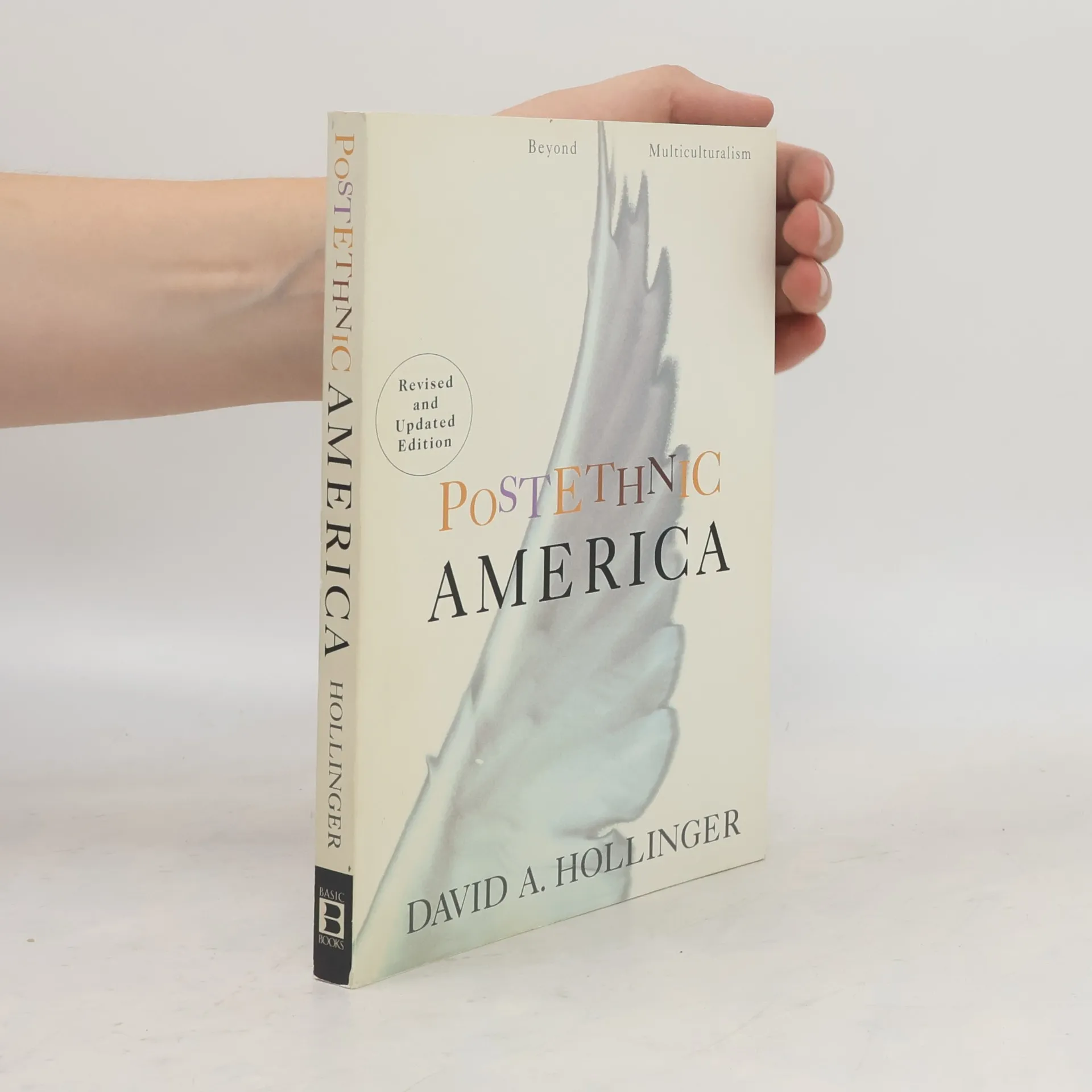
    Postethnic America
    Christianity's American Fate
    • Christianity's American Fate

      • 216 pages
      • 8 hours of reading

      This work traces the rise of evangelicalism and the decline of mainline Protestantism in American religious and cultural life. It explores how American Christianity became closely associated with conservative white evangelicalism. The author, a leading historian, examines the Protestant establishment's adoption of progressive ideas about race, gender, sexuality, and divinity, which led to a liberalization that alienated some while not satisfying others. Following 1960, mainline Protestantism experienced membership losses, with conservatives gravitating toward evangelicalism and progressives leaning toward secular activism. This shift resulted in a Protestant evangelicalism that embraced patriarchy and white supremacy, ultimately becoming the dominant Christian cultural force in the country. The author delves into the origins of what he describes as Protestantism’s “two-party system,” rooted in America’s culture of dissent established by seventeenth-century colonists. The constitutional separation of church and state fostered religious diversity, while waves of immigrants found community in churches. The narrative highlights how the U.S. evolved into an overwhelmingly Protestant nation, influenced by Jewish and non-Christian diversification by the 1960s. However, by engaging with modernity, ecumenical Protestants inadvertently set the stage for the reactionary stance of evangelicals.

      Christianity's American Fate2022
      3.9
    • Postethnic America

      Beyond Multiculturalism - Revised and Updated Edition

      • 288 pages
      • 11 hours of reading

      Amid the heated discourse on racism, anti-Semitism, and xenophobia, this work offers a reasoned perspective on these divisive issues. David A. Hollinger, a leading intellectual historian, presents a bold proposal to address America's ethnic divisions. He argues that traditional liberal toleration of established ethnic groups is ineffective, as it fails to challenge the existing power imbalances. Conversely, the multiculturalist approach leads to fragmentation into competing ethnic enclaves focused solely on their own interests. Hollinger advocates for a new cosmopolitanism that embraces multiple identities, emphasizing cross-cultural affiliations based on consent rather than biological determinism. This vision of postethnic America serves as a reminder of the nation's universalist promise as a refuge for diverse peoples. Acknowledging the limitations of older Eurocentric universalism, Hollinger calls for a revitalized nationalism. He contends that a democratic nation-state should bridge the gap between our shared humanity and the diverse ethnic and racial groups in the U.S. We are neither a chosen people nor merely a collection of diasporas; instead, we can aspire to be "a people among peoples" in a postethnic world, fostering a democratic-cosmopolitan society that honors its ethno-racial heritages without being confined by them.

      Postethnic America2011
    • The American Intellectual Tradition

      1630-1865 - Second Edition

      • 488 pages
      • 18 hours of reading

      Revised and expanded, the second edition of this uniquely comprehensive two-volume anthology of many of the most significant documents in American intellectual history offers new selections from a diversity of authors; an extensive chronology connecting several hundred important books and essays with events in American and European intellectual, cultural, and political history; and updated bibliographies and headnotes. The anthology makes readily available substantial selections from the writings of prominent American thinkers, ranged chronologically from the establishment of the Massachusetts Bay Colony in 1630 to the present. Designed for easy use by a wide range of readers, it is an invaluable reader for anyone interested in intellectual history, American history, American studies, or American literature. Volume I (to 1865) now offers new selections by Sarah M. Grimke, Horace Bushnell, and Louisa S. McCord, and Volume II (1865-present) now offers new selections by Charles Hodge, Henry Adams, George Santayana, W.E.B. Du Bois, Randolph Bourne, H.L. Mencken, John Crowe Ransom, Meridel Le Sueur, Reinhold Niebuhr, Ralph Ellison, Whittaker Chambers, Betty Friedan, Adrienne Rich, Evelyn Fox Keller, Richard Rorty, and Michael Walzer."

      The American Intellectual Tradition1993