



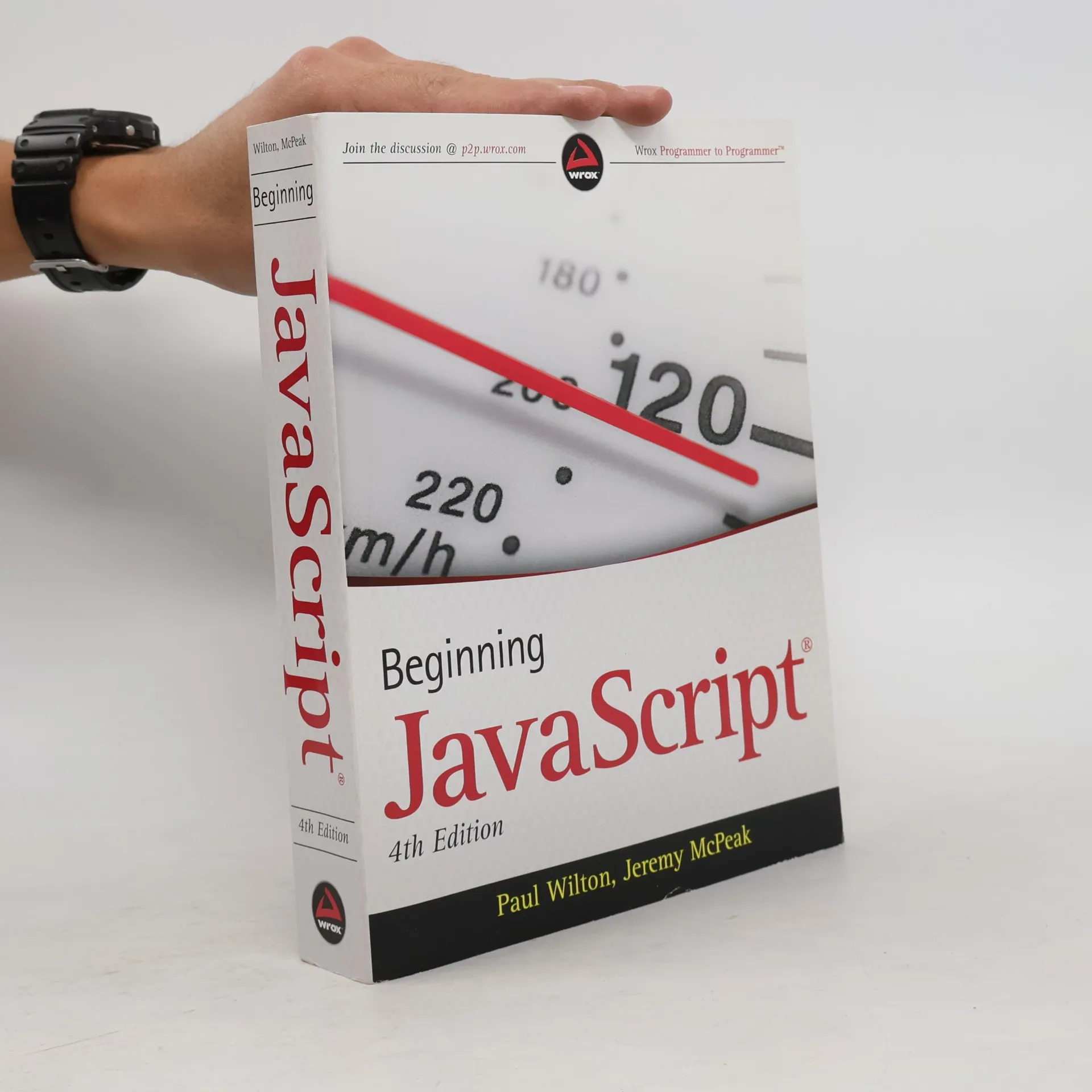

Beginning JavaScript - 4th Edition
- 792 pages
- 28 hours of reading
The perennial bestseller returns with new details for using the latest tools and techniques available with JavaScript JavaScript is the definitive language for making the Web a dynamic, rich, interactive medium. This guide to JavaScript builds on the success of previous editions and introduces you to many new advances in JavaScript development. The reorganization of the chapters helps streamline your learning process while new examples provide you with updated JavaScript programming techniques. You'll get all-new coverage of Ajax for remote scripting, JavaScript frameworks, JavaScript and XML, and the latest features in modern Web browsers. Plus, all the featured code has been updated to ensure compliance with the most recent popular Web browsers. Introduces you to the latest capabilities of JavaScript, the definitive language for developing dynamic, rich, interactive Web sites Features new coverage of data types and variables, JavaScript and XML, Ajax for remote scripting, and popular JavaScript frameworks Offers updated code that ensures compliance with the most popular Web browsers Includes improved examples on the most up-to-date JavaScript programming techniques Continuing in the superlative tradition of the first three editions, Beginning JavaScript, Fourth Edition , gets you up to speed on all the new advances in JavaScript development.