Amidst the deep silence and solitude prevailing in the avenue several market gardeners' carts were climbing the slope which led towards Paris, and the fronts of the houses, asleep behind the dim lines of elms on either side of the road, echoed back the rhythmical jolting of the wheels. At the Neuilly bridge a cart full of cabbages and another full of peas had joined the eight waggons of carrots and turnips coming down from Nanterre; and the horses, left to themselves, had continued plodding along with lowered heads, at a regular though lazy pace, which the ascent of the slope now slackened. The sleeping waggoners, wrapped in woollen cloaks, striped black and grey, and grasping the reins slackly in their closed hands, were stretched at full length on their stomachs atop of the piles of vegetables. Every now and then, a gas lamp, following some patch of gloom, would light up the hobnails of a boot, the blue sleeve of a blouse, or the peak of a cap peering out of the huge florescence of vegetables-red bouquets of carrots, white bouquets of turnips, and the overflowing greenery of peas and cabbages.
Alain Pagès Books


Nouvelles naturalistes des soirées de Médan
- 256 pages
- 9 hours of reading
This is a pre-1923 historical reproduction that was curated for quality. Quality assurance was conducted on each of these books in an attempt to remove books with imperfections introduced by the digitization process. Though we have made best efforts - the books may have occasional errors that do not impede the reading experience. We believe this work is culturally important and have elected to bring the book back into print as part of our continuing commitment to the preservation of printed works worldwide.
Lettres à Alexandrine
1876-1901 - Édition établie, présentée et annotée par Brigitte Émile-Zola et Alain Pagès
- 813 pages
- 29 hours of reading
fort vol. in-8, broché, 813 pp. Edition établie par Brigitte Emile-Zola et Alain Pagès. Bandeau de l'éditeur conservé. Excellent état, comme neuf.
Le naturalisme
- 128 pages
- 5 hours of reading
La naturalisme aujourd'hui, c'est d'abord une bibliographie, une chronologie, enfin un discours, jugements et analyses émis par la critique depuis un siècle. L'ouvrage se propose d'explorer le contenu intellectuel de ce 19e siècle naturaliste. « Copyright Electre »
Die Dreyfus-Affäre
Wahrheiten und Legenden
Die Dreyfus-Affäre (1894-1906) teilte viele Jahre lang Frankreich in zwei Lager, die sich im größten Justizskandal der Jahrhundertwende unversöhnlich gegenüberstanden. Schnell wurde sie ein mediales Ereignis, nicht nur in ganz Europa, sondern auch in den Vereinigten Staaten und Lateinamerika, und liefert bis heute Stoff für hitzige Kontroversen. Um zwischen historischen Wahrheiten und Legenden zu unterscheiden, beantwortet Alain Pagès in 27 Kapiteln die zentralen Fragen, die auch im 21. Jahrhundert noch die Gemüter erregen: Hatte die Anklage Beweise? Wurde Dreyfus von einem "jüdischen Syndikat" verteidigt? Wurde Émile Zola wegen seines Engagements ermordet? War Kaiser Wilhelm II. persönlich in die Dreyfus-Affäre verwickelt? Wie hat Roman Polanski die Dreyfus-Affäre dargestellt?
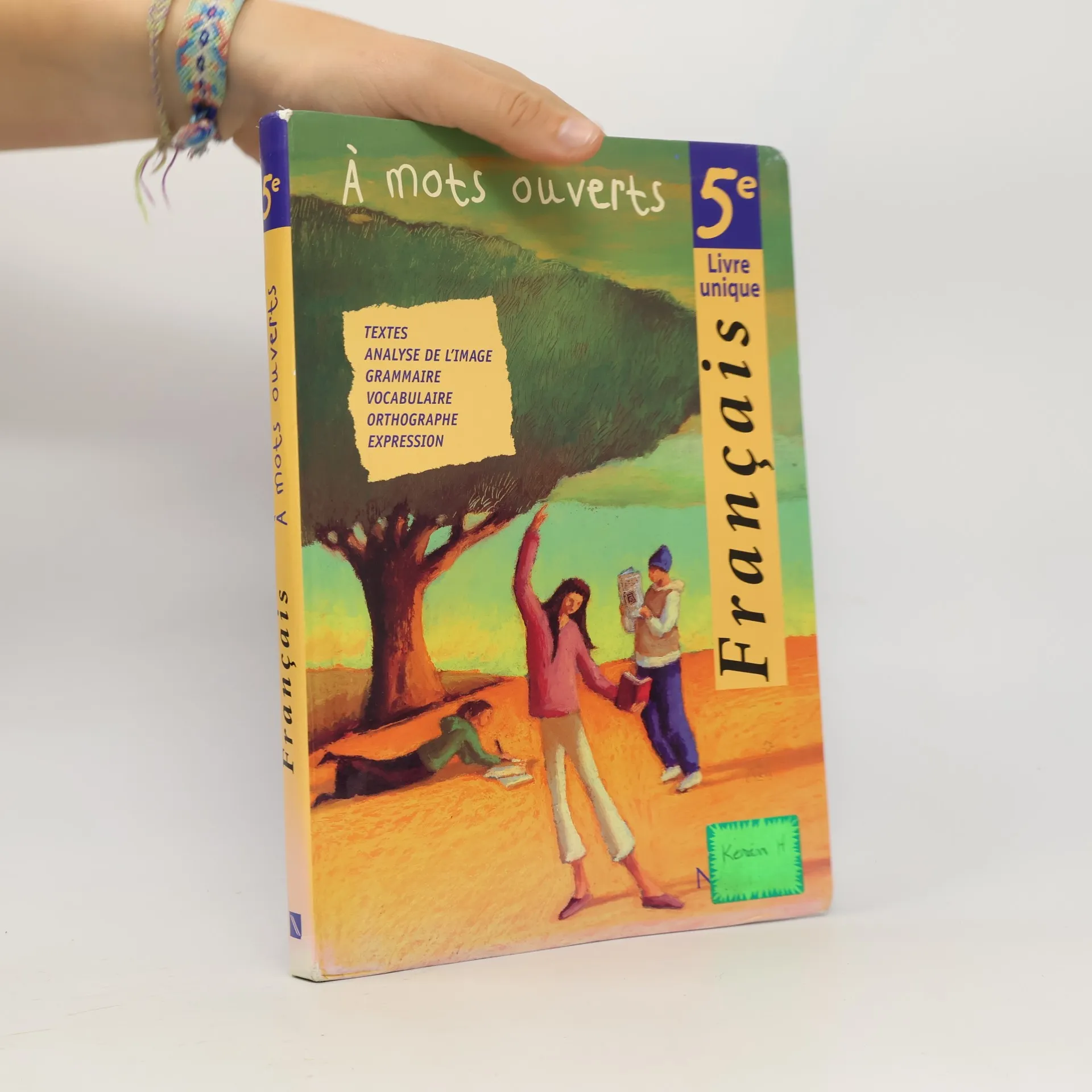
Français à mots ouverts 5e
Livre unique, textes, analyse de l'image, grammaire, vocabulaire, orthographe, expression - Élève 2001
- 359 pages
- 13 hours of reading
Pour un véritable travail en séquences, ce livre unique de français associe la lecture des textes aux activités de langue et d'expression : lecture, grammaire, vocabulaire, orthographe, expression écrite et orale, analyse de l'image. Organisé en deux parties , il offre à l'enseignant la liberté de construire des séquences selon les besoins de sa classe : – Partie 1 : des groupements de textes exploités du point de vue de la lecture, de la langue et de l'expression ; – Partie 2 : les outils de la langue en 41 unités de vocabulaire, de grammaire, d'orthographe et de conjugaison. Des renvois permettent une circulation souple et cohérente entre ces deux parties. Programme 1997Structure et points forts du manuel :La démarche et l'organisation de " À mots ouverts 5e " sont les mêmes que celles du manuel de 6e : Partie 1 : 10 séquences regroupant 90 textes exploités en lecture, étude de la langue, expression écrite et orale, et souvent accompagnés de lectures d'images et d'activités transversales (éducation civique). Partie 2 : 41 fiches d'outils de la langue accompagnées d'exercices d'entraînement. L'étude des textes y renvoie régulièrement.