


Explore the latest books of this year!
Bookbot

Albert Szent-Gyorgyi

    This scientist delved into the biochemical processes within the body, leading to discoveries that reshaped medicine. His research focused on understanding fundamental cellular reactions and identifying key vitamins essential for human health. Beyond his scientific contributions, he was also engaged in social issues, including protests against wars. His legacy lies in his profound impact on modern physiology and in inspiring the connection between scientific inquiry and social responsibility.

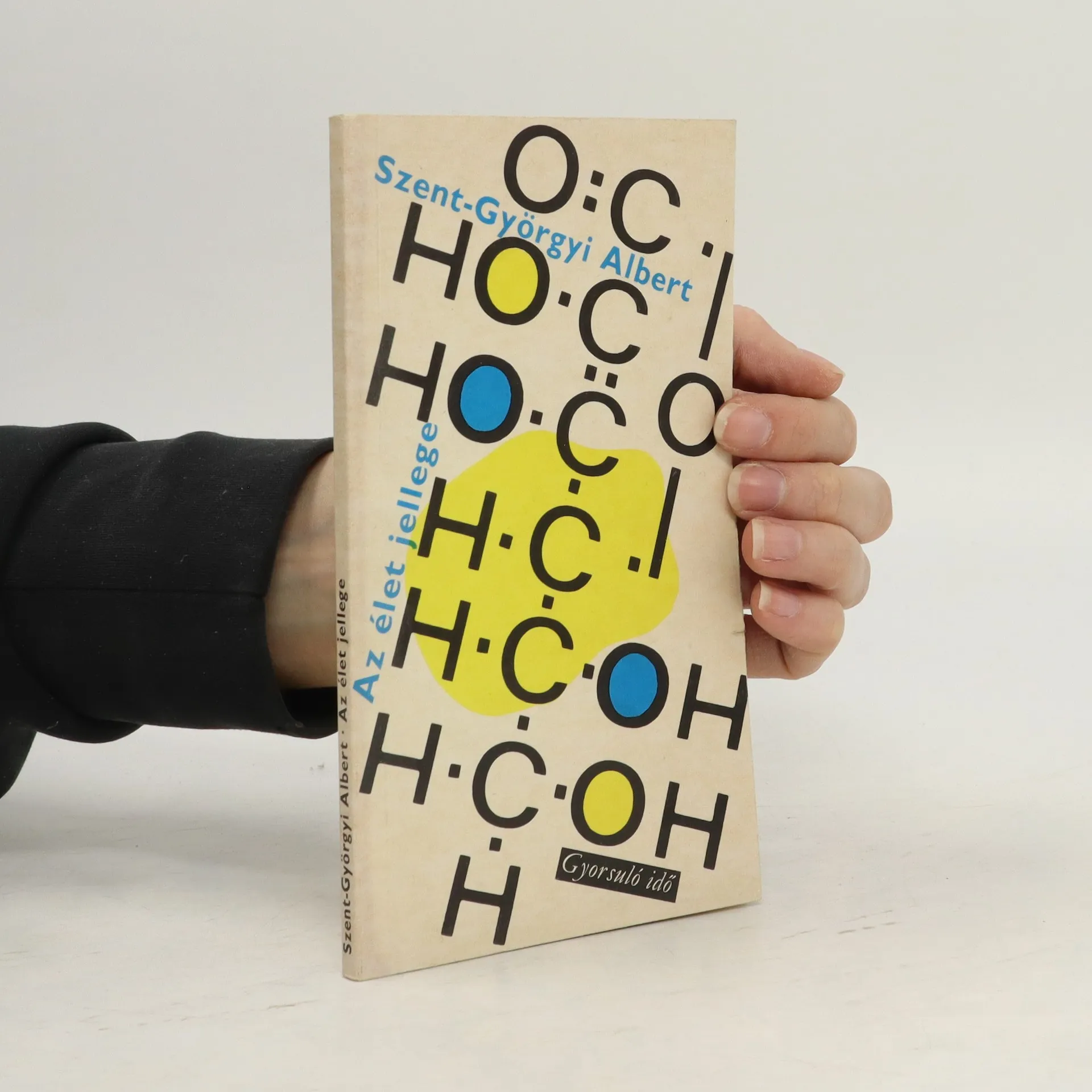
    Az élet jellege
    Introduction to a Submolecular Biology
    The Crazy Ape
    • Introduction to a Submolecular Biology

      • 153 pages
      • 6 hours of reading

      Introduction to a Submolecular Biology focuses on the study of the electronic interactions of biological molecules. This book discusses the energy cycle of life, units and measures, electronic mobility, and problems of charge transfer. The three examples of charge transfer—quinone-hydroquinone, riboflavine (FMN) and serotonin, and cortisone I2 are elaborated. This text deliberates the problems and approaches on the mechanism of drug action, adenosine triphosphate (ATP), chemistry of the thymus gland, and living state. Brief remarks on water, ions, and metachromasia are also included. Other topics covered include the redox potentials, ionization potentials and electron affinities, orbital energies, electromagnetic coupling resonance transfer of energy, and semiconduction. This publication is a good source for biochemists, biologists, and specialists aiming to acquire basic knowledge of submolecular biology.

      Introduction to a Submolecular Biology2012
    • The Crazy Ape

      • 96 pages
      • 4 hours of reading

      "Will humanity survive the machinations of today's people, who often seem to act more like crazy apes than rational beings?" Albert Szent-Györgyi posed this question in 1970, when the Vietnam War was at the center of international attention, and we could hardly dream of the destruction of weapons of mass destruction or the rapprochement of world powers. The Nobel Prize-winning scientist wished for this, seeing it as humanity's only possible way out of a crisis threatening complete destruction. "The Crazy Ape," a peace manifesto articulated with crystal-clear logic, profound humanity, and concern, appears here in its entirety. The author intended it for the youth, as he saw in them the strength to repair the broken world, yet the timeless thoughts of this eternally young scientist speak to all who choose peace over destruction.

      The Crazy Ape1970
      3.8